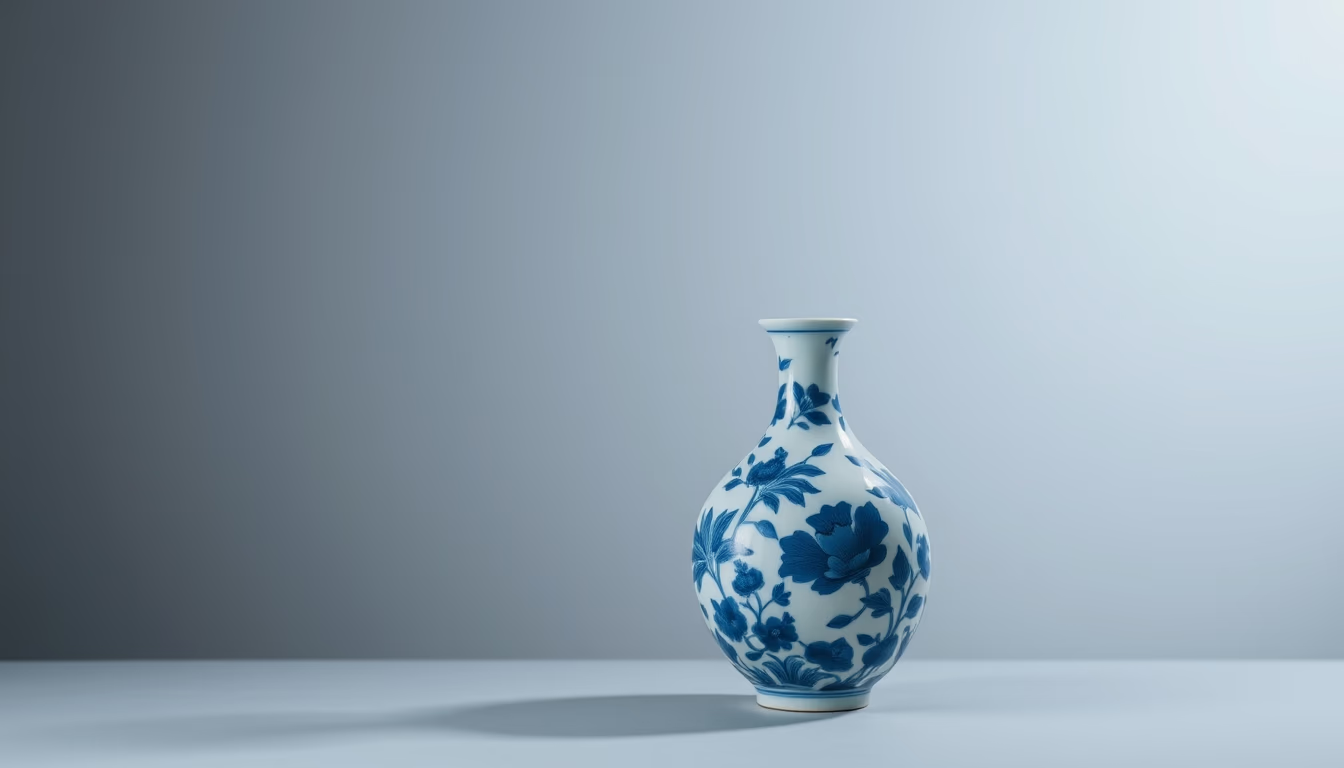
Porcelain blue white vase
1344×768 · AVIF · CC BY 4.0
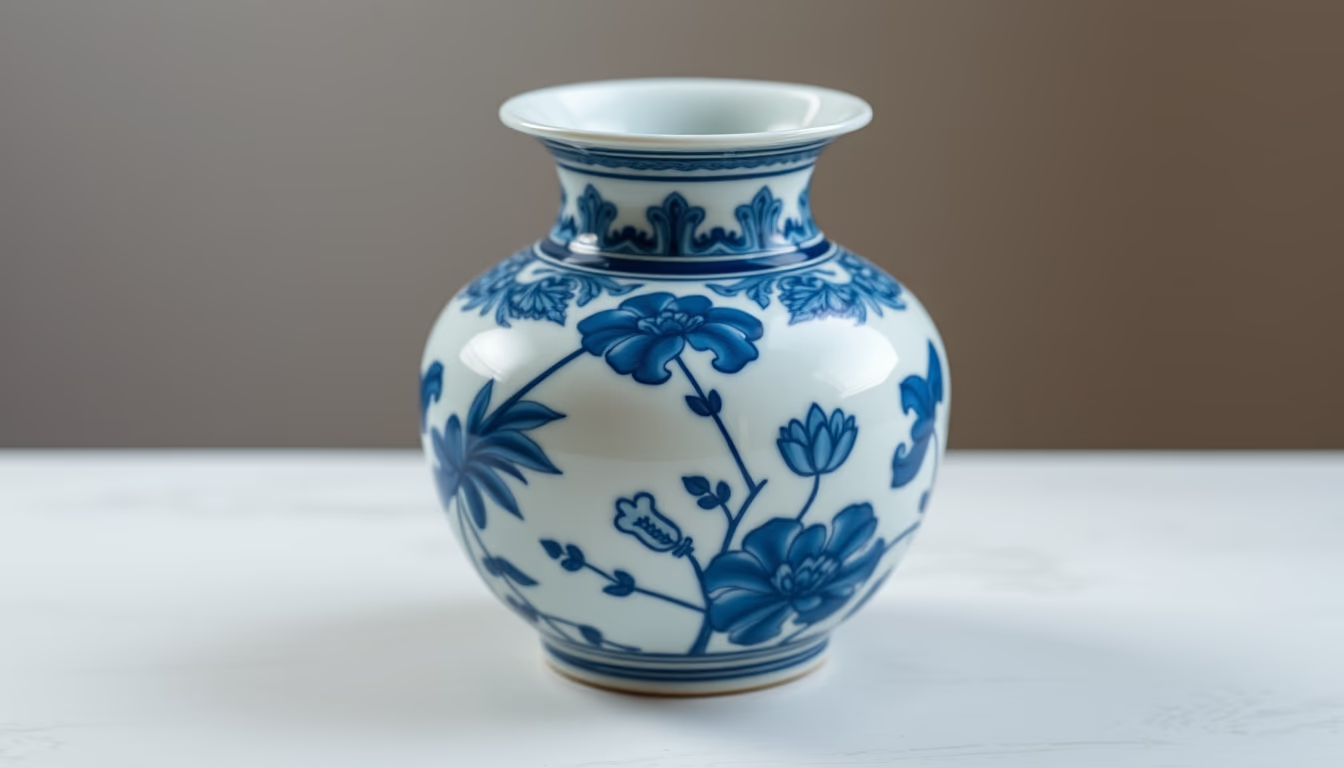
Blue and white porcelain vase, an icon of global trade between Asia and Europe in the 17th and 18th centuries.
About this subject
Blue and white porcelain originated in China during the Yuan dynasty (1271-1368), when Jingdezhen potters began painting pieces with cobalt oxide under a transparent glaze. The technique reached its peak during the Ming dynasty (1368-1644), with intricate designs of dragons, landscapes, and floral motifs. The blue pigment came from cobalt imported from Persia, illustrating the connectivity of Silk Road trade routes.
Portuguese traders were the first Europeans to directly import Chinese porcelain around 1500, but it was the Dutch East India Company (VOC) that massified the trade in the 17th and 18th centuries. Thousands of pieces were shipped to Europe, adorning palaces and noble homes. Chinese designs influenced European pottery, leading to Delftware and Meissen porcelain.
Beyond its aesthetic appeal, blue and white porcelain was valued for its durability and stain resistance, making it ideal for tableware. The secret of its production was coveted for centuries; only in the early 18th century did Europeans succeed in replicating hard-paste porcelain. Many pieces were custom-made for the Western market, combining European shapes with Chinese decoration, known as 'export China'.
Frequently Asked Questions
What is the origin of blue and white porcelain?
Blue and white porcelain originated in China during the Yuan dynasty (1271-1368), with refined production in Jingdezhen. The use of cobalt imported from Persia gave it the characteristic blue tones.
How did blue and white porcelain reach Europe?
Portuguese traders were the first to import it to Europe around 1500. Later, the Dutch East India Company (VOC) dominated the trade, shipping thousands of pieces in the 17th and 18th centuries.
Why was blue and white porcelain so valuable?
It was prized as a luxury item for its beauty, durability, and resistance. Additionally, the secret of its production was unknown in the West, increasing its value as a status symbol and object of desire.
Direct URL
https://pub-c7d6a6ea828543ac903a74a341ccb2e1.r2.dev/imagens/porcelain-blue-white-vase-documentary-nature-style-fresh12.avifHow to credit
Include a visible link back to UtilizAí. Copy one of the snippets below:
<a href="https://xn--utiliza-eza.com/en/midia/imagens/porcelain-blue-white-vase-documentary-nature-style-fresh12">Porcelain blue white vase</a> by <a href="https://xn--utiliza-eza.com">UtilizAí</a>, licensed under <a href="https://creativecommons.org/licenses/by/4.0/">CC BY 4.0</a>.
[Porcelain blue white vase](https://xn--utiliza-eza.com/en/midia/imagens/porcelain-blue-white-vase-documentary-nature-style-fresh12) by [UtilizAí](https://xn--utiliza-eza.com), CC BY 4.0
License: CC-BY-4.0