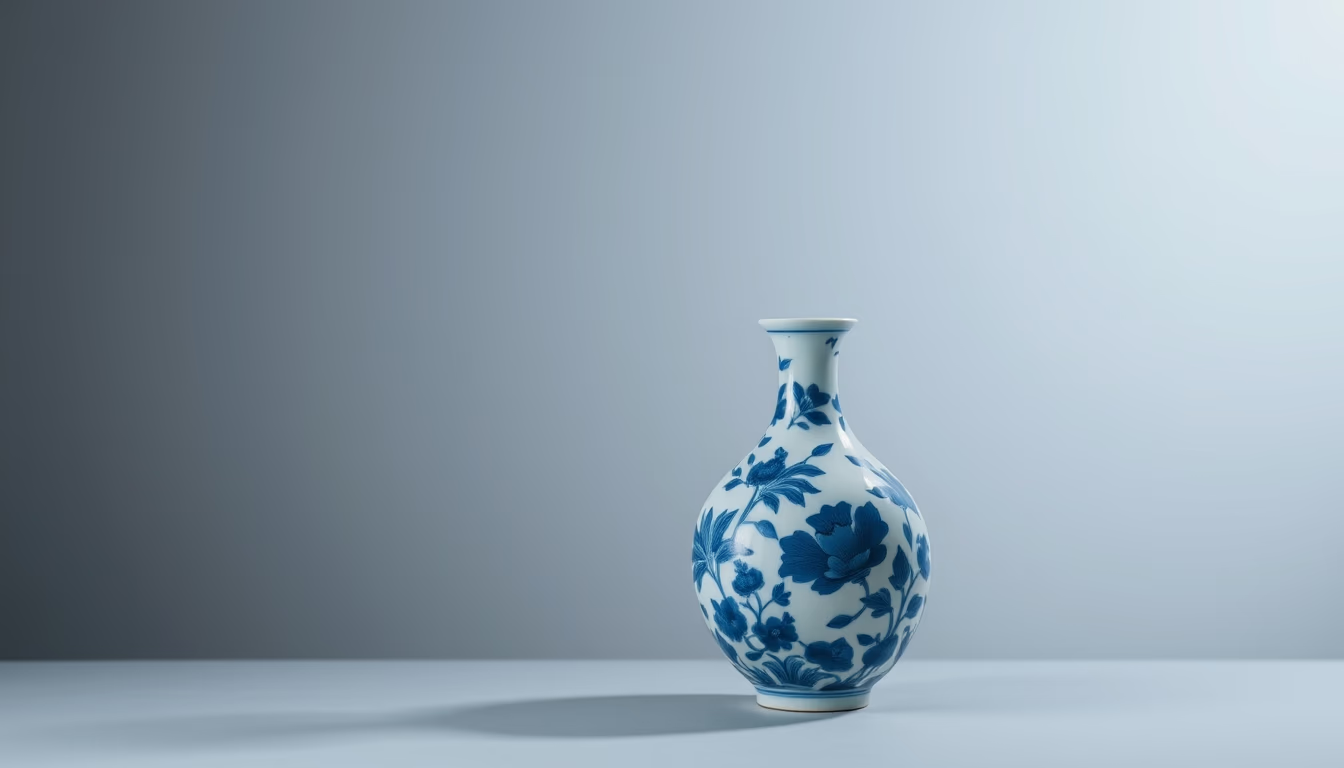
Porcelain blue white vase
1344×768 · AVIF · CC BY 4.0
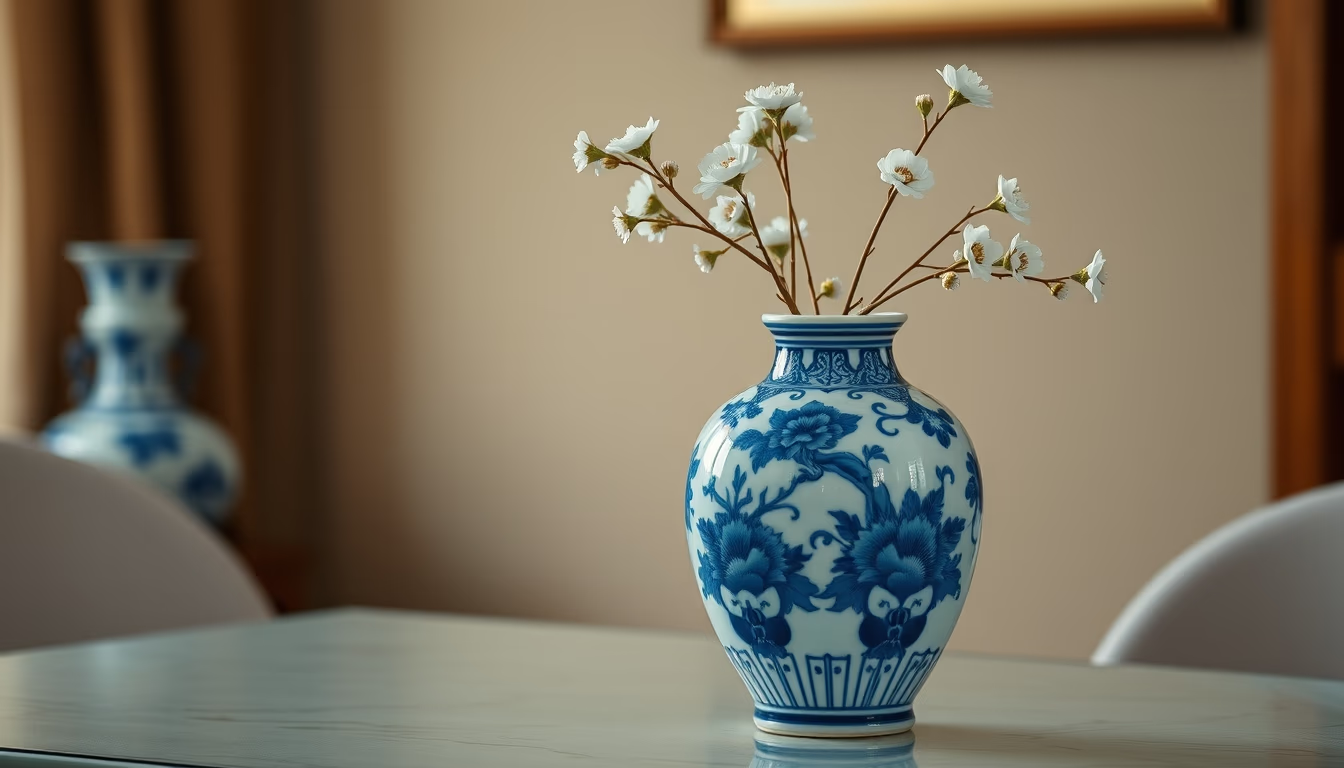
Blue and white porcelain vase, an iconic trade good that merged Chinese techniques with European demand.
About this subject
The blue and white porcelain vase is one of the most significant trade goods in global history. Originating in China during the Tang dynasty (7th century) and perfected under the Yuan dynasty (14th century), this glazed ceramic uses cobalt oxide to create designs under a transparent cover. The technique reached its peak during the Ming dynasty (1368-1644), with kilns in Jingdezhen, Jiangxi province, producing pieces exported worldwide, especially to Europe, the Middle East and Southeast Asia.
European demand for blue and white porcelain exploded in the 16th century, when the Dutch East India Company and other enterprises monopolized transport. The pieces were so prized that they inspired the production of faience and delftware in Holland and England, attempts to imitate the material. Chinese porcelain was stronger and more translucent, with designs mixing motifs like dragons, landscapes and flowers. The distinctive blue came from cobalt imported from Persia, and each historical period developed its own style, such as the Kangxi era patterns.
The trade of blue and white porcelain not only spread Chinese ceramics but also influenced global art and design. In Brazil, Chinese porcelain arrived during the colonial period, used as a luxury item and gift among elites. Today, these pieces are highly valued by collectors, and modern replicas continue to produce the style, which remains a symbol of elegance and cultural exchange. Contemporary production in Jingdezhen still follows traditional techniques, keeping this heritage alive.
Frequently Asked Questions
What is the origin of the blue color in Chinese porcelain?
The blue comes from cobalt oxide, which was imported from Persia. The mineral was ground and applied to the piece before glazing, resulting in the characteristic color after firing.
Why was Chinese porcelain so highly valued in Europe?
It was stronger, thinner and more translucent than contemporary European ceramics. Moreover, the exotic designs and underglaze painting technique were impossible to reproduce locally.
Where was blue and white porcelain produced?
The main production center was Jingdezhen in Jiangxi province, China. This city is known as the porcelain capital, with thousands of kilns that supplied global trade for centuries.
Direct URL
https://pub-c7d6a6ea828543ac903a74a341ccb2e1.r2.dev/imagens/porcelain-blue-white-vase-cinematic-wide-shot-fresh4.avifHow to credit
Include a visible link back to UtilizAí. Copy one of the snippets below:
<a href="https://xn--utiliza-eza.com/en/midia/imagens/porcelain-blue-white-vase-cinematic-wide-shot-fresh4">Porcelain blue white vase</a> by <a href="https://xn--utiliza-eza.com">UtilizAí</a>, licensed under <a href="https://creativecommons.org/licenses/by/4.0/">CC BY 4.0</a>.
[Porcelain blue white vase](https://xn--utiliza-eza.com/en/midia/imagens/porcelain-blue-white-vase-cinematic-wide-shot-fresh4) by [UtilizAí](https://xn--utiliza-eza.com), CC BY 4.0
License: CC-BY-4.0