Plant cell wall closeup
1344×768 · AVIF · CC BY 4.0
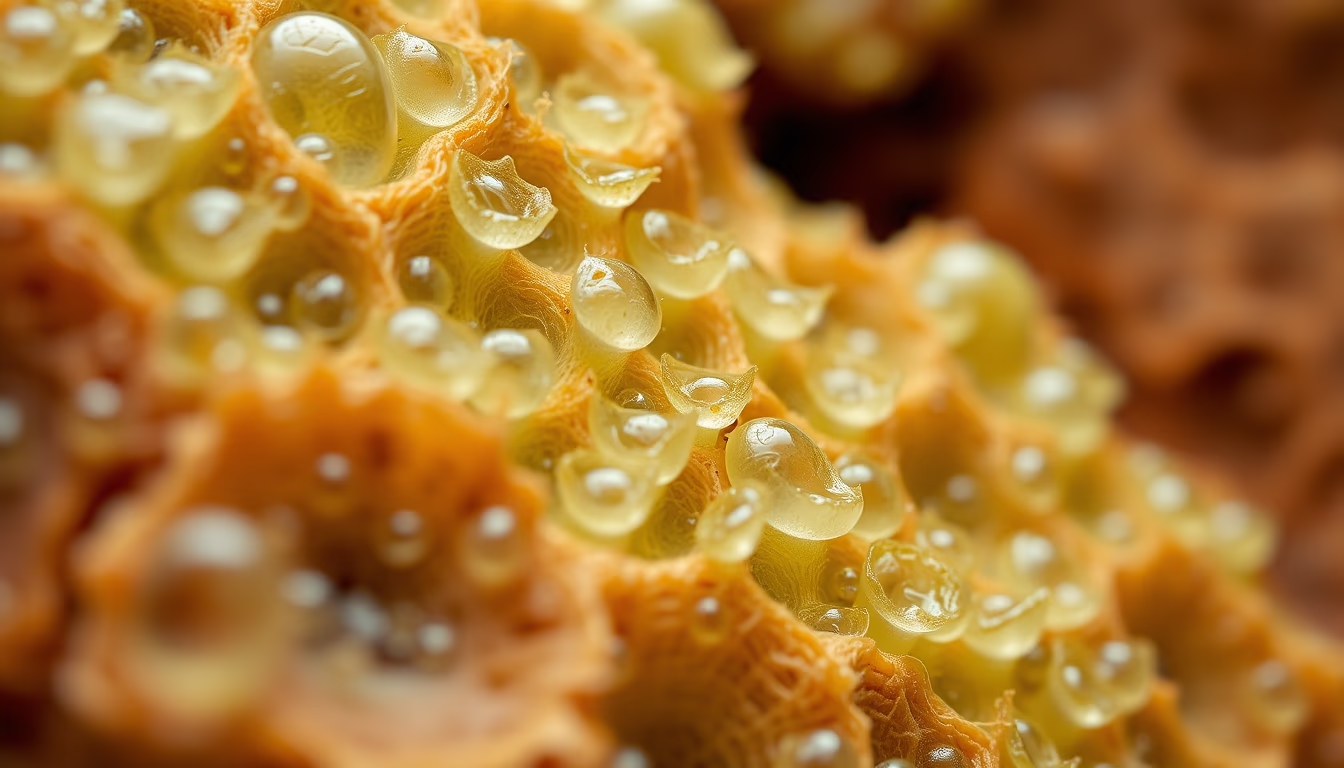
The plant cell wall is a rigid layer surrounding plant cells, composed mainly of cellulose, hemicellulose, and pectin, providing structural support and protection.
About this subject
The plant cell wall is a unique extracellular matrix present in all plants, algae, and some fungi. Its basic composition includes cellulose, hemicellulose, and pectin, forming a complex network of fibers. Cellulose, the most abundant organic polymer on Earth, organizes into crystalline microfibrils, providing tensile strength. Hemicellulose and pectin fill the spaces between microfibrils, conferring flexibility and cell-to-cell adhesion. In mature cells, a secondary wall may be deposited inside the primary one, often lignified, increasing rigidity and impermeability.
The primary function of the cell wall is to provide mechanical support, allowing plants to grow tall and withstand external forces like wind and rain. It also acts as a barrier against pathogens, blocking microbial entry. Moreover, the wall controls cell growth: its plasticity permits expansion during development. Plasmodesmata, channels that traverse the wall, enable communication and transport of substances between adjacent cells, essential for plant physiology.
The presence of a cell wall is a key difference between plant and animal cells. While animal cells have only the plasma membrane, plant cells have this additional layer that defines their polyhedral shape. Cell wall biosynthesis involves the deposition of polysaccharides by enzymes in the plasma membrane, a complex and regulated process. Interestingly, cellulose is resistant to digestion by most animals, being decomposed only by certain fungi, bacteria, and specialized microorganisms.
Practical applications of the cell wall are vast. Wood, rich in cellulose and lignin, is used in construction and furniture. Cellulose is a raw material for paper, textiles (viscose), and biofuels (cellulosic ethanol). Pectin is used in the food industry as a gelling agent. Studying cell walls is also crucial for understanding phytopathology, plant development, and biomass production.
Frequently Asked Questions
What is the plant cell wall?
It is a rigid layer outside the plasma membrane, composed of cellulose, hemicellulose, and pectin, responsible for structure and protection of plant cells.
What is the difference between primary and secondary wall?
The primary wall is thin and flexible, formed during growth. The secondary wall is thicker and deposited after maturation, rich in lignin, providing rigidity.
Why do plants need a cell wall?
To support the plant's structure, withstand osmotic pressure, and act as a barrier against pathogens. It also allows cell-to-cell transport via plasmodesmata.
Direct URL
https://pub-c7d6a6ea828543ac903a74a341ccb2e1.r2.dev/imagens/plant-cell-wall-closeup-national-geographic-style-p4.avifHow to credit
Include a visible link back to UtilizAí. Copy one of the snippets below:
<a href="https://xn--utiliza-eza.com/en/midia/imagens/plant-cell-wall-closeup-national-geographic-style-p4">Plant cell wall closeup</a> by <a href="https://xn--utiliza-eza.com">UtilizAí</a>, licensed under <a href="https://creativecommons.org/licenses/by/4.0/">CC BY 4.0</a>.
[Plant cell wall closeup](https://xn--utiliza-eza.com/en/midia/imagens/plant-cell-wall-closeup-national-geographic-style-p4) by [UtilizAí](https://xn--utiliza-eza.com), CC BY 4.0
License: CC-BY-4.0