Plant cell wall closeup
1344×768 · AVIF · CC BY 4.0
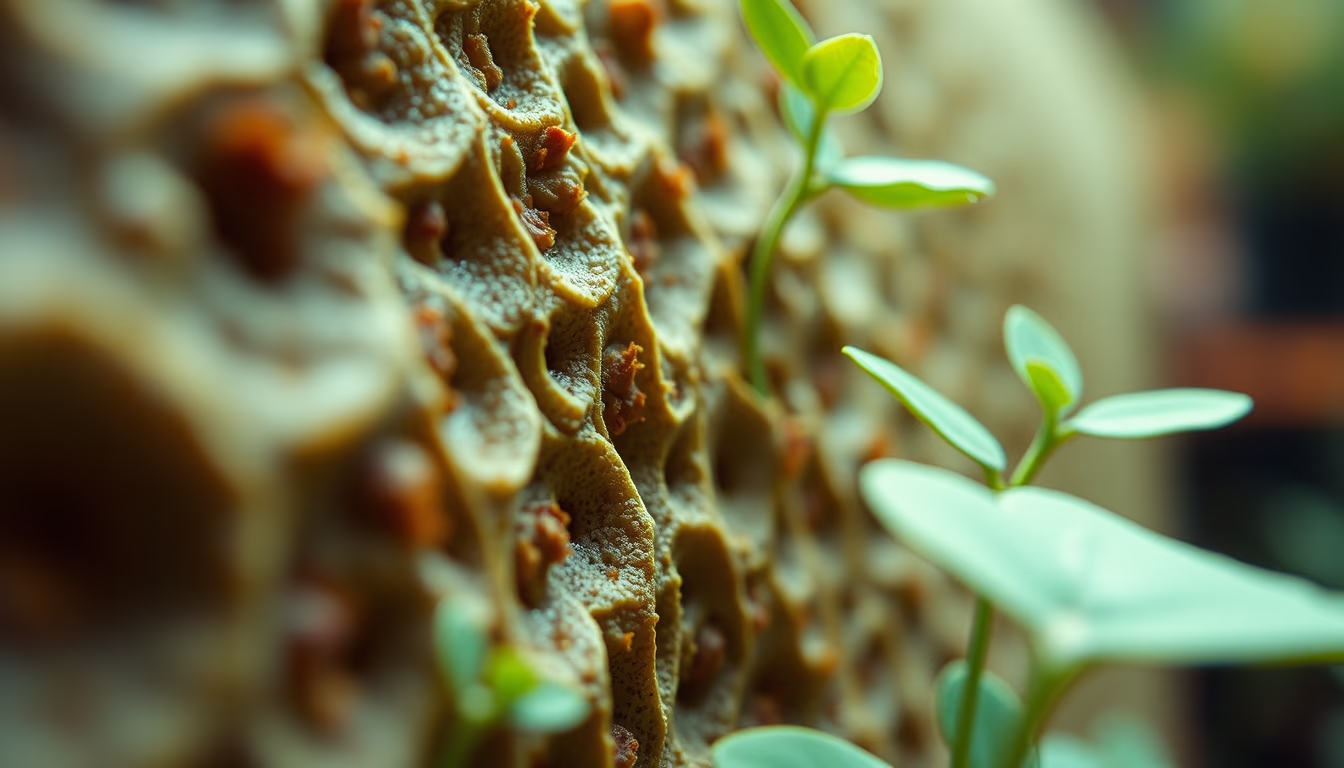
Plant cell wall: a microfibrillar cellulose structure that provides rigidity and protection to plant cells.
About this subject
The plant cell wall is a rigid extracellular layer surrounding the plasma membrane of plant cells, algae, and some prokaryotes. Unlike animal cell membranes, the cell wall is mainly composed of cellulose, hemicelluloses, and pectins, forming a complex and dynamic matrix. This structure provides mechanical support, defines cell shape, and protects against environmental stresses such as pathogens and osmotic fluctuations.
In land plants, the primary cell wall is deposited during cell growth and is flexible to allow expansion. The secondary wall, formed after maturation, is thicker and rich in lignin, offering additional strength. This lignification is crucial for supporting stems and trunks, as seen in trees. The orientation of cellulose microfibrils determines growth direction and the mechanical anisotropy of the wall.
Cell wall composition varies by species and cell type. For example, cotton fibers have a secondary wall almost entirely of cellulose, while xylem cells have high lignin deposition. Pectins in the middle lamella mediate adhesion between adjacent cells. The cell wall also participates in cell signaling and stress responses, making it an active component of plant development.
A notable fact: the cell wall is essential for water regulation in plants, preventing excessive water loss and enabling efficient transport through vascular tissues. Recent studies reveal that its nanoscale architecture can inspire new sustainable materials.
Frequently Asked Questions
What is the plant cell wall made of?
The plant cell wall is primarily composed of cellulose, hemicelluloses, and pectins. Some cells also contain lignin, structural proteins, and other polysaccharides.
What is the difference between primary and secondary cell walls?
The primary wall is deposited during cell growth, being thin and flexible. The secondary wall forms after maturation, is thicker, and often lignified, providing greater rigidity.
Why is the cell wall important for plants?
It provides mechanical support, protection against pathogens, regulates osmotic pressure, defines cell shape, and is crucial for water and nutrient transport.
Direct URL
https://pub-c7d6a6ea828543ac903a74a341ccb2e1.r2.dev/imagens/plant-cell-wall-closeup-film-grain-authentic-p7.avifHow to credit
Include a visible link back to UtilizAí. Copy one of the snippets below:
<a href="https://xn--utiliza-eza.com/en/midia/imagens/plant-cell-wall-closeup-film-grain-authentic-p7">Plant cell wall closeup</a> by <a href="https://xn--utiliza-eza.com">UtilizAí</a>, licensed under <a href="https://creativecommons.org/licenses/by/4.0/">CC BY 4.0</a>.
[Plant cell wall closeup](https://xn--utiliza-eza.com/en/midia/imagens/plant-cell-wall-closeup-film-grain-authentic-p7) by [UtilizAí](https://xn--utiliza-eza.com), CC BY 4.0
License: CC-BY-4.0