Piccolo small flute
1344×768 · AVIF · CC BY 4.0
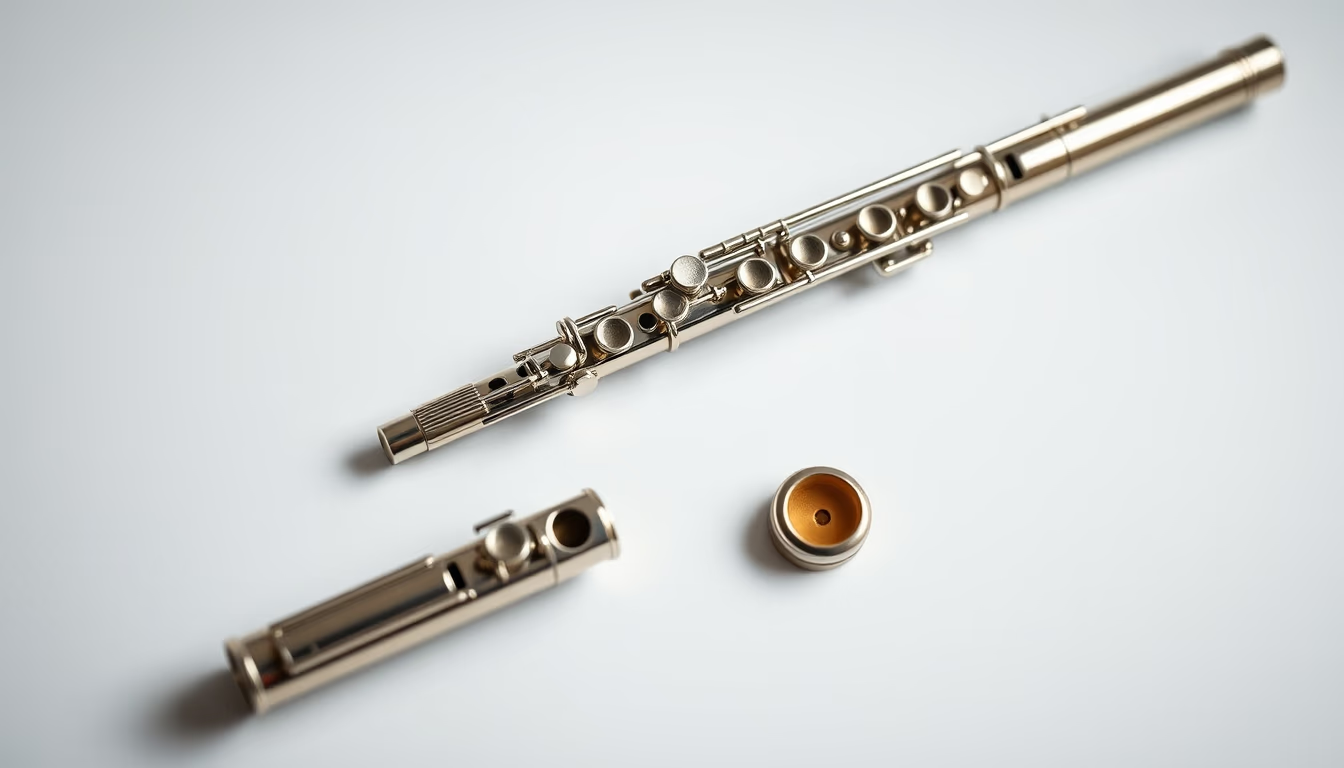
The piccolo is a woodwind instrument from the flute family, known for its high-pitched sound and prominent role in orchestras and bands.
About this subject
The piccolo, also known as the piccolo flute, is the smallest and highest-pitched instrument in the flute family. It is about half the length of a standard concert flute and sounds an octave higher. Its piercing tone makes it essential in symphony orchestras, especially for adding brilliance to musical passages. Beyond classical music, it is widely used in marching bands, where its timbre cuts through the sound of other instruments.
Historically, the modern piccolo evolved from military flutes of the 18th century. During the Romantic period, composers like Beethoven and Tchaikovsky employed the piccolo for dramatic effects. For instance, Tchaikovsky's famous “Dance of the Flutes” from “The Nutcracker” features the instrument prominently. In the 20th century, it became a staple in film scores and even jazz, with musicians like Herbie Mann exploring its possibilities.
Traditionally made of wood (such as grenadilla) or metal (silver or nickel), the piccolo demands high precision from the player due to its small embouchure and the need for pitch control. Unlike the flute, it does not have keys for all chromatic notes, requiring advanced technique. Today, professional models can cost thousands of dollars and are custom-made for orchestras.
Interestingly, despite its small size, the piccolo is one of the most physically demanding instruments. The intense airflow and pressure needed to produce the highest notes can cause rapid fatigue. Therefore, in orchestras, the flutist often alternates between flute and piccolo, being a specialized musician.
Frequently Asked Questions
What is the difference between a flute and a piccolo?
The piccolo is smaller and sounds an octave higher than the concert flute. Its embouchure is smaller, requiring more control, and it is often made of wood or metal, while the flute is typically metal.
In which musical genres is the piccolo most commonly used?
The piccolo is essential in symphony orchestras, marching bands, and chamber music. It also appears in film scores, jazz, and occasionally in rock, such as in songs by the Beatles.
Is the piccolo difficult to play?
Yes, due to its small size and the need for precise embouchure. It requires great breath control and fast fingering. It is considered one of the most challenging wind instruments.
Direct URL
https://pub-c7d6a6ea828543ac903a74a341ccb2e1.r2.dev/imagens/piccolo-small-flute-isometric-flat-lay-p5.avifHow to credit
Include a visible link back to UtilizAí. Copy one of the snippets below:
<a href="https://xn--utiliza-eza.com/en/midia/imagens/piccolo-small-flute-isometric-flat-lay-p5">Piccolo small flute</a> by <a href="https://xn--utiliza-eza.com">UtilizAí</a>, licensed under <a href="https://creativecommons.org/licenses/by/4.0/">CC BY 4.0</a>.
[Piccolo small flute](https://xn--utiliza-eza.com/en/midia/imagens/piccolo-small-flute-isometric-flat-lay-p5) by [UtilizAí](https://xn--utiliza-eza.com), CC BY 4.0
License: CC-BY-4.0