Pharmaceutical research lab
1344×768 · AVIF · CC BY 4.0
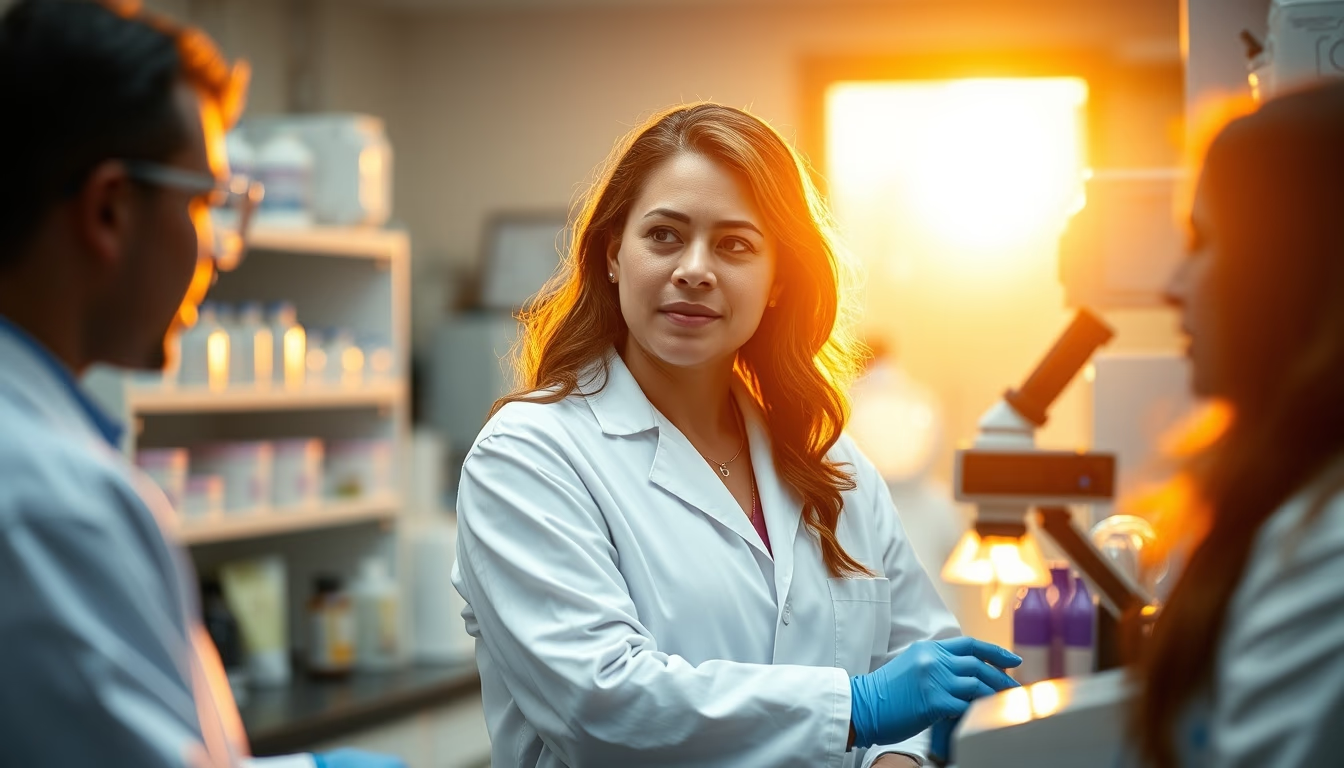
Pharmaceutical research labs are facilities where scientists develop new drugs, conduct efficacy and safety tests, and advance modern medicine.
About this subject
Pharmaceutical research labs play a crucial role in the development of new drugs and therapies. These controlled environments feature state-of-the-art equipment such as chromatographs, mass spectrometers, and automated synthesis systems, enabling precise analysis of chemical and biological compounds. Research in these labs follows rigorous biosafety protocols, including laminar flow hoods and containment rooms, to protect both researchers and samples. In Brazil, institutions like the Oswaldo Cruz Foundation (Fiocruz) and the Butantan Institute have pharmaceutical research labs that were fundamental in developing national vaccines and medicines.
The daily routine in a pharmaceutical research lab ranges from synthesizing new molecules to preclinical testing in cellular and animal models. Each step requires meticulous documentation and compliance with Good Laboratory Practices (GLP). After the discovery of a promising candidate, the galenic development phase begins, where the ideal pharmaceutical form, such as tablets or injectables, is determined. Pharmacokinetics and toxicology are evaluated before clinical trials in humans, which can take years and involve thousands of volunteers.
Historically, labs such as those at Pfizer and Moderna accelerated the development of COVID-19 vaccines using mRNA platforms that demanded intensive lab research. These spaces are also centers for biotechnology innovation, studying drug-receptor interactions through molecular modeling. The integration of artificial intelligence and robotics has increased efficiency, enabling the screening of millions of compounds in days. However, challenges like antimicrobial resistance and neglected diseases continue to drive global research.
Professional training for working in these labs is multidisciplinary, covering pharmacy, chemistry, biology, and engineering. Collaboration among universities, industry, and government is essential to transform scientific discoveries into accessible products. Countries like Switzerland, the United States, and Germany lead in pharmaceutical R&D investment, but Brazil has advanced with technology parks and innovation incentives. Maintaining high ethical and quality standards distinguishes a pharmaceutical research lab from a mere analysis facility.
Frequently Asked Questions
What is the importance of pharmaceutical research labs in public health?
They are essential for discovering new drugs, vaccines, and therapies that treat diseases, improve quality of life, and increase life expectancy.
What equipment is commonly found in a pharmaceutical research lab?
Equipment such as chromatographs, mass spectrometers, centrifuges, laminar flow hoods, incubators, and automated synthesis systems are widely used for compound analysis and development.
How does a drug go from the lab to the market?
After laboratory research, the candidate undergoes preclinical tests, clinical trials (phases I, II, and III), regulatory review, and approval by agencies like ANVISA or FDA before being marketed.
Direct URL
https://pub-c7d6a6ea828543ac903a74a341ccb2e1.r2.dev/imagens/pharmaceutical-research-lab-travel-photography-p8.avifHow to credit
Include a visible link back to UtilizAí. Copy one of the snippets below:
<a href="https://xn--utiliza-eza.com/en/midia/imagens/pharmaceutical-research-lab-travel-photography-p8">Pharmaceutical research lab</a> by <a href="https://xn--utiliza-eza.com">UtilizAí</a>, licensed under <a href="https://creativecommons.org/licenses/by/4.0/">CC BY 4.0</a>.
[Pharmaceutical research lab](https://xn--utiliza-eza.com/en/midia/imagens/pharmaceutical-research-lab-travel-photography-p8) by [UtilizAí](https://xn--utiliza-eza.com), CC BY 4.0
License: CC-BY-4.0