Pharmaceutical research lab
1344×768 · AVIF · CC BY 4.0
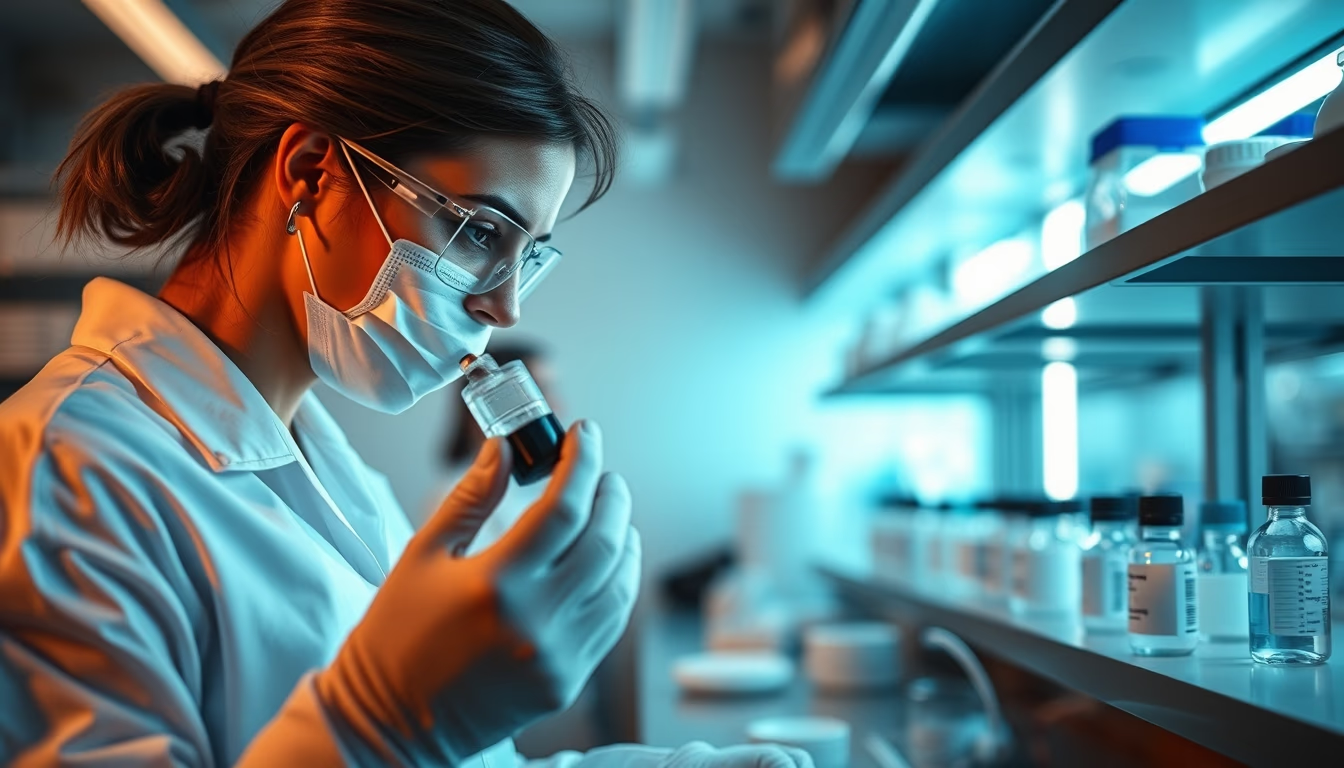
Pharmaceutical research labs are controlled environments where scientists develop new drugs, conduct efficacy and safety tests, and contribute to global health advancements.
About this subject
A pharmaceutical research lab is the epicenter of drug development. In these highly regulated environments, multidisciplinary teams of chemists, biologists, and pharmacists work to transform promising molecules into approved therapies. The process begins with chemical synthesis or natural compound extraction, followed by in vitro tests to assess biological activity and initial toxicity. Essential equipment includes high-performance liquid chromatographs (HPLC), mass spectrometers, and CO2 incubators for cell culturing.
Infrastructure includes fume hoods for safe handling of volatile substances, laminar flow cabinets for sterile work, and controlled storage systems such as -80°C freezers for biological samples. Good Laboratory Practices (GLP) and Good Manufacturing Practices (GMP) ensure traceability and reproducibility. Historically, Alexander Fleming's lab in 1928, with its accidental discovery of penicillin, marked the start of the modern antibiotic era.
Today, pharmaceutical research incorporates artificial intelligence for virtual compound screening, structural biology for rational drug design, and gene-editing techniques like CRISPR for advanced therapies. In Brazil, public labs such as Farmanguinhos/Fiocruz and private ones like EMS lead research into generic and innovative drugs. The COVID-19 pandemic accelerated the adoption of mRNA platforms and decentralized clinical trials, showcasing lab adaptability.
A lesser-known aspect is analytical method validation, which requires rigorous precision, accuracy, and robustness testing before any test can be used for quality control. Additionally, sustainability gains ground with green chemistry, aiming to reduce toxic solvents and waste. The pharmaceutical research lab is thus an innovation ecosystem combining basic science, strict regulation, and a commitment to public health.
Frequently Asked Questions
How does a pharmaceutical research lab operate?
It operates in stages: target discovery, compound screening, lead optimization, preclinical in vitro and in vivo tests, followed by clinical trials. Each step follows strict quality and safety protocols.
What are the main pieces of equipment found in these labs?
HPLC chromatographs, mass spectrometers, confocal microscopes, CO2 incubators, laminar flow hoods, and ultralow-temperature freezers (-80°C) are common for analysis and cell culture.
Why is pharmaceutical research important for society?
It develops drugs that treat diseases, improve quality of life, and increase life expectancy. Without it, there would be no vaccines, antibiotics, or therapies for cancer and chronic diseases.
Direct URL
https://pub-c7d6a6ea828543ac903a74a341ccb2e1.r2.dev/imagens/pharmaceutical-research-lab-fine-art-photography-p5.avifHow to credit
Include a visible link back to UtilizAí. Copy one of the snippets below:
<a href="https://xn--utiliza-eza.com/en/midia/imagens/pharmaceutical-research-lab-fine-art-photography-p5">Pharmaceutical research lab</a> by <a href="https://xn--utiliza-eza.com">UtilizAí</a>, licensed under <a href="https://creativecommons.org/licenses/by/4.0/">CC BY 4.0</a>.
[Pharmaceutical research lab](https://xn--utiliza-eza.com/en/midia/imagens/pharmaceutical-research-lab-fine-art-photography-p5) by [UtilizAí](https://xn--utiliza-eza.com), CC BY 4.0
License: CC-BY-4.0