Pharmaceutical research lab
1344×768 · AVIF · CC BY 4.0
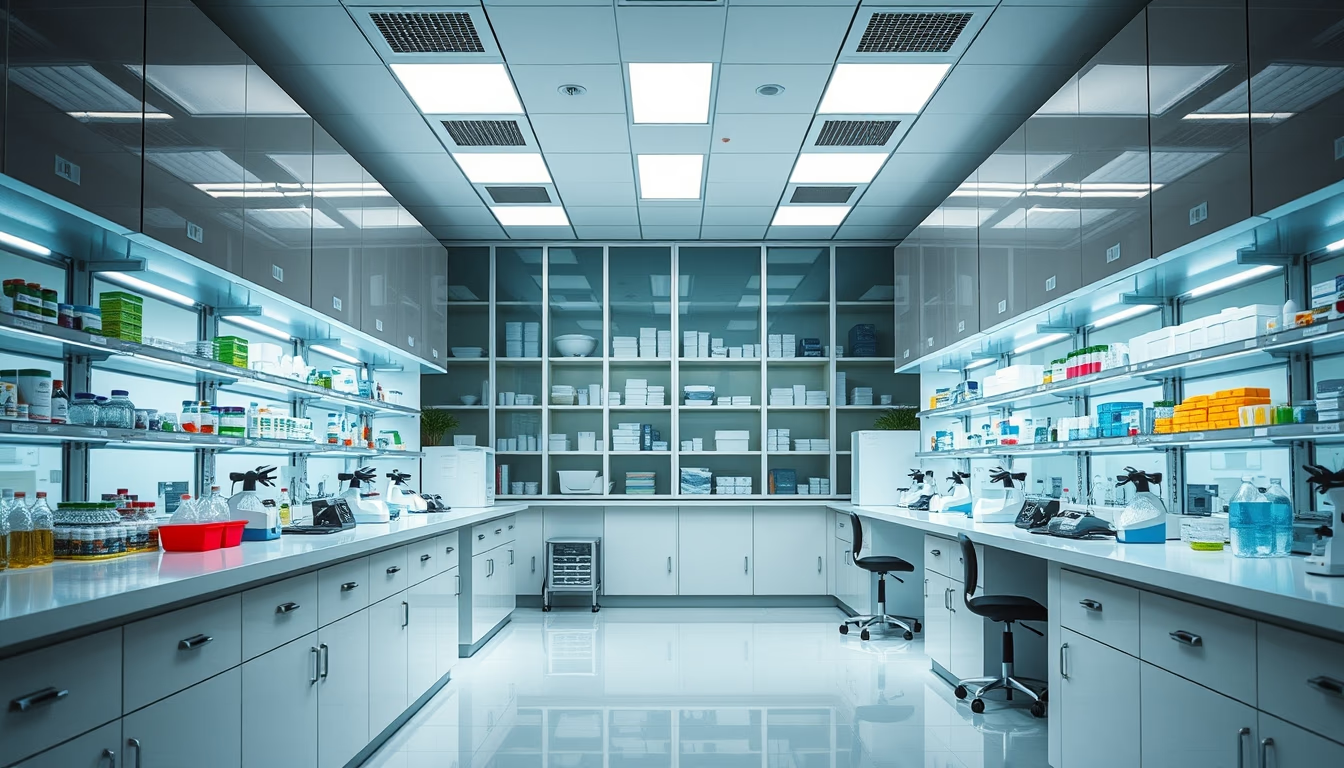
Pharmaceutical research labs blend functional architectural design with strict safety standards to drive new drug discoveries.
About this subject
Pharmaceutical research labs are highly specialized facilities designed to house experiments ranging from chemical synthesis to biological assays. The architectural layout prioritizes efficient workflows, with separate zones for cleanrooms, reagent storage, and high-precision equipment such as mass spectrometers and chromatographs. Good Manufacturing Practices (GMP) and ISO 14644 cleanroom standards are strictly followed, requiring ventilation systems with HEPA filters, differential pressurization, and chemical-resistant materials.
The design of these spaces has evolved significantly in recent decades. Previously, labs were enclosed and compartmentalized; today, they tend to be open and modular, fostering collaboration among multidisciplinary teams. Natural lighting and temperature control are carefully planned to ensure experimental accuracy and researcher comfort. Sustainability is also gaining ground, with solvent recycling systems and waste reduction initiatives.
The importance of these labs is evident in the development of vaccines, antibiotics, and innovative therapies. For instance, during the COVID-19 pandemic, pharmaceutical labs worldwide accelerated research using flexible designs that allowed rapid adaptation to new protocols. Interestingly, many centers feature biosafety level 3 (BSL-3) labs for handling dangerous pathogens, requiring decontamination systems and controlled access.
In Brazil, the pharmaceutical industrial complex includes labs in universities, research centers, and industries such as Fiocruz and Butantan. The architecture of these facilities reflects the need for a balance between innovation and safety, designed by laboratory engineering specialists. Every detail, from stainless steel benches to emergency exits, is intended to minimize risks and maximize scientific efficiency.
Frequently Asked Questions
What are the main safety standards in a pharmaceutical research lab?
Labs follow GMP (Good Manufacturing Practices) and ISO 14644 cleanroom standards, along with HEPA-filtered ventilation, differential pressurization, and chemical-resistant materials. Biosafety levels (BSL-2 and BSL-3) are used for handling hazardous agents.
How does architectural design influence pharmaceutical research efficiency?
A well-planned layout optimizes workflow by separating preparation, analysis, and storage zones. Modular and open labs facilitate team collaboration, while natural lighting and climate control ensure experimental accuracy and researcher comfort.
What equipment is commonly found in pharmaceutical research labs?
Equipment such as mass spectrometers, chromatographs, electron microscopes, bioreactors, and water purification systems are essential. Biological safety cabinets and ultra-low temperature freezers are used to store samples and reagents.
Direct URL
https://pub-c7d6a6ea828543ac903a74a341ccb2e1.r2.dev/imagens/pharmaceutical-research-lab-architectural-photography-p11.avifHow to credit
Include a visible link back to UtilizAí. Copy one of the snippets below:
<a href="https://xn--utiliza-eza.com/en/midia/imagens/pharmaceutical-research-lab-architectural-photography-p11">Pharmaceutical research lab</a> by <a href="https://xn--utiliza-eza.com">UtilizAí</a>, licensed under <a href="https://creativecommons.org/licenses/by/4.0/">CC BY 4.0</a>.
[Pharmaceutical research lab](https://xn--utiliza-eza.com/en/midia/imagens/pharmaceutical-research-lab-architectural-photography-p11) by [UtilizAí](https://xn--utiliza-eza.com), CC BY 4.0
License: CC-BY-4.0