Pharmaceutical research lab
1344×768 · AVIF · CC BY 4.0
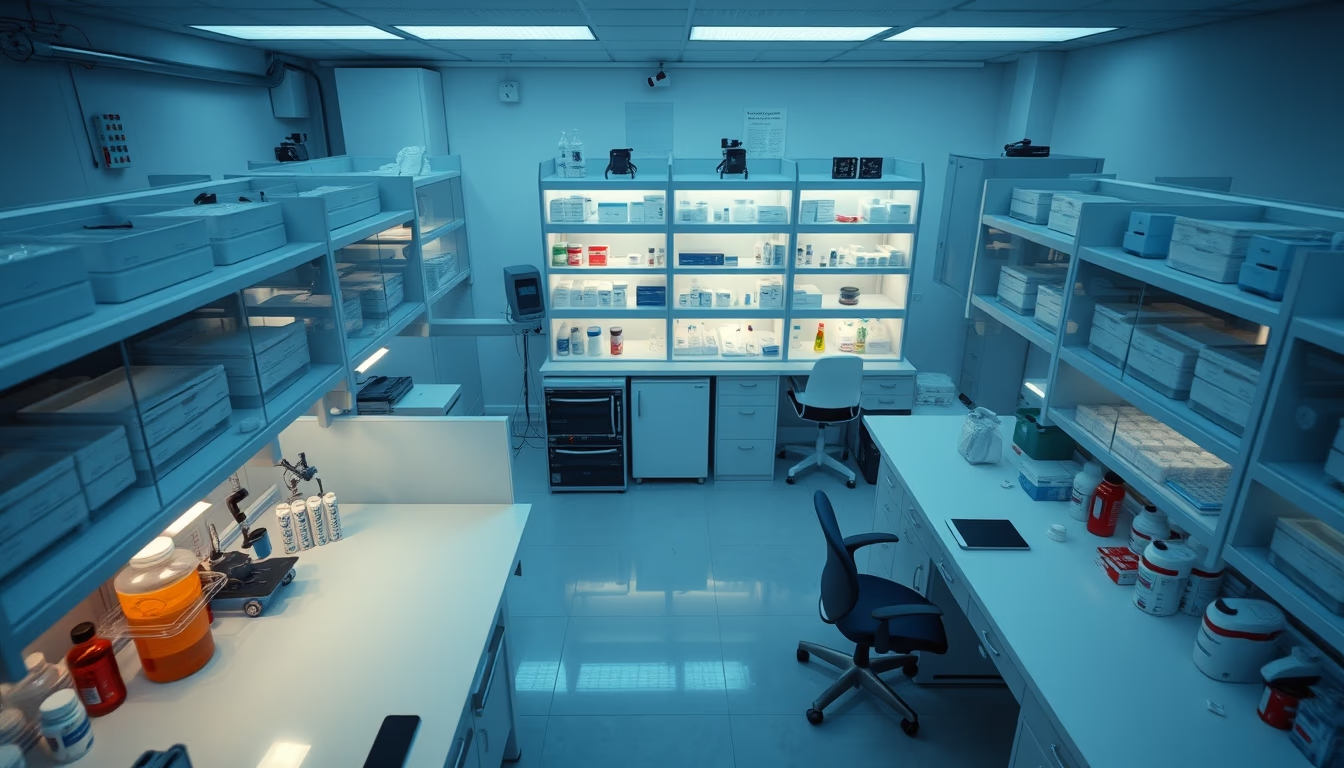
Pharmaceutical research labs are controlled environments where scientists develop new drugs, conduct efficacy and safety tests, and study chemical and biological interactions to innovate in healthcare.
About this subject
Pharmaceutical research labs play a central role in drug development. Multidisciplinary teams of chemists, pharmacists, and biologists work on synthesizing new molecules, formulating drugs, and conducting preclinical assays. These labs follow strict quality and safety protocols, often certified by agencies like ANVISA in Brazil or the FDA in the United States.
Equipment such as laminar flow hoods, high-performance liquid chromatographs (HPLC), mass spectrometers, and incubators are essential for precise analyses. Controlled conditions of temperature, humidity, and pressure are maintained to ensure reproducibility. Techniques like cell culture, molecular biology, and enzymatic assays are routine.
Regulation is strict: good laboratory practices (GLP) and good manufacturing practices (GMP) are mandatory. Every step is documented, from synthesis to animal testing (preclinical phase). Traceability of reagents and samples is maintained through computerized systems.
Currently, pharmaceutical labs face challenges such as antimicrobial resistance, which demands new classes of antibiotics, and personalized medicine, which requires specific biomarkers. Research also focuses on controlled-release formulations and nanotechnology for greater efficacy and fewer side effects.
Frequently Asked Questions
What are the main pieces of equipment in a pharmaceutical lab?
Key equipment includes laminar flow hoods, high-performance liquid chromatographs (HPLC), mass spectrometers, analytical balances, ovens, and incubators. Each is used for specific analyses such as compound purification or substance quantification.
How is safety ensured in these labs?
Safety is ensured through constant training, use of personal protective equipment (PPE) like gloves and lab coats, exhaust systems, chemical safety hoods, and emergency plans. Strict rules for waste storage and disposal are also enforced.
Why are pharmaceutical labs important for public health?
They are essential for developing new drugs that treat diseases, improve quality of life, and combat epidemics. They also perform quality tests on existing medications, ensuring efficacy and safety for the population.
Direct URL
https://pub-c7d6a6ea828543ac903a74a341ccb2e1.r2.dev/imagens/pharmaceutical-research-lab-aerial-drone-shot-p2.avifHow to credit
Include a visible link back to UtilizAí. Copy one of the snippets below:
<a href="https://xn--utiliza-eza.com/en/midia/imagens/pharmaceutical-research-lab-aerial-drone-shot-p2">Pharmaceutical research lab</a> by <a href="https://xn--utiliza-eza.com">UtilizAí</a>, licensed under <a href="https://creativecommons.org/licenses/by/4.0/">CC BY 4.0</a>.
[Pharmaceutical research lab](https://xn--utiliza-eza.com/en/midia/imagens/pharmaceutical-research-lab-aerial-drone-shot-p2) by [UtilizAí](https://xn--utiliza-eza.com), CC BY 4.0
License: CC-BY-4.0