Petra treasury jordan
1344×768 · AVIF · CC BY 4.0
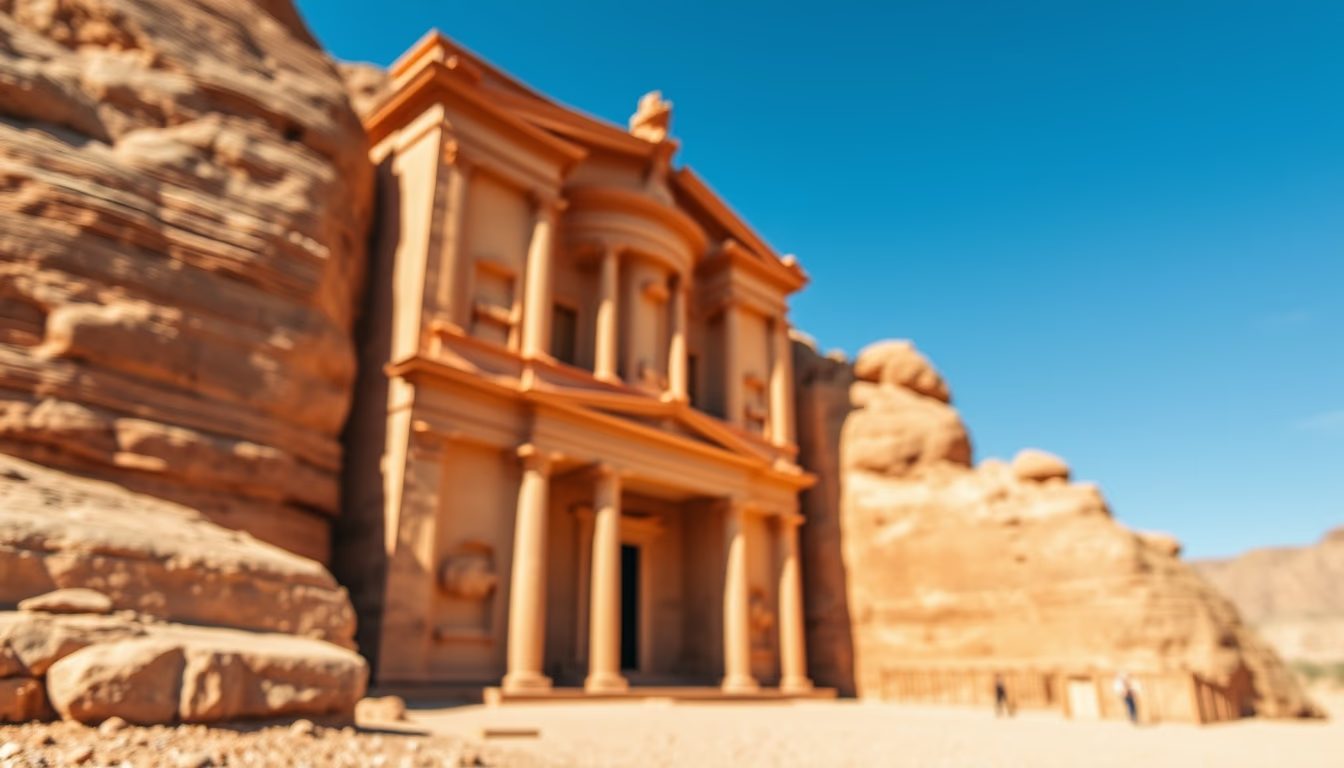
The Treasury of Petra, carved into rose-colored sandstone in the 1st century BC, is one of the most iconic monuments of the ancient Nabatean city in Jordan.
About this subject
The Treasury of Petra, also known as Al-Khazneh, is a monumental facade carved directly into the sandstone rock of the city of Petra in southern Jordan. Built probably in the 1st century BC, during the peak of the Nabatean Kingdom, the monument served as a royal tomb, not a treasury, despite its popular name. The facade, approximately 39 meters high, combines Greco-Roman and Oriental architectural styles, reflecting the influence of trade routes controlled by the Nabateans.
Petra was the capital of the Nabatean kingdom and a major center for trade of spices, silk, and incense. The city was rediscovered by Swiss explorer Johann Ludwig Burckhardt in 1812, remaining unknown to the Western world for centuries. Since 1985, Petra has been a UNESCO World Heritage Site and one of the New Seven Wonders of the World. The Treasury is the first major structure visitors see when walking through the Siq, a narrow gorge that leads to the site.
Interestingly, the name "Treasury" derives from Bedouin legends that believed an urn at the top of the facade contained gold and jewels. In reality, the urn is solid stone and shows bullet marks, resulting from attempts to hit it to knock down the supposed treasure. The monument became even more famous for its appearance in the film "Indiana Jones and the Last Crusade" (1989), where it is depicted as the entrance to the Holy Grail.
The Treasury facade features refined details, such as Corinthian columns, pediments, and statues of deities, including the Egyptian goddess Isis and the Greek goddess Tyche. Despite natural erosion and human action, much of the reliefs are still preserved. Archaeological studies indicate that the interior consists of a main chamber and three side chambers, all empty, suggesting the tombs were looted in antiquity.
Frequently Asked Questions
How was the Treasury of Petra built?
The Treasury was excavated from top to bottom directly into the sandstone rock using chisels and hammers. Workers started at the top and descended, creating scaffolding on the rock. The precision of the lines and symmetry show great engineering and architectural knowledge.
Why is it called the Treasury if there was no treasure?
The name comes from Bedouin legends that claimed an urn at the top of the facade contained gold or valuables. In reality, the urn is solid stone. Bullet marks on the urn are from attempts to knock it down to obtain the supposed treasure.
What is inside the Treasury of Petra?
The interior consists of a main chamber about 12 meters high and three smaller side chambers. All are currently empty. Originally, they likely held sarcophagi and offerings, but were looted over the centuries.
Direct URL
https://pub-c7d6a6ea828543ac903a74a341ccb2e1.r2.dev/imagens/petra-treasury-jordan-tilt-shift-miniature-p2.avifHow to credit
Include a visible link back to UtilizAí. Copy one of the snippets below:
<a href="https://xn--utiliza-eza.com/en/midia/imagens/petra-treasury-jordan-tilt-shift-miniature-p2">Petra treasury jordan</a> by <a href="https://xn--utiliza-eza.com">UtilizAí</a>, licensed under <a href="https://creativecommons.org/licenses/by/4.0/">CC BY 4.0</a>.
[Petra treasury jordan](https://xn--utiliza-eza.com/en/midia/imagens/petra-treasury-jordan-tilt-shift-miniature-p2) by [UtilizAí](https://xn--utiliza-eza.com), CC BY 4.0
License: CC-BY-4.0