Petra treasury jordan
1344×768 · AVIF · CC BY 4.0
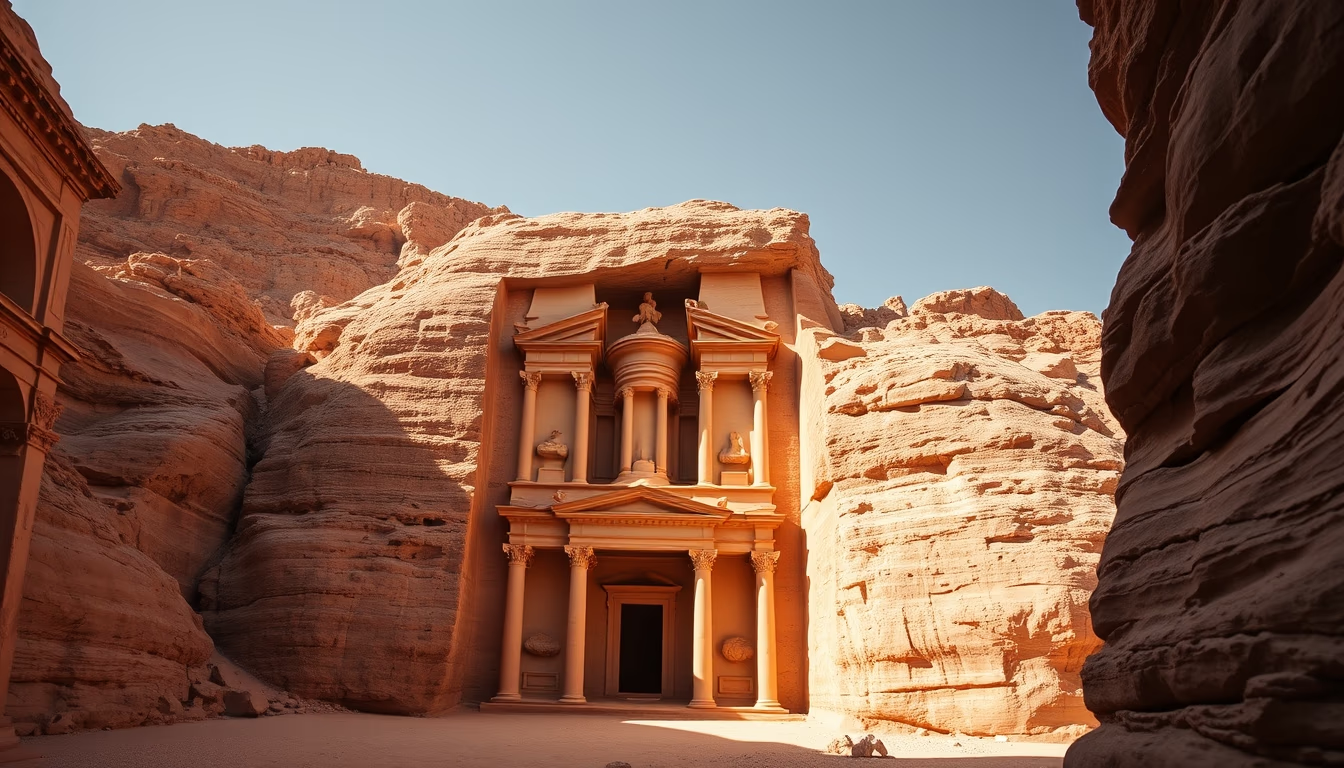
The Treasury of Petra, a monumental rock-cut facade in Jordan, is an icon of Nabataean architecture and a UNESCO World Heritage site.
About this subject
Petra, the lost city of the Nabataeans, is located in southern Jordan, hidden in a valley of sandstone mountains. The Treasury, or Al-Khazneh, is its most famous structure, carved directly into the rock face around the 1st century BCE. It served as a royal tomb, possibly for King Aretas IV, and later acquired the name Treasury due to legends that an urn at the top held hidden riches. In reality, the urn is a solid stone piece.
The facade features a monumental Greco-Roman influenced design, with Corinthian columns, a broken pediment, and a central tholos. The structure measures about 40 meters high and 28 meters wide, carved with incredible precision. The interior is relatively simple, a square chamber with niches. The rock color ranges from pink to orange depending on sunlight, making the site even more impressive.
Petra was designated a UNESCO World Heritage Site in 1985 and is one of the New Seven Wonders of the World since 2007. The archaeological site is accessed through a narrow gorge called the Siq, which extends over one kilometer. The Treasury appears dramatically and suddenly at the end of the Siq, providing a visual impact that attracts millions of tourists annually. Unfortunately, erosion and humidity threaten the facade's conservation, leading to ongoing preservation efforts by UNESCO and the Jordanian government.
The Petra region also features advanced hydraulic systems, including channels and cisterns to manage water in a desert environment. Nabataean culture thrived as a center for trade of incense, spices, and silk, connecting the Middle East. The Treasury of Petra continues to inspire artists, filmmakers, and travelers, appearing in films such as Indiana Jones and the Last Crusade, where it was used as a setting for the Temple of the Holy Grail.
Frequently Asked Questions
What is the Treasury of Petra and what was its original function?
The Treasury of Petra (Al-Khazneh) is a monumental rock-cut tomb built by the Nabataeans in the 1st century BCE. It served as a royal mausoleum, possibly for King Aretas IV. The name "Treasury" comes from legends about hidden riches in the urn at the top, which is actually solid stone.
How to get to the Treasury of Petra and what is the best time to visit?
Petra is in southern Jordan. Access is through the Siq, a narrow gorge about 1.2 km long ending at the Treasury facade. The best time to visit is spring (March to May) or autumn (September to November) when temperatures are mild. Avoid summer due to extreme heat.
Why is the Treasury of Petra considered an architectural wonder?
The facade, 40 meters high and 28 meters wide, was carved directly into sandstone with precise techniques. It blends Hellenistic and Oriental influences, featuring Corinthian columns and a broken pediment. Additionally, the rock color shifts with sunlight, creating a unique visual spectacle.
Direct URL
https://pub-c7d6a6ea828543ac903a74a341ccb2e1.r2.dev/imagens/petra-treasury-jordan-magazine-editorial-p10.avifHow to credit
Include a visible link back to UtilizAí. Copy one of the snippets below:
<a href="https://xn--utiliza-eza.com/en/midia/imagens/petra-treasury-jordan-magazine-editorial-p10">Petra treasury jordan</a> by <a href="https://xn--utiliza-eza.com">UtilizAí</a>, licensed under <a href="https://creativecommons.org/licenses/by/4.0/">CC BY 4.0</a>.
[Petra treasury jordan](https://xn--utiliza-eza.com/en/midia/imagens/petra-treasury-jordan-magazine-editorial-p10) by [UtilizAí](https://xn--utiliza-eza.com), CC BY 4.0
License: CC-BY-4.0