Petra treasury jordan
1344×768 · AVIF · CC BY 4.0
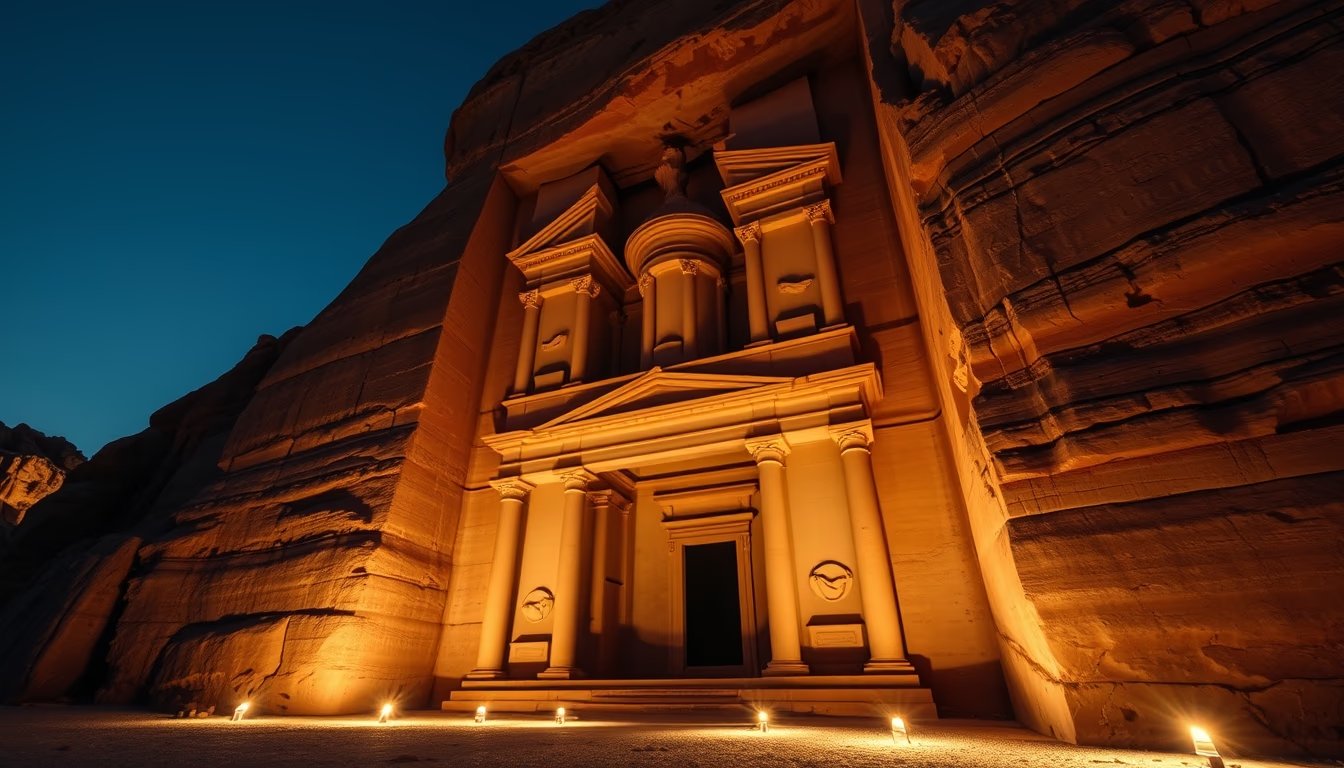
The Treasury of Petra (Al-Khazneh) is a monumental rock-cut façade, symbol of the ancient Nabatean city in Jordan.
About this subject
The Treasury of Petra, known as Al-Khazneh, is one of the most iconic structures of the ancient Nabatean city of Petra in southern Jordan. Carved directly into the face of a rose-colored sandstone cliff, the façade measures approximately 39 meters in height and 25 meters in width. It is believed to have been built in the 1st century AD as a royal mausoleum, possibly for King Aretas IV. The name "Treasury" comes from Bedouin legends that the Nabateans hid treasures in the urn atop the structure, visible from bullet marks left by locals trying to break it open for gold.
Architecturally, Al-Khazneh blends Hellenistic influences with Nabatean elements. The Corinthian columns, triangular pediments, and statues of mythological figures such as the Greek goddess Tyche reflect the cosmopolitan nature of the Nabatean civilization. The façade has two levels: the lower with six columns and a tympanum, and the upper featuring a tholos (circular structure) flanked by eagles. Inside, there are three burial chambers, with the central being the most elaborate.
Petra served as the capital of the Nabatean kingdom from the 4th century BC to the 2nd century AD, thriving as a hub for spice, incense, and silk trade. The city was rediscovered by Swiss explorer Johann Ludwig Burckhardt in 1812 and has since become one of the most visited archaeological sites worldwide. In 1985, Petra was designated a UNESCO World Heritage Site, and the Treasury is often regarded as its centerpiece.
Interestingly, the Treasury of Petra gained global fame after appearing in the film "Indiana Jones and the Last Crusade" (1989) as the temple housing the Holy Grail. Despite its imposing appearance, the façade was carved top-down, requiring scaffolding and precision. The local sandstone, rich in iron oxide, produces pinkish hues that change with sunlight, making the monument ever more captivating throughout the day.
Frequently Asked Questions
What is the Treasury of Petra?
The Treasury of Petra, or Al-Khazneh, is a monumental rock-cut façade in the ancient city of Petra, Jordan, likely built as a royal mausoleum in the 1st century AD.
Why is it called the Treasury?
The name comes from Bedouin legends that a treasure was hidden in the urn on top. Bullet marks on the monument are from attempts to break the rock to reach the supposed gold.
What is the cultural significance of Petra?
Petra was the capital of the Nabatean kingdom and a major trade hub. It is a UNESCO World Heritage Site since 1985 and a top archaeological attraction, famous for its rock-cut architecture and appearance in the film "Indiana Jones".
Direct URL
https://pub-c7d6a6ea828543ac903a74a341ccb2e1.r2.dev/imagens/petra-treasury-jordan-fine-art-photography-p9.avifHow to credit
Include a visible link back to UtilizAí. Copy one of the snippets below:
<a href="https://xn--utiliza-eza.com/en/midia/imagens/petra-treasury-jordan-fine-art-photography-p9">Petra treasury jordan</a> by <a href="https://xn--utiliza-eza.com">UtilizAí</a>, licensed under <a href="https://creativecommons.org/licenses/by/4.0/">CC BY 4.0</a>.
[Petra treasury jordan](https://xn--utiliza-eza.com/en/midia/imagens/petra-treasury-jordan-fine-art-photography-p9) by [UtilizAí](https://xn--utiliza-eza.com), CC BY 4.0
License: CC-BY-4.0