Petra treasury jordan
1344×768 · AVIF · CC BY 4.0
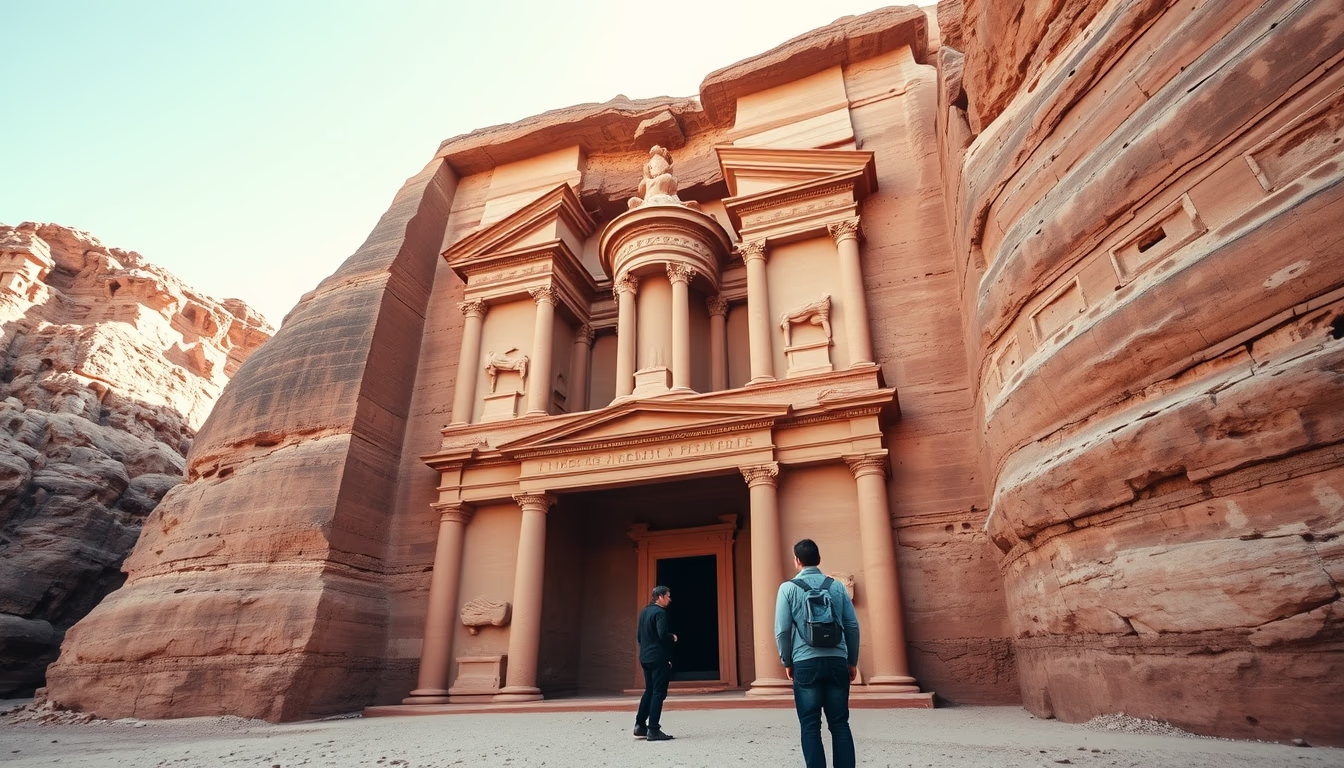
The Treasury of Petra (Al-Khazneh) is one of Jordan's most iconic monuments, carved into rock by the Nabataeans over two millennia ago.
About this subject
Al-Khazneh, also known as the Treasury of Petra, is a monumental facade carved directly into the rose-red sandstone cliffs of southern Jordan. Built around the 1st century BC, it served as a royal mausoleum for Nabataean King Aretas IV. The structure impresses with its dimensions, approximately 40 meters high and 25 meters wide, and its architectural style blending Hellenistic, Egyptian, and Oriental influences. The facade features Corinthian columns, broken pediments, and a central tholos, indicating the high skill of Nabataean sculptors.
Petra, where the Treasury is located, was the capital of the Nabataean kingdom, an Arab people who controlled the spice and silk trade routes between Arabia, Egypt, and the Mediterranean. The city, dating back to the 6th century BC, is famous for its rock-cut architecture and advanced water management system. In 1985, Petra was declared a UNESCO World Heritage Site, and in 2007 it was named one of the New Seven Wonders of the World. The Treasury is the first major monument visitors see upon emerging from the Siq, a narrow gorge over a kilometer long that serves as the entrance to the ancient city.
The name "Treasury" comes from Bedouin legends claiming that an urn at the top of the facade contained gold and precious stones. Although the urn is made of solid stone and bears bullet marks from Bedouins trying to break it, the legend persists. In reality, the interior is a simple square chamber, unadorned, likely intended for burial. Archaeological studies suggest the site may have also been used as a temple or place of worship, given the presence of niches and reliefs of Nabataean deities, such as the goddess Al-Uzza.
Preservation of Al-Khazneh faces challenges from natural erosion, pollution, and heavy tourism, which attracts over one million visitors annually. Conservation efforts are underway, including humidity monitoring and restricted access to certain areas. The Treasury of Petra remains a symbol of human ingenuity and a testament to Jordan's rich cultural history, inspiring travelers and historians for centuries.
Frequently Asked Questions
What was the original function of the Treasury of Petra?
Al-Khazneh was built as a royal mausoleum, likely for Nabataean King Aretas IV. Its interior chamber held sarcophagi, though evidence suggests it may have also served religious or ceremonial purposes.
Why is the monument called the Treasury?
The name comes from Bedouin legends that the urn at the top of the facade contained gold and jewels. Though the urn is solid stone and bears bullet marks from attempts to break it, the popular belief has persisted for centuries.
How did the Nabataeans carve Petra into the rock?
The Nabataeans used iron tools and a top-down carving technique, constructing scaffolding and water systems to assist. The soft sandstone was easier to carve but required precision to avoid cracking.
Direct URL
https://pub-c7d6a6ea828543ac903a74a341ccb2e1.r2.dev/imagens/petra-treasury-jordan-documentary-photography-p3.avifHow to credit
Include a visible link back to UtilizAí. Copy one of the snippets below:
<a href="https://xn--utiliza-eza.com/en/midia/imagens/petra-treasury-jordan-documentary-photography-p3">Petra treasury jordan</a> by <a href="https://xn--utiliza-eza.com">UtilizAí</a>, licensed under <a href="https://creativecommons.org/licenses/by/4.0/">CC BY 4.0</a>.
[Petra treasury jordan](https://xn--utiliza-eza.com/en/midia/imagens/petra-treasury-jordan-documentary-photography-p3) by [UtilizAí](https://xn--utiliza-eza.com), CC BY 4.0
License: CC-BY-4.0