Petra treasury jordan
1344×768 · AVIF · CC BY 4.0
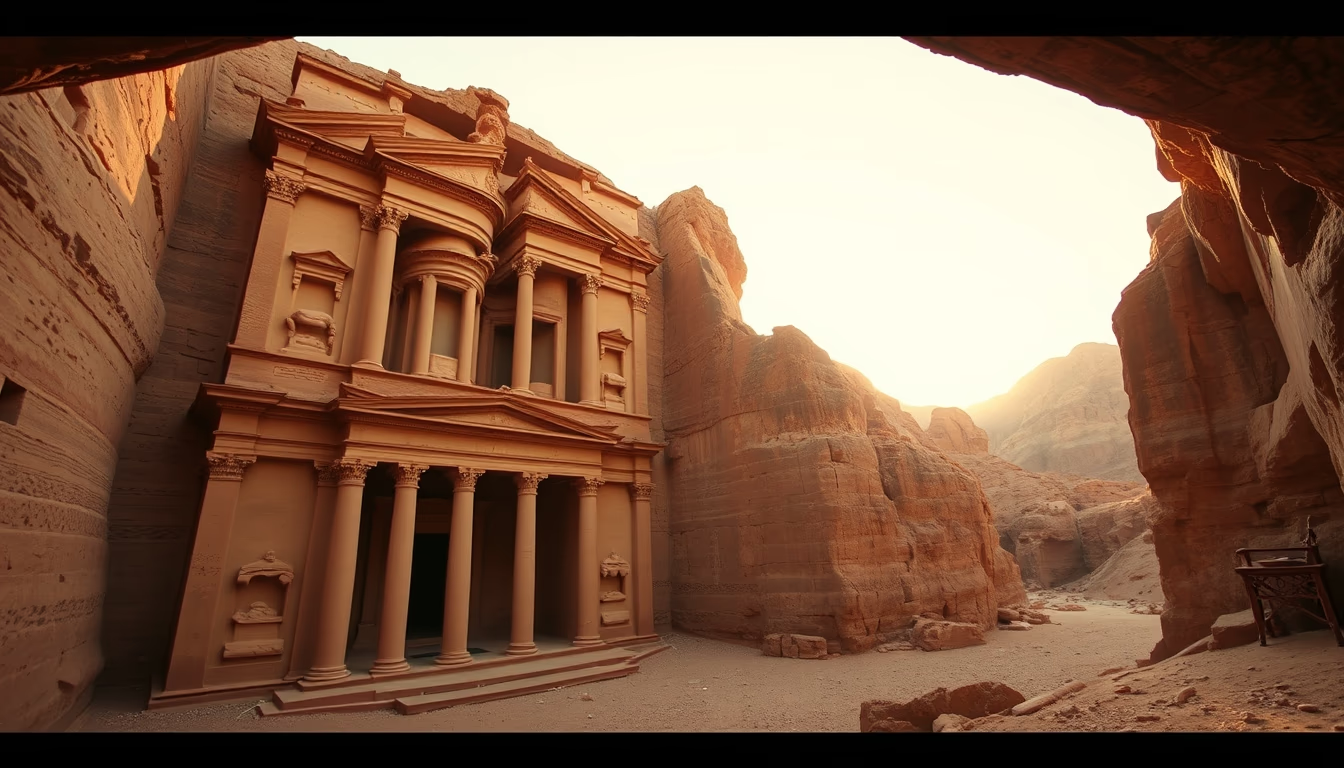
Al-Khazneh, the Treasury of Petra, is a monumental Nabataean temple carved into rock in the 1st century BC, symbol of the ancient Jordanian city.
About this subject
The Treasury of Petra, known as Al-Khazneh in Arabic, is one of the world's most iconic monuments. Carved directly into the face of a sandstone cliff, it stands about 39 meters high and 25 meters wide. Its elaborate facade combines elements of Hellenistic architecture with Nabataean traditions, reflecting the cultural exchange that characterized Petra, the capital of the Nabataean kingdom between the 4th century BC and 2nd century AD.
Al-Khazneh is believed to have been built as a temple or mausoleum for the Nabataean king Aretas IV, who reigned from 9 BC to 40 AD. The name 'Treasury' comes from a local legend: Bedouins thought that an urn at the top of the facade contained gold and precious stones. In reality, the urn is solid stone, but the bullet marks visible on it are from Bedouin attempts to break it open to retrieve the supposed treasure.
Petra was declared a UNESCO World Heritage Site in 1985 and is located in a remote valley in southern Jordan, accessible through a narrow gorge called the Siq. The monument appears in films such as 'Indiana Jones and the Last Crusade', where it was portrayed as the hiding place of the Holy Grail. Natural erosion and heavy tourism pose constant threats to the preservation of Al-Khazneh, which attracts millions of visitors each year. Recent archaeological studies, such as those by the Petra Archaeological Project, have revealed additional burial chambers beneath the monument, indicating it served as a royal tomb before being reused in later periods.
Frequently Asked Questions
What does Al-Khazneh mean?
Al-Khazneh means 'The Treasury' in Arabic. The name comes from a Bedouin legend that believed an urn at the top of the facade held gold and jewels.
What was the original function of Al-Khazneh?
It is believed to have been built as a royal mausoleum for the Nabataean king Aretas IV, around the 1st century AD. Recent excavations have revealed burial chambers beneath the monument, supporting this theory.
Why is the Treasury of Petra famous in cinema?
The monument appears in the film 'Indiana Jones and the Last Crusade' (1989) as the temple housing the Holy Grail. This scene made Al-Khazneh world-famous.
Direct URL
https://pub-c7d6a6ea828543ac903a74a341ccb2e1.r2.dev/imagens/petra-treasury-jordan-cinematic-wide-shot-p4.avifHow to credit
Include a visible link back to UtilizAí. Copy one of the snippets below:
<a href="https://xn--utiliza-eza.com/en/midia/imagens/petra-treasury-jordan-cinematic-wide-shot-p4">Petra treasury jordan</a> by <a href="https://xn--utiliza-eza.com">UtilizAí</a>, licensed under <a href="https://creativecommons.org/licenses/by/4.0/">CC BY 4.0</a>.
[Petra treasury jordan](https://xn--utiliza-eza.com/en/midia/imagens/petra-treasury-jordan-cinematic-wide-shot-p4) by [UtilizAí](https://xn--utiliza-eza.com), CC BY 4.0
License: CC-BY-4.0