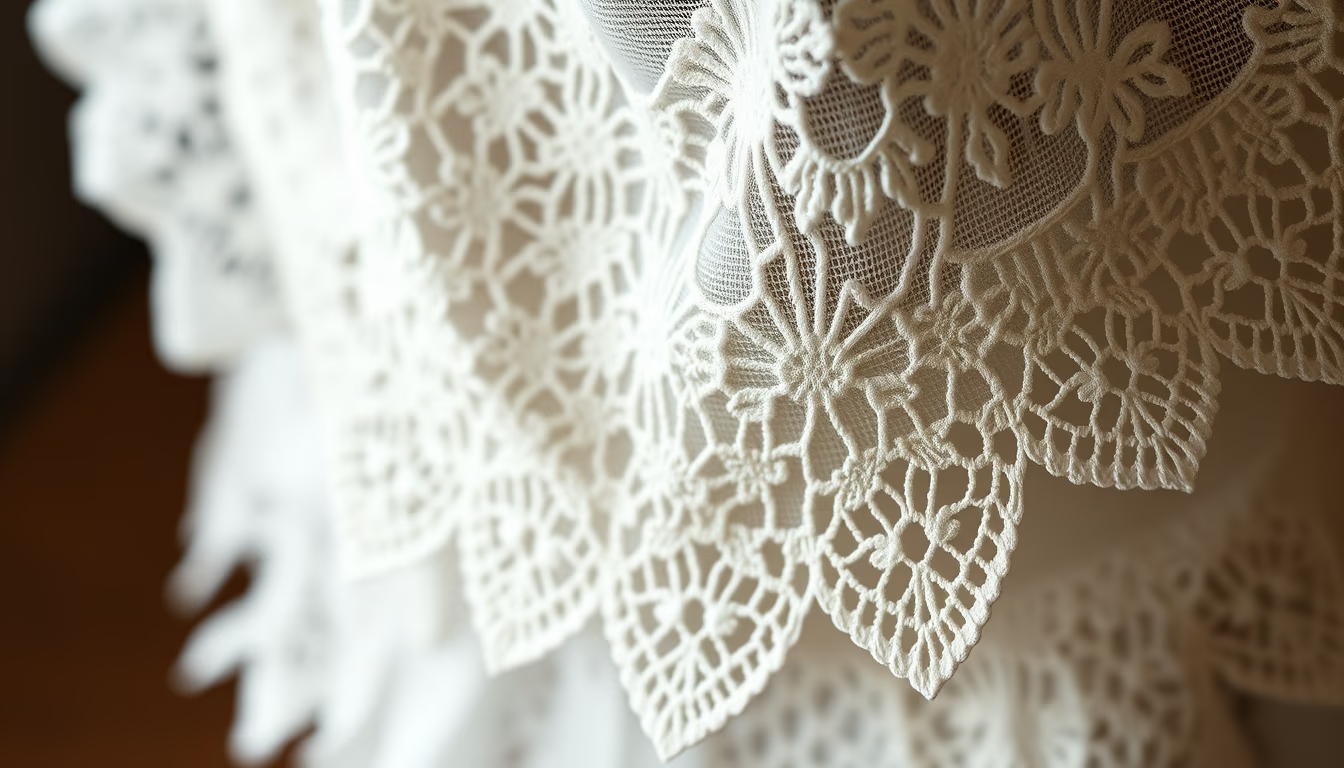
Persian rug weaving
1344×768 · AVIF · CC BY 4.0
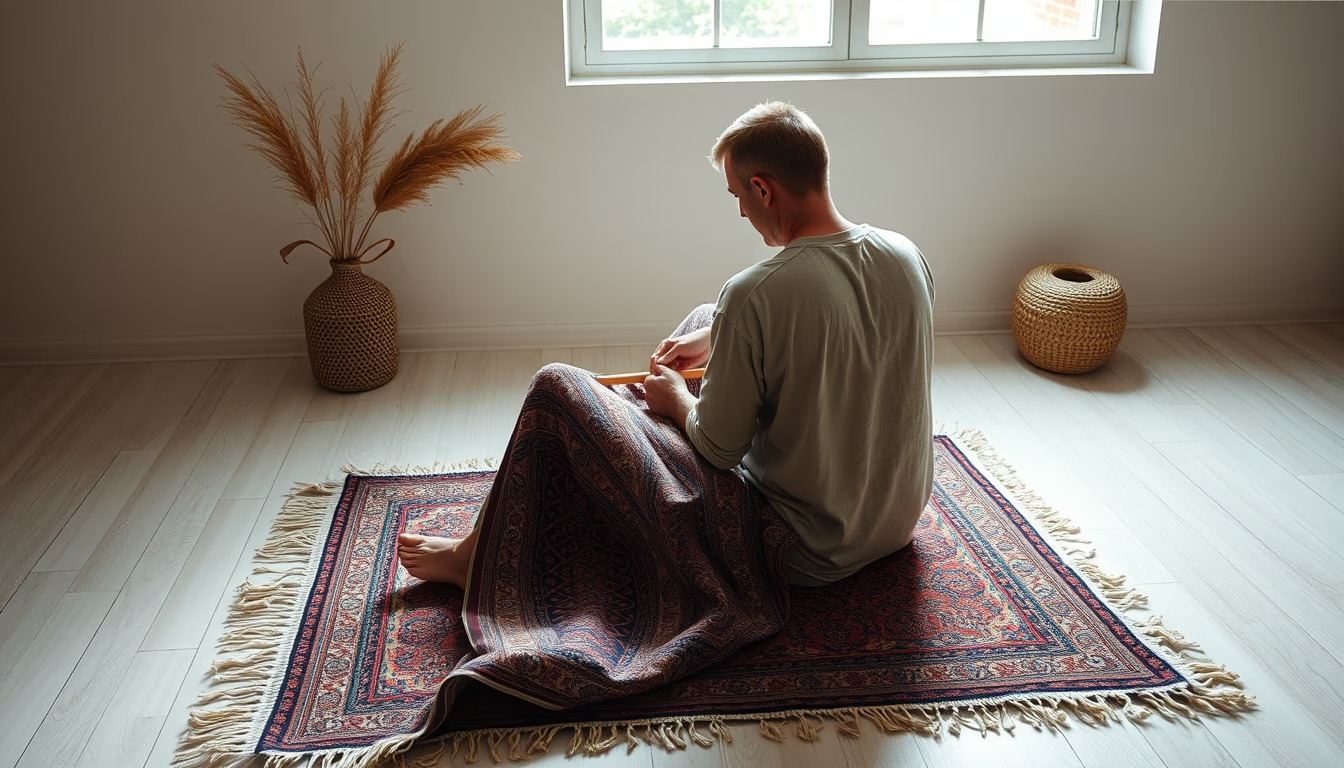
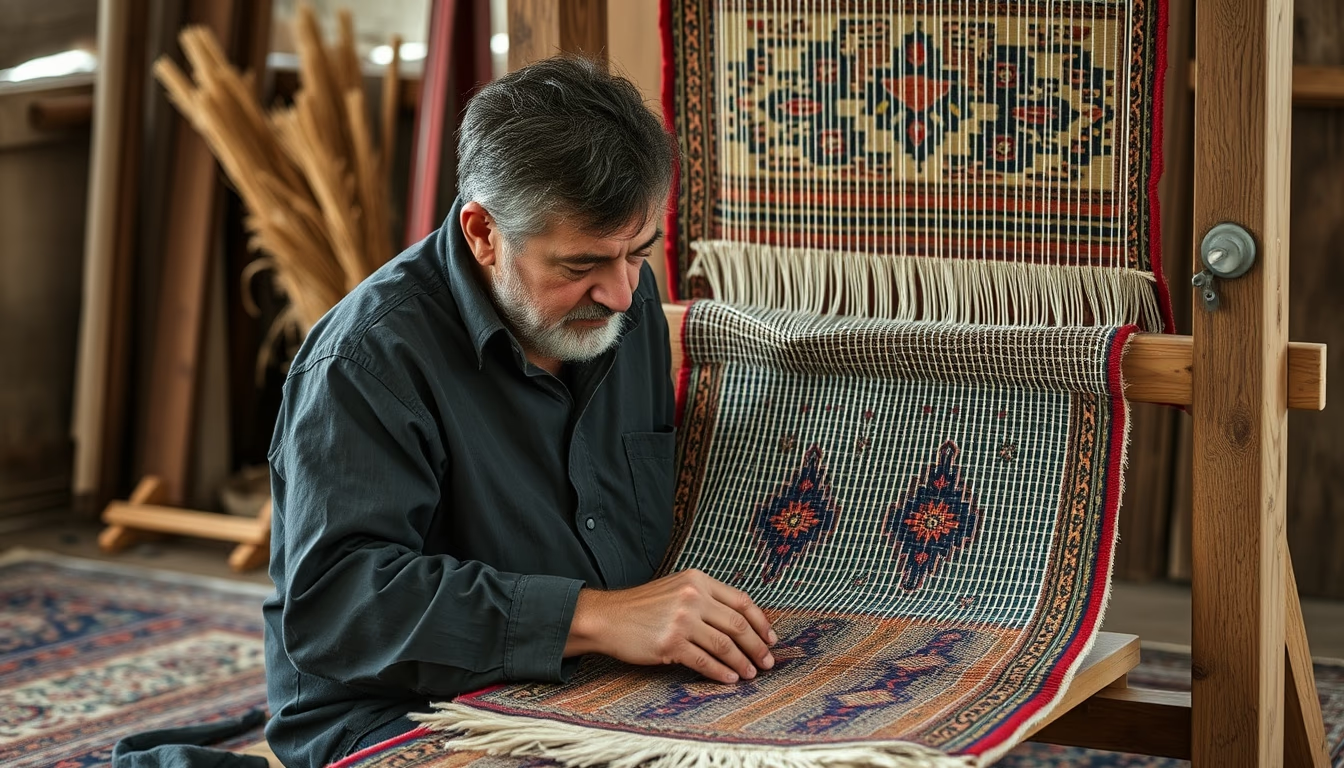
Persian rug weaving, a millennia-old art from Iran, combines ancient techniques with intricate designs that reflect centuries of culture and tradition.
About this subject
Persian rug weaving is one of the oldest and most refined forms of textile art in the world. Originating in the region now known as Iran, this practice dates back over 2,500 years, with archaeological evidence of carpets from the 5th century BCE. The peak of production occurred during the Safavid Empire (16th-18th centuries), when cities like Tabriz, Isfahan, and Kerman became renowned centers. Each rug is a testament to the manual skill of artisans, who use hand looms and hand-tied knots.
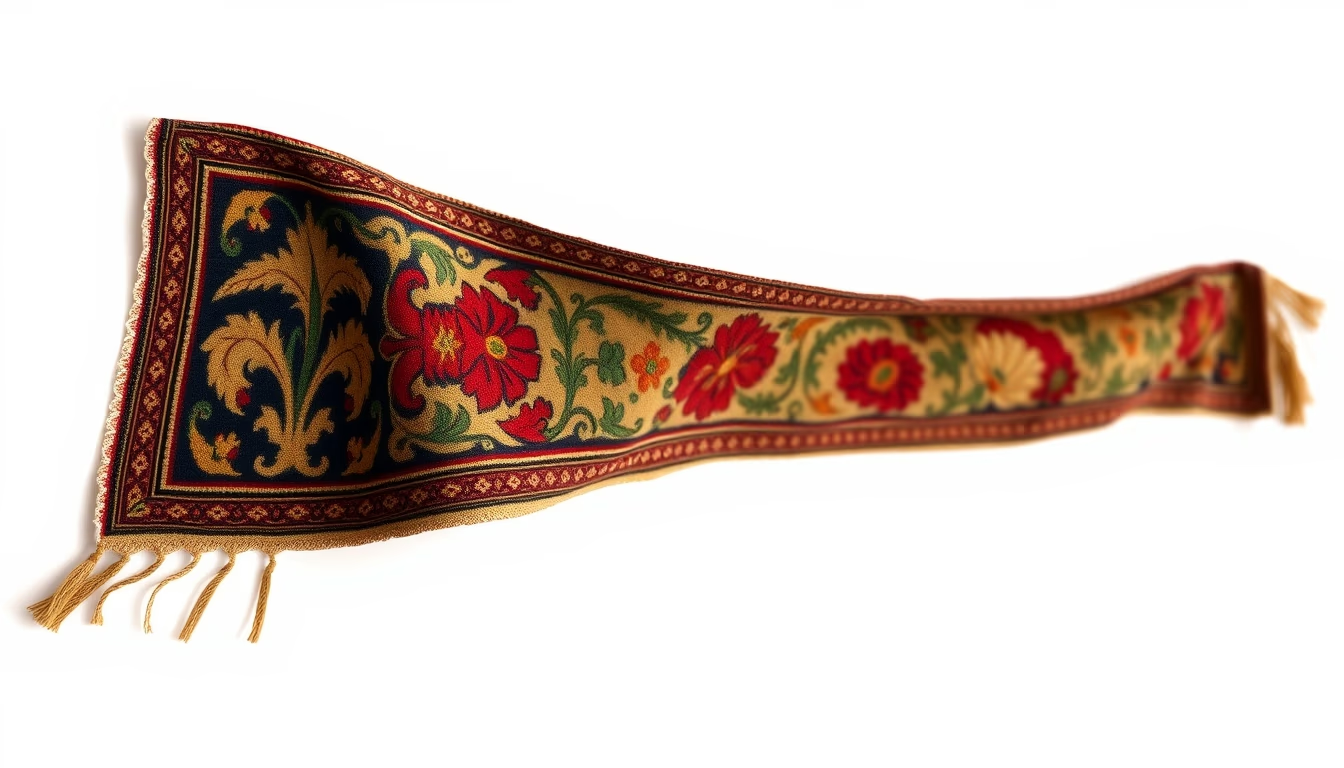
Traditional materials include high-quality wool, silk, and occasionally cotton for the warp. Dyes are often natural, derived from plants such as madder (for reds) and indigo (for blues). Patterns vary enormously: floral designs, central medallions, geometric motifs, and scenes of gardens or hunting. Each region has distinct styles, such as Qom rugs, known for fine silk and dense knots, and Tabriz rugs, with elaborate designs and lustrous wool.
The knotting technique is crucial for quality. There are two main types: the senneh (or Persian) knot, which is asymmetrical, and the ghiordes (or Turkish) knot, which is symmetrical. Knot density, measured in knots per square inch, determines the sharpness of the design and durability. An authentic Persian rug can take months or years to complete, depending on size and complexity. This art has been passed down through generations, often within families, and remains an important cultural and economic expression in Iran.
Beyond its aesthetic value, Persian rugs carry symbolic meaning. Patterns often represent paradise, eternal life, or elements of nature like water and flowers. They also serve as indicators of social status and wealth. Today, the Persian rug market faces challenges such as competition from machine-made products and the need to preserve traditional techniques. Yet the authenticity and unique beauty of these works continue to captivate collectors and decorators worldwide.
Frequently Asked Questions
How can I identify an authentic Persian rug?
Check the knot density (more knots per inch indicate higher quality), knot type (senneh or ghiordes), use of natural materials like wool and silk, and slight irregularities common in handmade pieces. Authentic Persian rugs often come with a certificate or origin label.
What are the main knot types in Persian rugs?
There are two main types: the senneh (asymmetrical) knot, typical of Persian rugs, and the ghiordes (symmetrical) knot, more common in Turkish rugs. The senneh knot allows for more fluid designs, while the ghiordes is more durable.
Why are Persian rugs so valuable?
Due to a combination of high-quality materials (wool, silk, natural dyes), handcrafted techniques requiring months or years of work, complex designs rich in cultural meaning, and a millennia-old heritage. Antique rugs or those from famous regions can fetch high prices at auctions.
Direct URL
https://pub-c7d6a6ea828543ac903a74a341ccb2e1.r2.dev/imagens/persian-rug-weaving-minimalist-composition-fresh14.avifHow to credit
Include a visible link back to UtilizAí. Copy one of the snippets below:
<a href="https://xn--utiliza-eza.com/en/midia/imagens/persian-rug-weaving-minimalist-composition-fresh14">Persian rug weaving</a> by <a href="https://xn--utiliza-eza.com">UtilizAí</a>, licensed under <a href="https://creativecommons.org/licenses/by/4.0/">CC BY 4.0</a>.
[Persian rug weaving](https://xn--utiliza-eza.com/en/midia/imagens/persian-rug-weaving-minimalist-composition-fresh14) by [UtilizAí](https://xn--utiliza-eza.com), CC BY 4.0
License: CC-BY-4.0