Persian rug weaving
1344×768 · AVIF · CC BY 4.0
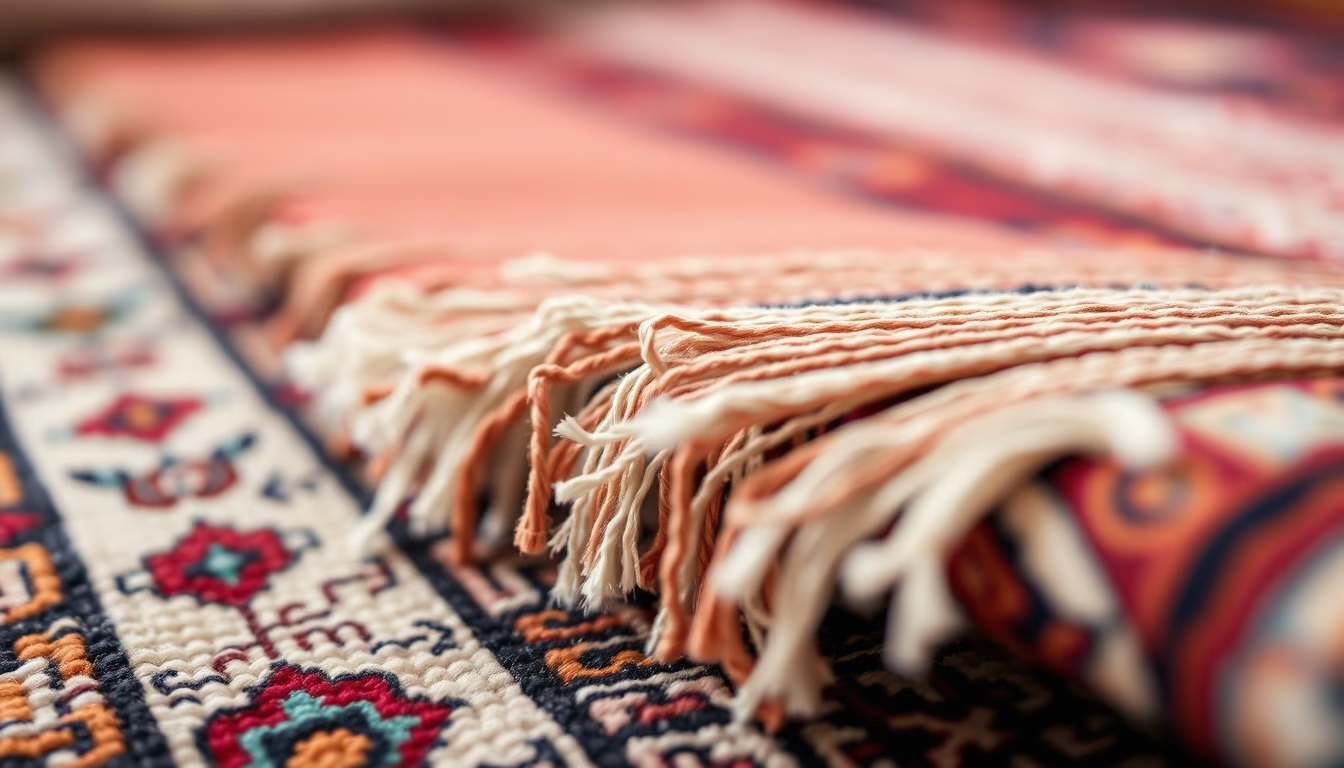
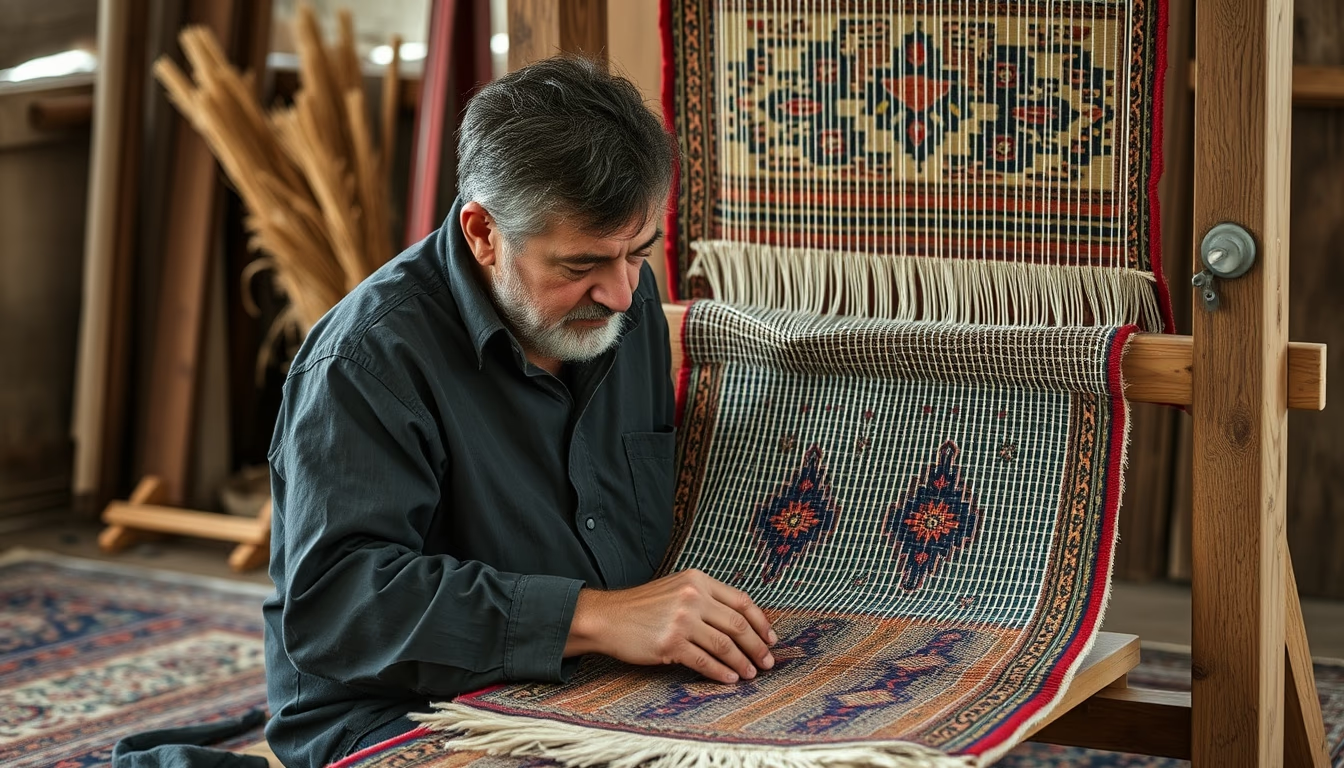
Persian rug weaving is an ancient craft combining intricate techniques, cultural symbolism, and natural materials like wool and silk.
About this subject
Persian rugs, originating from present-day Iran, are considered one of the world's most refined forms of textile art. Their production dates back over 2,500 years, with archaeological evidence of rug weaving in ancient Persia. The tradition is passed down through generations, mainly in cities such as Tabriz, Isfahan, Qom, and Kashan, each with characteristic styles.
The central technique is hand-knotting, either Turkish (Ghiordes) or Persian (Senneh) knots. The Ghiordes knot is symmetrical and common in northwestern Iran, while the Senneh knot is asymmetrical and typical of central regions. Wool or silk threads are dyed with natural materials like cochineal, indigo, and saffron, resulting in vibrant, long-lasting colors. Knot density per square meter is a quality indicator, reaching millions in fine pieces.
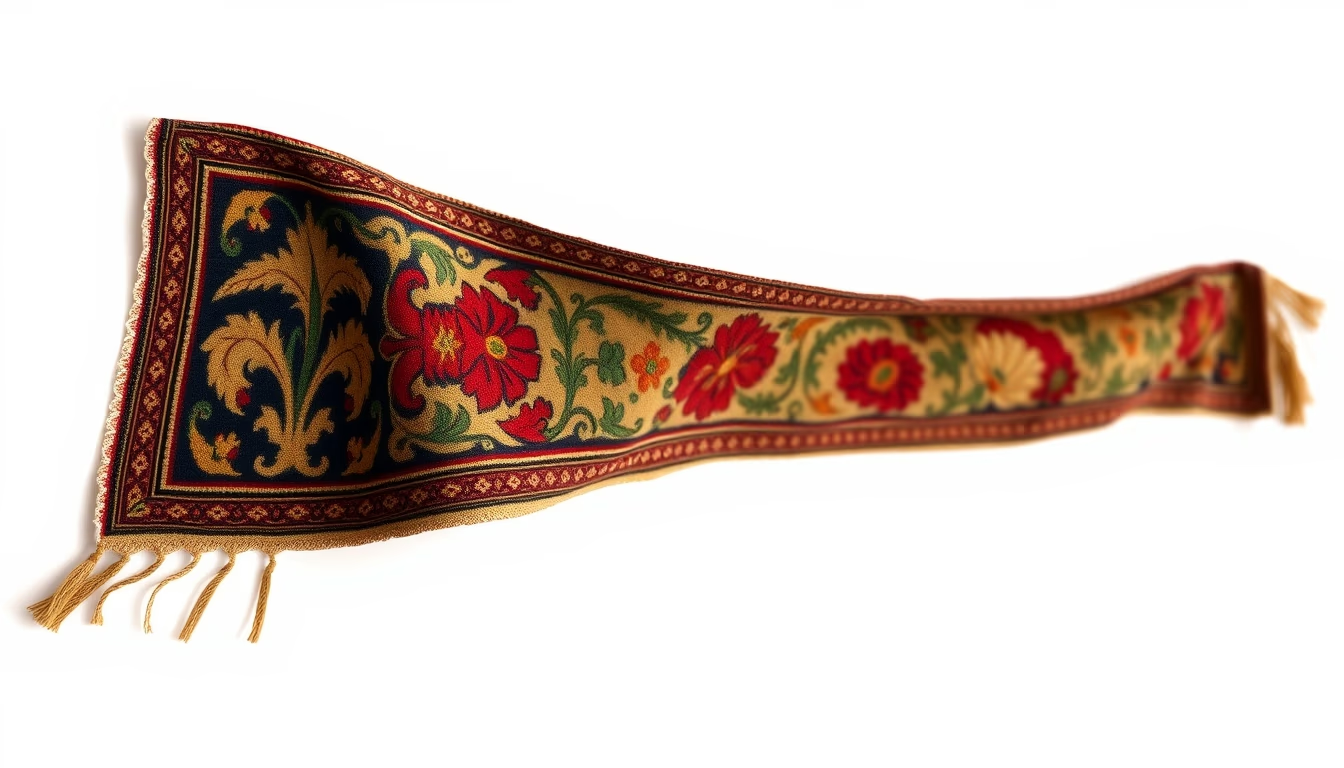
Geometric and floral patterns carry symbolic meanings. The central medallion, for instance, represents divine unity, while repetitive borders symbolize infinity. Each tribe or region developed specific motifs, such as Isfahan's arabesques or Tabriz's hunting designs. Beyond aesthetic value, Persian rugs are investment items, with antique pieces fetching high prices at auctions.
In 2010, the art of Persian rug weaving was inscribed by UNESCO as Intangible Cultural Heritage of Humanity. Despite competition from machine-made rugs, handcrafted production persists in rural and urban areas, supporting thousands of families. Knowledge of techniques, designs, and materials remains alive, preserving a millennia-old tradition.
Frequently Asked Questions
What are the main types of knots used in Persian rugs?
The two main types are the Turkish (Ghiordes) knot, symmetrical and common in northwestern Iran, and the Persian (Senneh) knot, asymmetrical and typical of central regions like Isfahan and Qom.
How can you identify an authentic Persian rug?
Authentic Persian rugs have tight, uniform knots, colors from natural dyes (e.g., indigo, cochineal), and symmetrical patterns. Knot density and natural irregularities indicate handcrafting.
What is the cultural significance of Persian rugs?
Persian rugs are integral to Iranian heritage, used in ceremonies, as dowries, and family heirlooms. Each pattern and color carries symbolic meanings, reflecting history and regional traditions.
Direct URL
https://pub-c7d6a6ea828543ac903a74a341ccb2e1.r2.dev/imagens/persian-rug-weaving-macro-closeup-fresh13.avifHow to credit
Include a visible link back to UtilizAí. Copy one of the snippets below:
<a href="https://xn--utiliza-eza.com/en/midia/imagens/persian-rug-weaving-macro-closeup-fresh13">Persian rug weaving</a> by <a href="https://xn--utiliza-eza.com">UtilizAí</a>, licensed under <a href="https://creativecommons.org/licenses/by/4.0/">CC BY 4.0</a>.
[Persian rug weaving](https://xn--utiliza-eza.com/en/midia/imagens/persian-rug-weaving-macro-closeup-fresh13) by [UtilizAí](https://xn--utiliza-eza.com), CC BY 4.0
License: CC-BY-4.0