Persian rug weaving
1344×768 · AVIF · CC BY 4.0
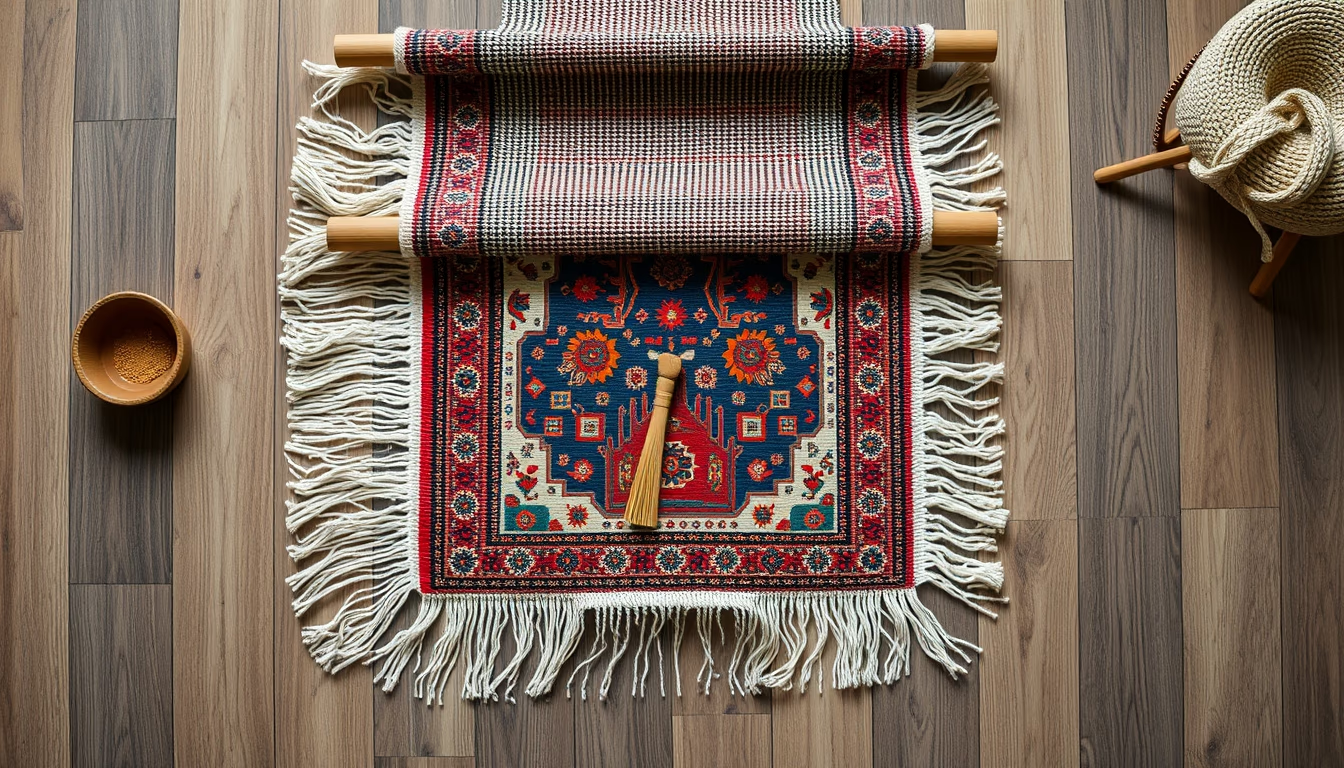
The Persian handloom, a UNESCO intangible cultural heritage, weaves centuries of history, symbolism, and technique into every hand-tied knot.
About this subject
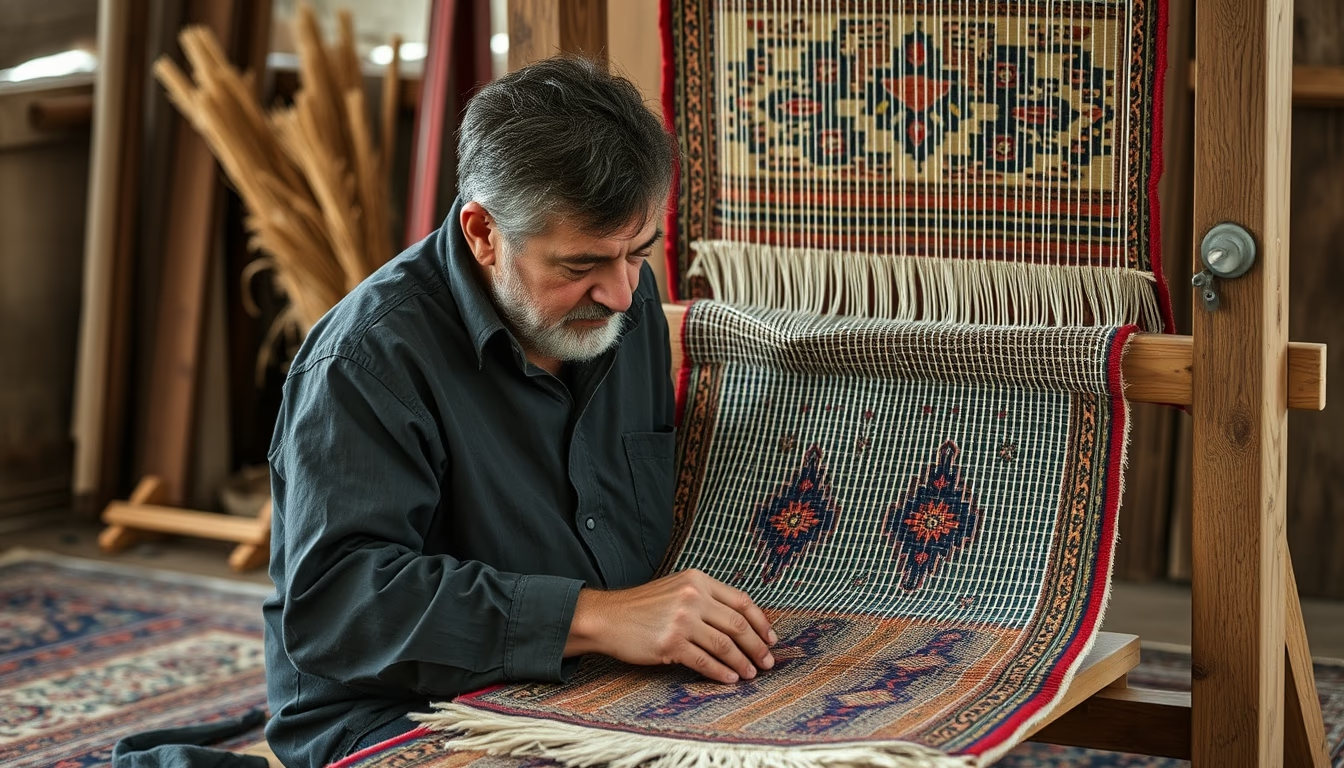
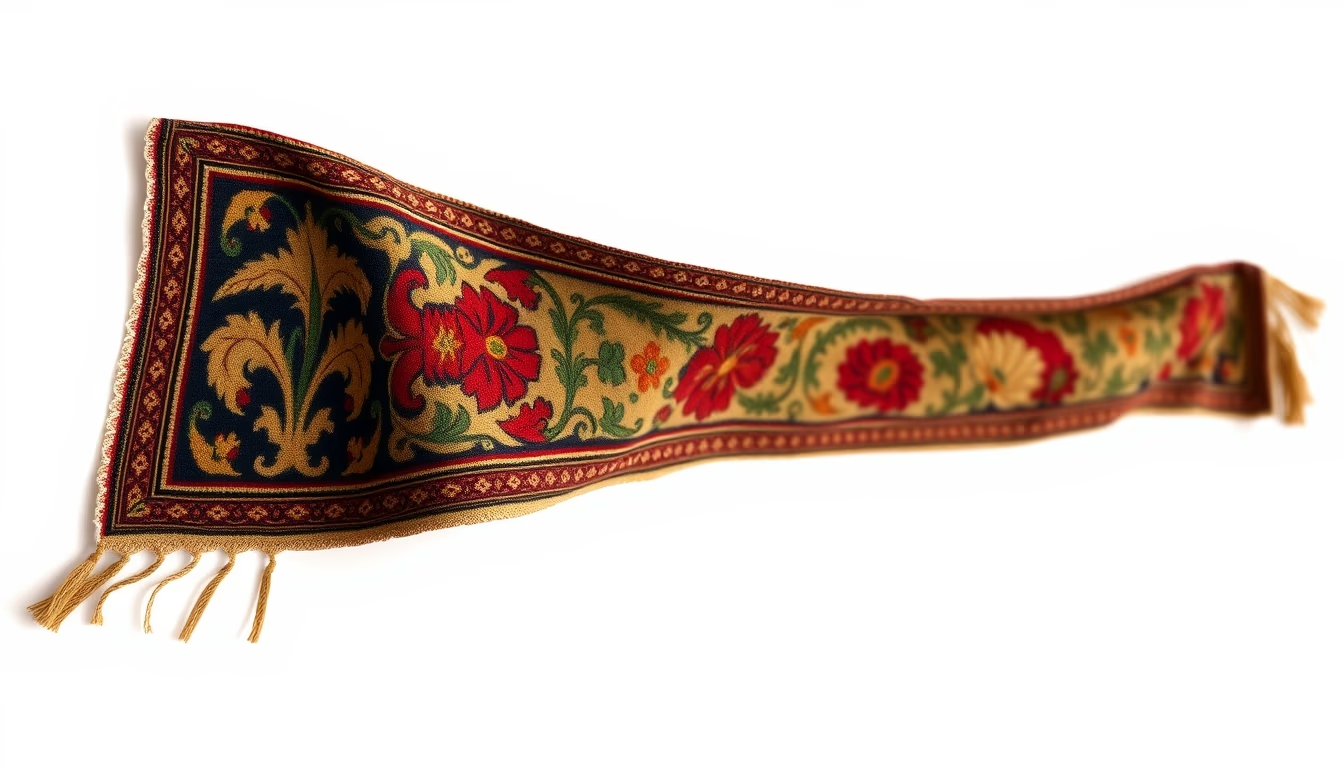
Persian rug weaving is one of the oldest and most refined forms of textile art, with origins dating back to the 5th century BC. Historical records by authors such as Xenophon and Herodotus mention Persian carpets as objects of luxury and prestige. The traditional technique involves a vertical or horizontal loom, where wool, silk, or cotton threads are manually interwoven, using either symmetrical (Turkish) or asymmetrical (Persian) knots. Each region of Iran, such as Tabriz, Isfahan, Qom, and Kerman, has developed its own patterns and color palettes, often inspired by gardens, arabesques, and geometric motifs, rich with cultural and religious symbolism.
Creating a Persian rug is an extremely meticulous process that can take months or even years, depending on the size and complexity of the design. Artisans, often from families that pass down knowledge through generations, use natural dyes extracted from plants, insects, and minerals to achieve vibrant and lasting colors. The Persian knot, also known as the asymmetrical knot, allows for a higher density of threads, resulting in finer and more detailed rugs. In contrast, the Turkish knot (symmetrical) is more common in other regions.
The cultural importance of the Persian rug goes beyond functionality. It is a central item in Iranian homes, present in ceremonies, weddings, and as family heirlooms. UNESCO recognized Persian carpet weaving as an Intangible Cultural Heritage of Humanity in 2010, highlighting its role in national identity. Despite modernization and competition from industrial carpets, handmade production persists in rural and urban areas, with master weavers working on home looms or in small workshops. The global market for Persian rugs, though impacted by imitations, still values authentic pieces, which can fetch high prices at international auctions.
Interestingly, the design of many Persian rugs incorporates elements from Iranian poetry and mythology, such as the gardens of Paradise described in the Avesta or in poems by Hafez and Ferdowsi. Each pattern tells a story: the cypress motif symbolizes immortality, the palm tree represents fertility, and the flower vase suggests the connection between heaven and earth. These visual narratives make each rug a unique work of art, whose value is measured not only by the material but by the labor and meaning woven into every thread.
Frequently Asked Questions
What is the difference between the Persian knot and the Turkish knot?
The Persian knot (asymmetrical) allows for higher thread density and finer details, common in Iranian rugs. The Turkish knot (symmetrical) is more robust, used in rugs from Turkey and the Caucasus.
How can I identify an authentic Persian rug?
Check the knot density (more knots per square inch indicates higher quality), subtle irregularities (sign of handcrafting), and the use of natural dyes. Authentic rugs come with a certificate of origin and are sold by specialized dealers.
Why are Persian rugs so expensive?
The cost reflects production time (can take years), the artisan's skill, the quality of materials (wool or silk) and natural dyes, plus cultural and historical value. Antique pieces or those by renowned masters fetch high prices at auctions.
Direct URL
https://pub-c7d6a6ea828543ac903a74a341ccb2e1.r2.dev/imagens/persian-rug-weaving-isometric-flat-lay-fresh5.avifHow to credit
Include a visible link back to UtilizAí. Copy one of the snippets below:
<a href="https://xn--utiliza-eza.com/en/midia/imagens/persian-rug-weaving-isometric-flat-lay-fresh5">Persian rug weaving</a> by <a href="https://xn--utiliza-eza.com">UtilizAí</a>, licensed under <a href="https://creativecommons.org/licenses/by/4.0/">CC BY 4.0</a>.
[Persian rug weaving](https://xn--utiliza-eza.com/en/midia/imagens/persian-rug-weaving-isometric-flat-lay-fresh5) by [UtilizAí](https://xn--utiliza-eza.com), CC BY 4.0
License: CC-BY-4.0