Persian rug weaving
1344×768 · AVIF · CC BY 4.0
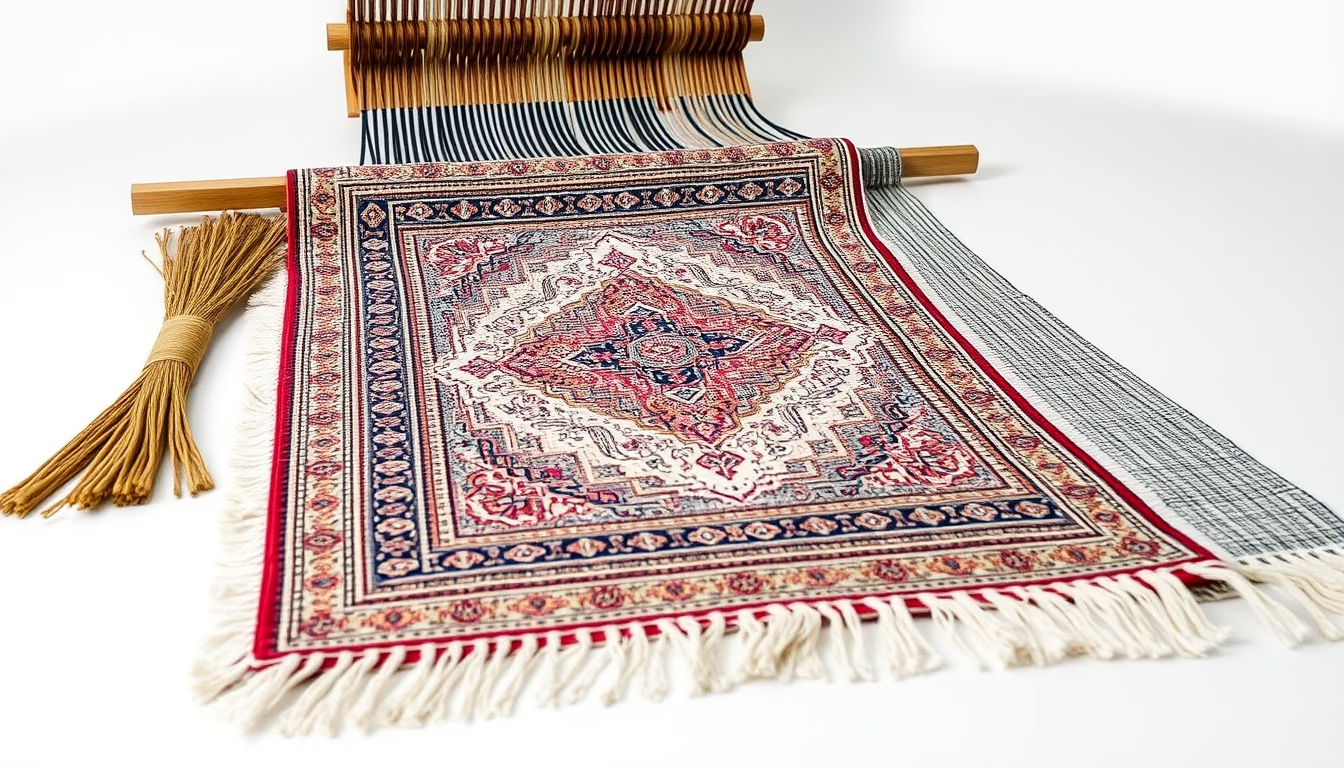
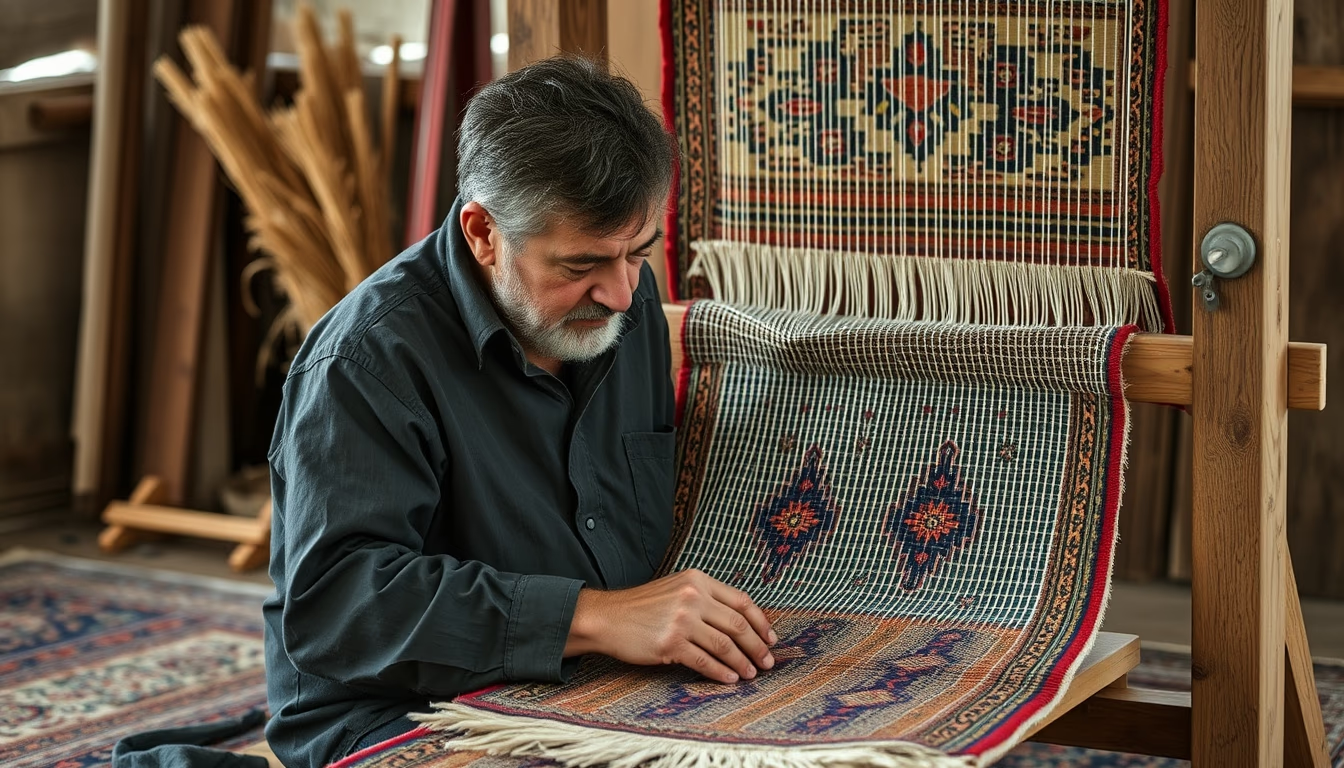
Persian rug weaving is an ancient craft that combines ancestral techniques with symbolic designs, producing pieces of high cultural and economic value.
About this subject
Persian rug weaving dates back over 2,500 years, originating in the region of modern-day Iran. The technique involves intricate hand-tied knots on vertical or horizontal looms, using sheep wool, silk, or cotton. Each rug is unique, and geometric or floral patterns carry tribal or religious meanings. Cities like Tabriz, Isfahan, and Kerman are famous for their distinct styles. Knot density is measured in raj, and high-quality rugs can have over 1,000 knots per square inch.
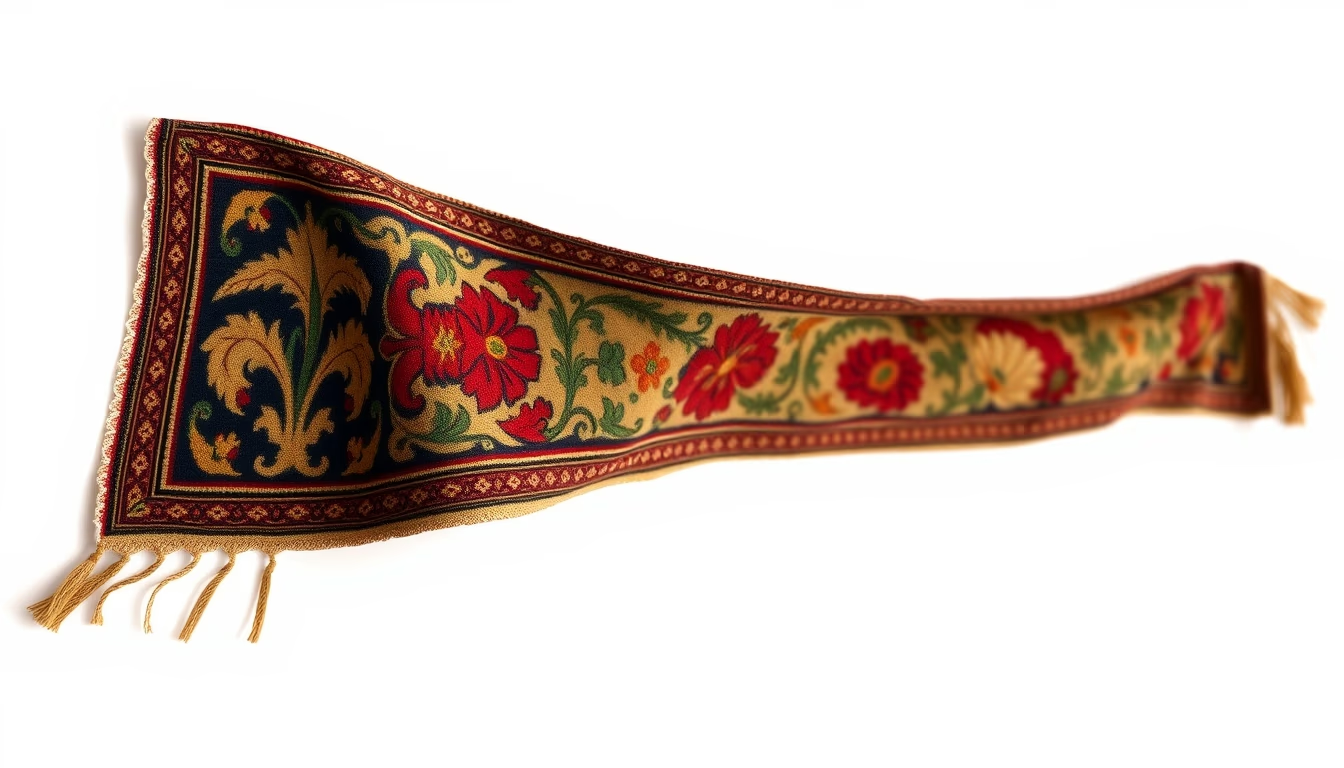
The dyeing process uses natural colorants, such as indigo blue and cochineal red, giving vibrant colors that last centuries. Designs often feature central medallions, palmettes, and arabesques inspired by Islamic art and pre-Islamic mythology. Producing a rug can take months or years, depending on size and complexity. In the 16th century, the Safavid dynasty elevated weaving to a court art, creating masterpieces now in museums.
Culturally, Persian rugs are symbols of status and hospitality, used in homes, mosques, and palaces. UNESCO recognized Persian carpet weaving as Intangible Cultural Heritage in 2010. Iran is the largest exporter of hand-made rugs, though competition from industrial production and a shortage of young artisans threaten the tradition. Nonetheless, demand for authentic rugs remains high among collectors worldwide.
Interestingly, each Persian region has its own knot style: the Turkish (symmetrical) and Persian (asymmetrical) knots. The Persian knot is more common, allowing curvilinear patterns. Nomadic rugs, like those of the Qashqai, feature abstract patterns and vivid colors reflecting a mobile lifestyle. Reading a rug involves identifying origin, materials, and age; experts use magnifying glasses and combs to count knots. An antique Persian rug can fetch millions at auction.
Frequently Asked Questions
What is the historical origin of Persian rugs?
Persian rug weaving is over 2,500 years old, with evidence from the Achaemenid Empire. The oldest preserved example is the Pazyryk carpet from the 5th century BC, found in Siberia.
What materials are used in traditional Persian rug making?
Main materials are sheep wool (for durability), silk (for luster and fine details), and cotton (for the foundation). Natural dyes from plants and insects are used.
How can you identify an authentic Persian rug?
Authentic rugs are hand-knotted with asymmetrical (Persian) or symmetrical knots, and have slight design irregularities. The back should show a clear reverse pattern. Certification and knot analysis help verify authenticity.
Direct URL
https://pub-c7d6a6ea828543ac903a74a341ccb2e1.r2.dev/imagens/persian-rug-weaving-commercial-product-photography-fresh17.avifHow to credit
Include a visible link back to UtilizAí. Copy one of the snippets below:
<a href="https://xn--utiliza-eza.com/en/midia/imagens/persian-rug-weaving-commercial-product-photography-fresh17">Persian rug weaving</a> by <a href="https://xn--utiliza-eza.com">UtilizAí</a>, licensed under <a href="https://creativecommons.org/licenses/by/4.0/">CC BY 4.0</a>.
[Persian rug weaving](https://xn--utiliza-eza.com/en/midia/imagens/persian-rug-weaving-commercial-product-photography-fresh17) by [UtilizAí](https://xn--utiliza-eza.com), CC BY 4.0
License: CC-BY-4.0