Persian perfume vial
1344×768 · AVIF · CC BY 4.0
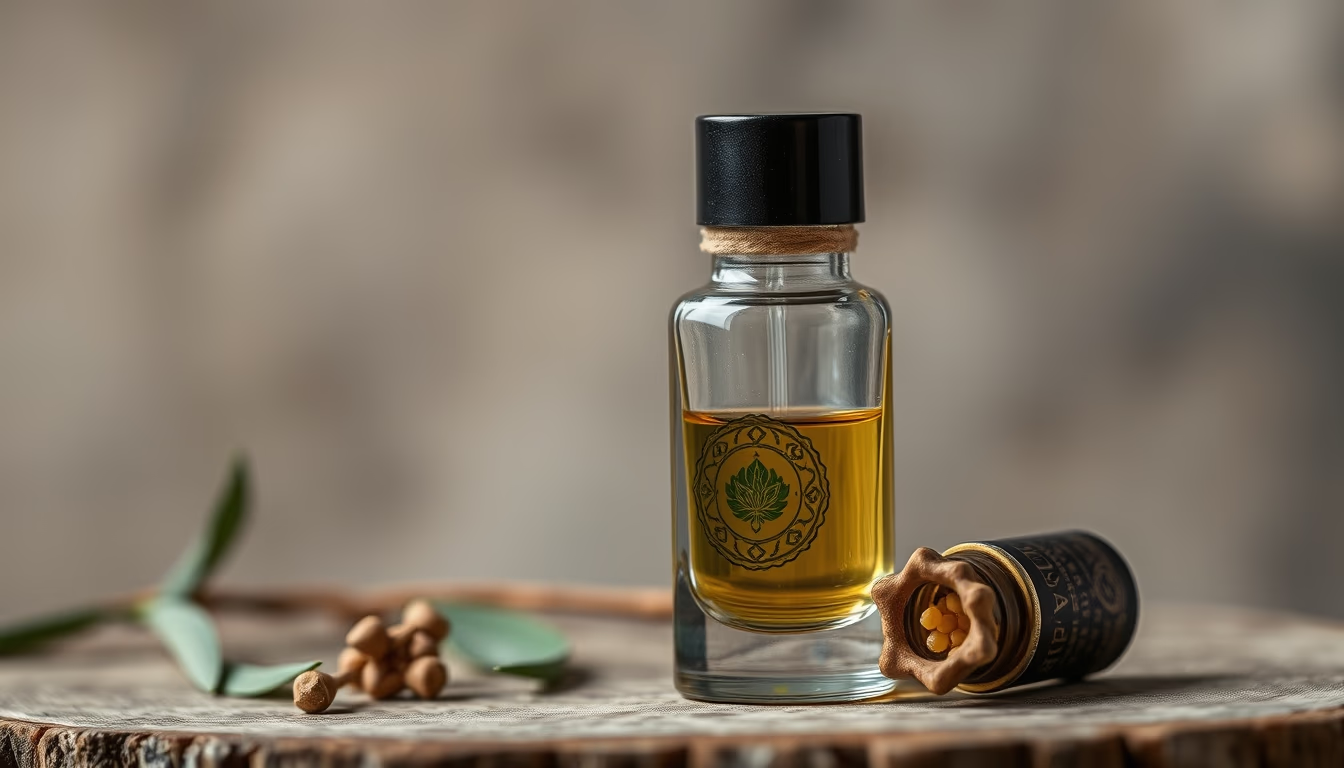
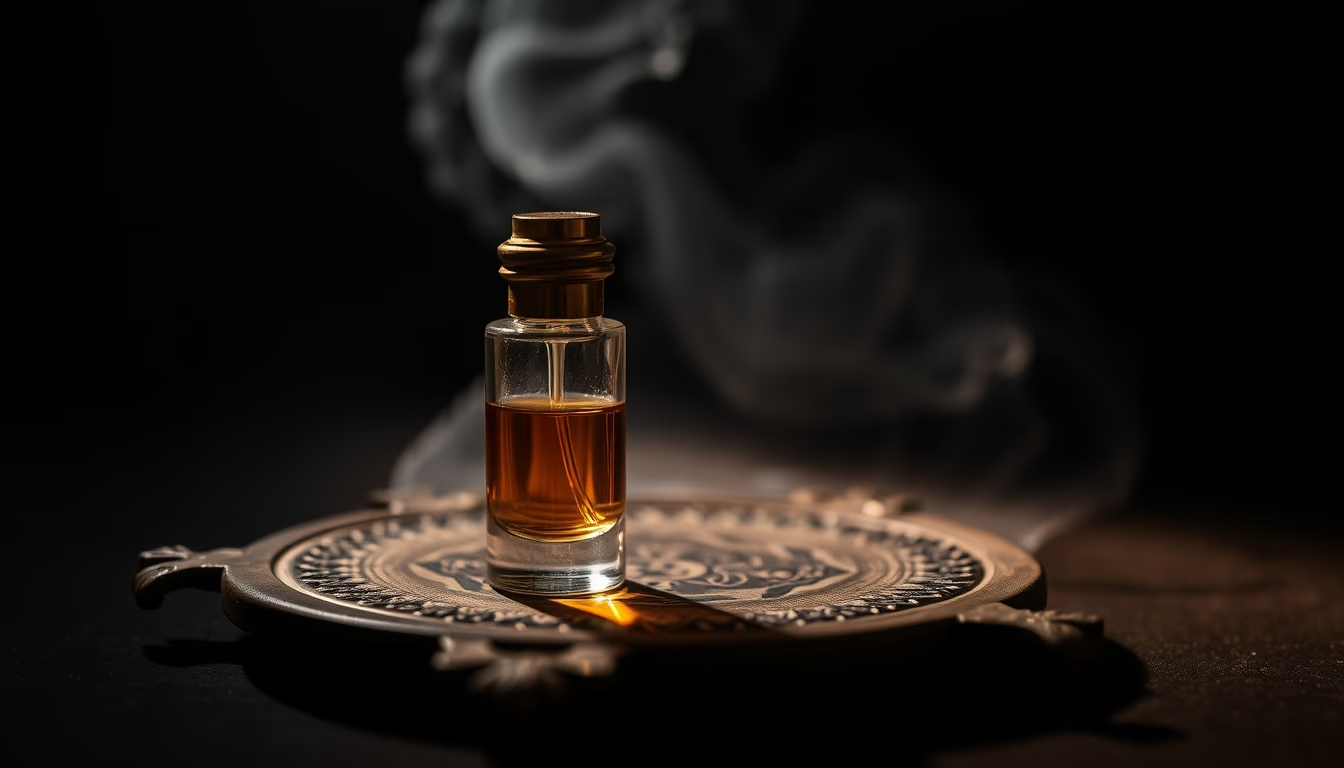
Persian perfume vial: an ancient artifact blending tradition, craftsmanship, and Iran's rich cultural heritage.
About this subject
Persian perfume vials are small bottles used to store aromatic oils and essences, a practice dating back to the Achaemenid Empire (550, 330 BC). The art of crafting these containers reached its peak during the Safavid period (1501, 1736), when glass and ceramic production flourished in cities like Isfahan, Shiraz, and Kashan. Persian artisans mastered techniques such as blown glass, precious metal inlay, and enamel painting, resulting in pieces that are true works of art.
These vials were not merely functional; they reflected social status and aesthetic taste. Shapes ranged from simple bulbs to zoomorphic or phytomorphic forms, often adorned with geometric patterns and Persian calligraphy. The use of aromatic substances was deeply rooted in Persian culture, from Zoroastrian religious rituals to the daily life of the nobility, who used perfumes to demonstrate refinement.
The Silk Road played a crucial role in the dissemination of these vials, which reached Europe, China, and India, influencing local metalworking and glassmaking. Today, museums such as the Metropolitan Museum of Art and the National Museum of Iran house specimens dating from the 9th to the 19th centuries. Contemporary production in Iran continues to value traditional craftsmanship, with local artists recreating historical designs for the global collector market.
Interestingly, many Persian vials had ground glass or carved wooden stoppers, and some featured small chains for easy carrying. The glass used often contained impurities that gave it shades of blue, green, or amber, a distinctive characteristic that sets them apart from European bottles of the same period.
Frequently Asked Questions
What materials were Persian perfume vials made of?
Persian vials were made of blown glass, glazed ceramic, metal (gold, silver, bronze), and occasionally semi-precious stones like agate or rock crystal. The most luxurious combined multiple materials with inlays.
What was the cultural significance of perfumes in ancient Persia?
In ancient Persia, perfumes and incense were used in Zoroastrian rituals for purification, as well as symbols of hospitality and luxury among the nobility. The Persian tradition heavily influenced the development of Islamic perfumery.
Can I buy modern replicas of Persian vials?
Yes, Iranian artisans produce faithful replicas based on historical designs, especially in cities like Isfahan. They are sold in craft shops and online, but it is important to verify authenticity and provenance to ensure traditional techniques are used.
Direct URL
https://pub-c7d6a6ea828543ac903a74a341ccb2e1.r2.dev/imagens/persian-perfume-vial-documentary-nature-style-fresh1.avifHow to credit
Include a visible link back to UtilizAí. Copy one of the snippets below:
<a href="https://xn--utiliza-eza.com/en/midia/imagens/persian-perfume-vial-documentary-nature-style-fresh1">Persian perfume vial</a> by <a href="https://xn--utiliza-eza.com">UtilizAí</a>, licensed under <a href="https://creativecommons.org/licenses/by/4.0/">CC BY 4.0</a>.
[Persian perfume vial](https://xn--utiliza-eza.com/en/midia/imagens/persian-perfume-vial-documentary-nature-style-fresh1) by [UtilizAí](https://xn--utiliza-eza.com), CC BY 4.0
License: CC-BY-4.0