Pcr machine running cycle
1344×768 · AVIF · CC BY 4.0
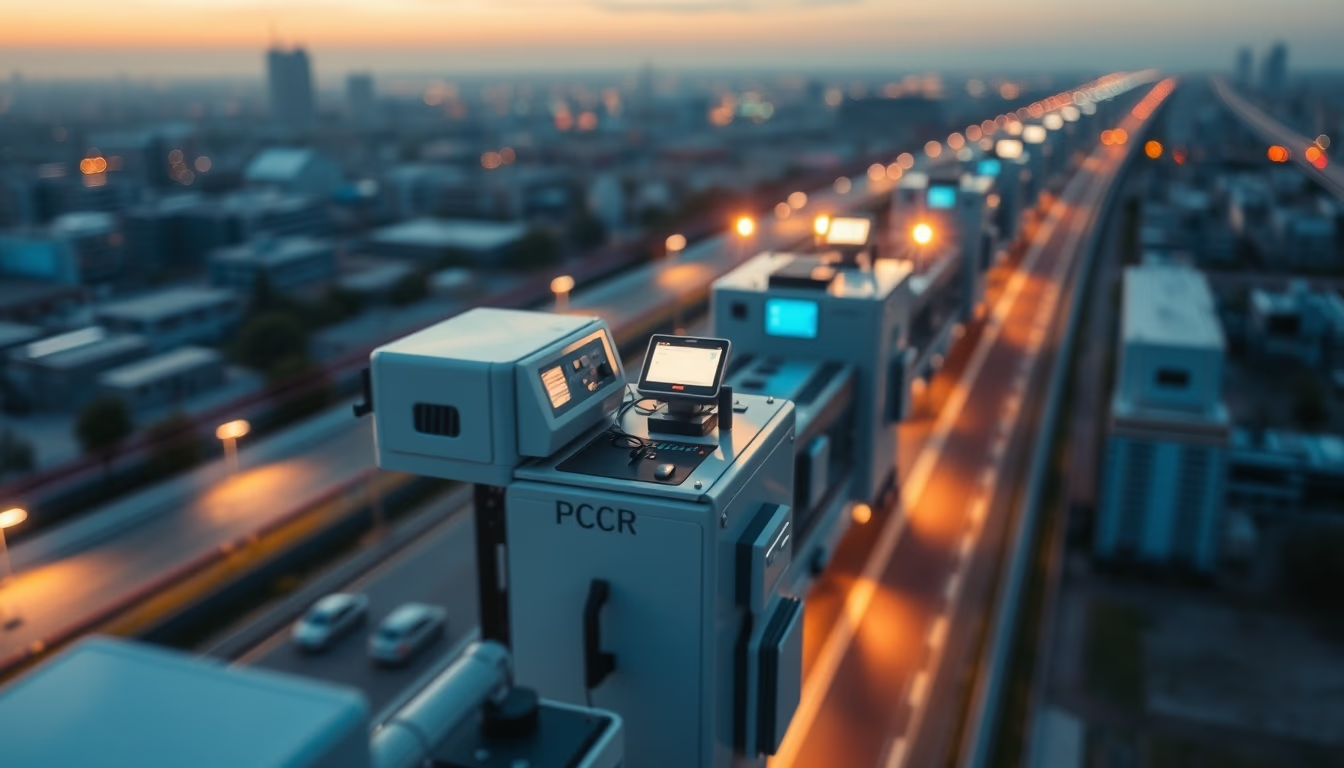
PCR machine running thermal cycles for DNA amplification, essential in diagnostics and genetic research.
About this subject
The Polymerase Chain Reaction, or PCR, is a fundamental technique in molecular biology that allows selective amplification of specific DNA segments. Invented by Kary Mullis in 1983, PCR revolutionized genetics by enabling the production of millions of copies of a target sequence from a minimal sample.
A PCR machine, also known as a thermal cycler, performs repeated cycles of temperature changes to promote DNA denaturation, primer annealing, and extension by DNA polymerase enzyme. Each cycle doubles the amount of target DNA, resulting in exponential amplification. Typical processes involve 25 to 35 cycles, with temperatures ranging from approximately 95°C for denaturation, 55-65°C for annealing, and 72°C for extension.
In clinical practice, PCR is essential for diagnosing infectious diseases like COVID-19, identifying genetic mutations, paternity testing, and forensic analysis. During the pandemic, thermal cyclers operated continuously in laboratories worldwide, processing millions of samples. The precision and speed of PCR have made it the gold standard in molecular biology.
Modern machines feature thermal blocks capable of processing multiple samples simultaneously, with precise temperature and time control. Advanced models include gradient thermal functionality for reaction optimization and connectivity for remote monitoring. Technology evolution has reduced cycle time, allowing results in under 30 minutes in some equipment.
Frequently Asked Questions
What is a PCR machine?
A PCR machine, or thermal cycler, is a laboratory instrument that performs controlled thermal cycles to amplify DNA segments through the Polymerase Chain Reaction.
Why is PCR important for diagnostics?
PCR can detect minimal amounts of genetic material, making it crucial for identifying pathogens like SARS-CoV-2, bacteria, and viruses, as well as genetic mutations, with high sensitivity and specificity.
How many cycles does a typical PCR have?
A typical PCR runs between 25 and 35 cycles. Each cycle doubles the amount of target DNA, resulting in exponential amplification sufficient for analysis.
Direct URL
https://pub-c7d6a6ea828543ac903a74a341ccb2e1.r2.dev/imagens/pcr-machine-running-cycle-aerial-drone-shot-p5.avifHow to credit
Include a visible link back to UtilizAí. Copy one of the snippets below:
<a href="https://xn--utiliza-eza.com/en/midia/imagens/pcr-machine-running-cycle-aerial-drone-shot-p5">Pcr machine running cycle</a> by <a href="https://xn--utiliza-eza.com">UtilizAí</a>, licensed under <a href="https://creativecommons.org/licenses/by/4.0/">CC BY 4.0</a>.
[Pcr machine running cycle](https://xn--utiliza-eza.com/en/midia/imagens/pcr-machine-running-cycle-aerial-drone-shot-p5) by [UtilizAí](https://xn--utiliza-eza.com), CC BY 4.0
License: CC-BY-4.0