Parthenon athens columns
1344×768 · AVIF · CC BY 4.0
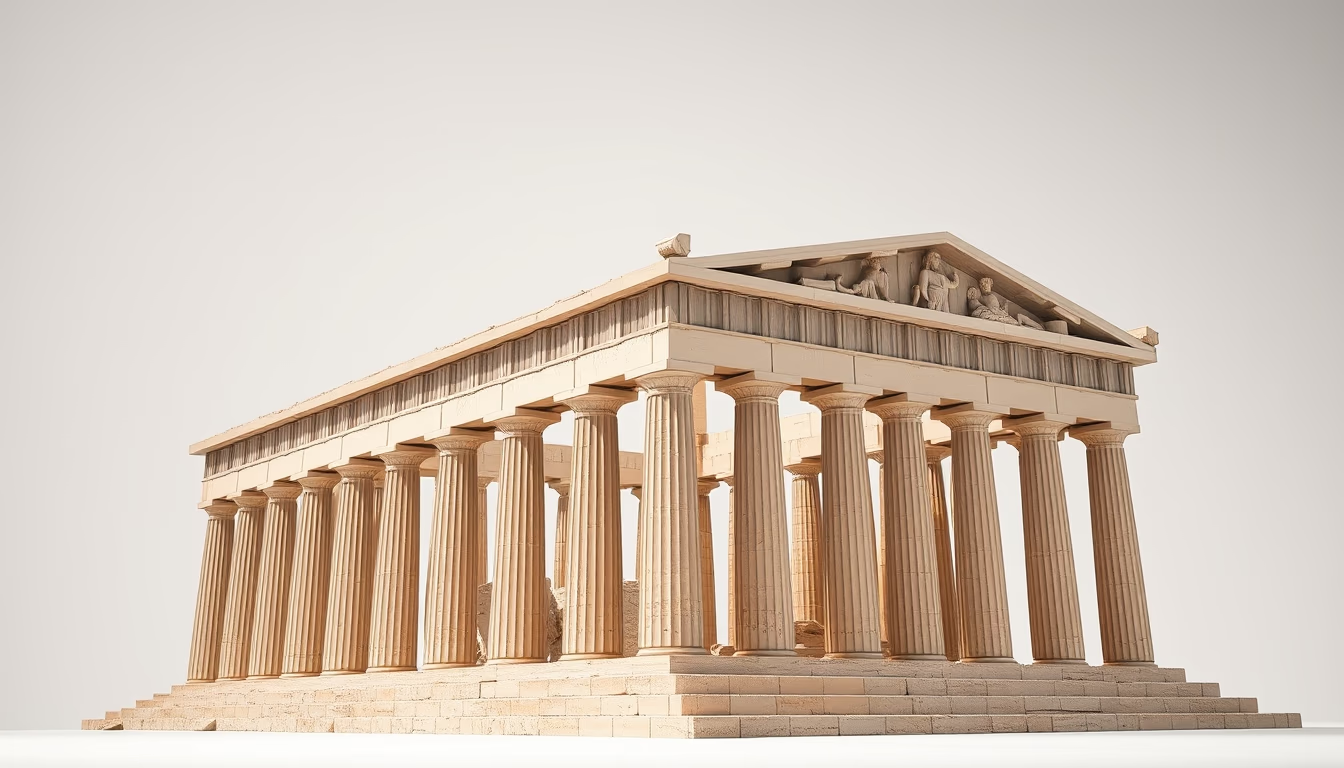
The Parthenon, a temple dedicated to the goddess Athena, is an icon of ancient Greek architecture and a symbol of Athenian democracy.
About this subject
The Parthenon is a temple located on the Acropolis of Athens, Greece, built between 447 and 432 BC under the leadership of Pericles. It was designed by architects Ictinus and Callicrates, with sculptures by Phidias. The temple is a classic example of the Doric order, featuring 46 external columns and 19 internal ones, measuring approximately 69.5 meters in length and 30.9 meters in width. Its primary function was to house the chryselephantine statue of Athena Parthenos, made of gold and ivory.
Over the centuries, the Parthenon underwent significant transformations and damage. In the 6th century, it was converted into a Christian church dedicated to the Virgin Mary. After the Ottoman conquest, it became a mosque. In 1687, during the Venetian siege, an explosion of gunpowder stored inside destroyed much of the building. In the 19th century, Lord Elgin removed many of the marbles, which now reside in the British Museum, sparking controversy over repatriation.
Despite the damage, the Parthenon remains an enduring symbol of ancient Greece and democracy. In 1975, a restoration project was initiated by the Greek government, with UNESCO supporting the efforts. Today, the monument attracts millions of visitors annually and has been a UNESCO World Heritage Site since 1987. Its architecture has influenced countless buildings worldwide, including the US Capitol and the National Library of Greece.
Frequently Asked Questions
What is the historical significance of the Parthenon?
The Parthenon is a symbol of Athenian democracy and ancient Greek culture, representing the pinnacle of classical architecture and art.
Where are the Parthenon marbles now?
Many Parthenon marbles are in the British Museum in London, after being removed by Lord Elgin in the early 19th century. Greece requests their repatriation.
Is the Parthenon still being restored?
Yes, since 1975 an ongoing restoration project aims to preserve and reconstruct damaged parts of the Parthenon, with UNESCO support.
Direct URL
https://pub-c7d6a6ea828543ac903a74a341ccb2e1.r2.dev/imagens/parthenon-athens-columns-studio-still-life-p3.avifHow to credit
Include a visible link back to UtilizAí. Copy one of the snippets below:
<a href="https://xn--utiliza-eza.com/en/midia/imagens/parthenon-athens-columns-studio-still-life-p3">Parthenon athens columns</a> by <a href="https://xn--utiliza-eza.com">UtilizAí</a>, licensed under <a href="https://creativecommons.org/licenses/by/4.0/">CC BY 4.0</a>.
[Parthenon athens columns](https://xn--utiliza-eza.com/en/midia/imagens/parthenon-athens-columns-studio-still-life-p3) by [UtilizAí](https://xn--utiliza-eza.com), CC BY 4.0
License: CC-BY-4.0