Parthenon athens columns
1344×768 · AVIF · CC BY 4.0
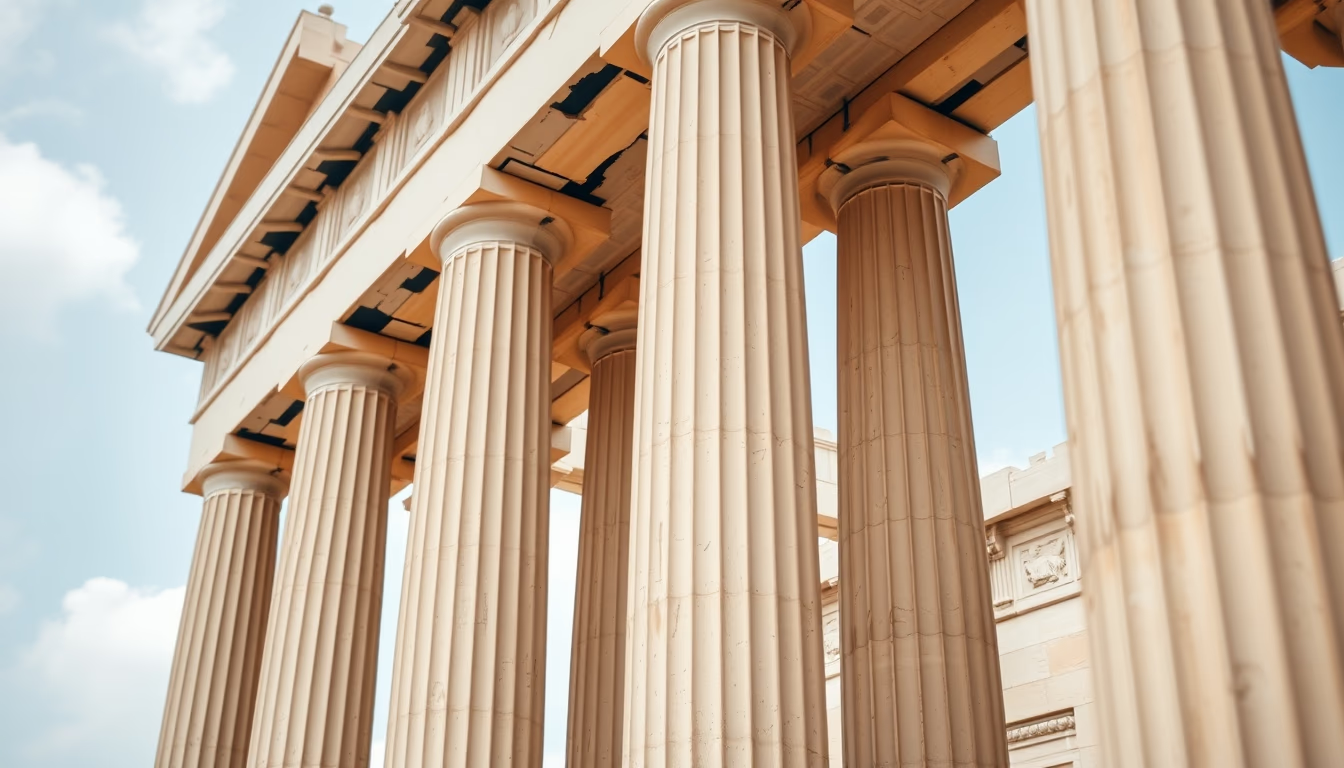
The columns of the Parthenon in Athens are exemplary of classical Doric architecture and enduring symbols of Ancient Greece.
About this subject
The Parthenon, located on the Acropolis of Athens, was built between 447 and 438 BC under the supervision of sculptor Phidias and architects Ictinus and Callicrates. Dedicated to the goddess Athena Parthenos, the construction uses Pentelic marble, quarried from Mount Pentelicus, known for its white color and fine grain. The Doric columns of the temple feature a subtle characteristic called entasis, a slight curvature in the shaft that corrects the optical illusion of concavity. Originally, the Parthenon housed a giant statue of Athena made of gold and ivory, about 12 meters tall, created by Phidias. The temple also served as the treasury of the Delian League, a military alliance led by Athens. Over the centuries, the Parthenon underwent transformations: it was a Christian church in the Byzantine period, a mosque under Ottoman rule, and in 1687, an explosion during the Venetian siege severely damaged its structure. Today, the remaining columns are subject to constant restoration, with original pieces preserved in the Acropolis Museum. Each Doric column has 20 flutes (vertical grooves) and tapers slightly from top to base. The average diameter of the lower columns is 1.9 meters, with a height of approximately 10.4 meters. The precision of optical adjustments in the Parthenon, such as the inclination of the columns and the curved entablature, demonstrates the high engineering knowledge of the ancient Greeks. These architectural details have influenced numerous neoclassical buildings worldwide, including parliament houses and museums.
Frequently Asked Questions
How many columns does the Parthenon originally have?
The Parthenon had 46 Doric columns on the outer perimeter: 8 on the front facade and 17 on each side (sharing the corner columns).
Why are the Parthenon columns slightly curved?
The Greeks applied entasis, a subtle curve in the shaft, to counteract the illusion that straight columns would appear concave. This technique refined the temple's aesthetics.
What material were the Parthenon columns made of?
The columns are carved from Pentelic marble, quarried from Mount Pentelicus about 16 km from Athens. This marble contains traces of iron that gives it a slightly golden hue over time.
Direct URL
https://pub-c7d6a6ea828543ac903a74a341ccb2e1.r2.dev/imagens/parthenon-athens-columns-macro-closeup-p12.avifHow to credit
Include a visible link back to UtilizAí. Copy one of the snippets below:
<a href="https://xn--utiliza-eza.com/en/midia/imagens/parthenon-athens-columns-macro-closeup-p12">Parthenon athens columns</a> by <a href="https://xn--utiliza-eza.com">UtilizAí</a>, licensed under <a href="https://creativecommons.org/licenses/by/4.0/">CC BY 4.0</a>.
[Parthenon athens columns](https://xn--utiliza-eza.com/en/midia/imagens/parthenon-athens-columns-macro-closeup-p12) by [UtilizAí](https://xn--utiliza-eza.com), CC BY 4.0
License: CC-BY-4.0