Parthenon athens columns
1344×768 · AVIF · CC BY 4.0
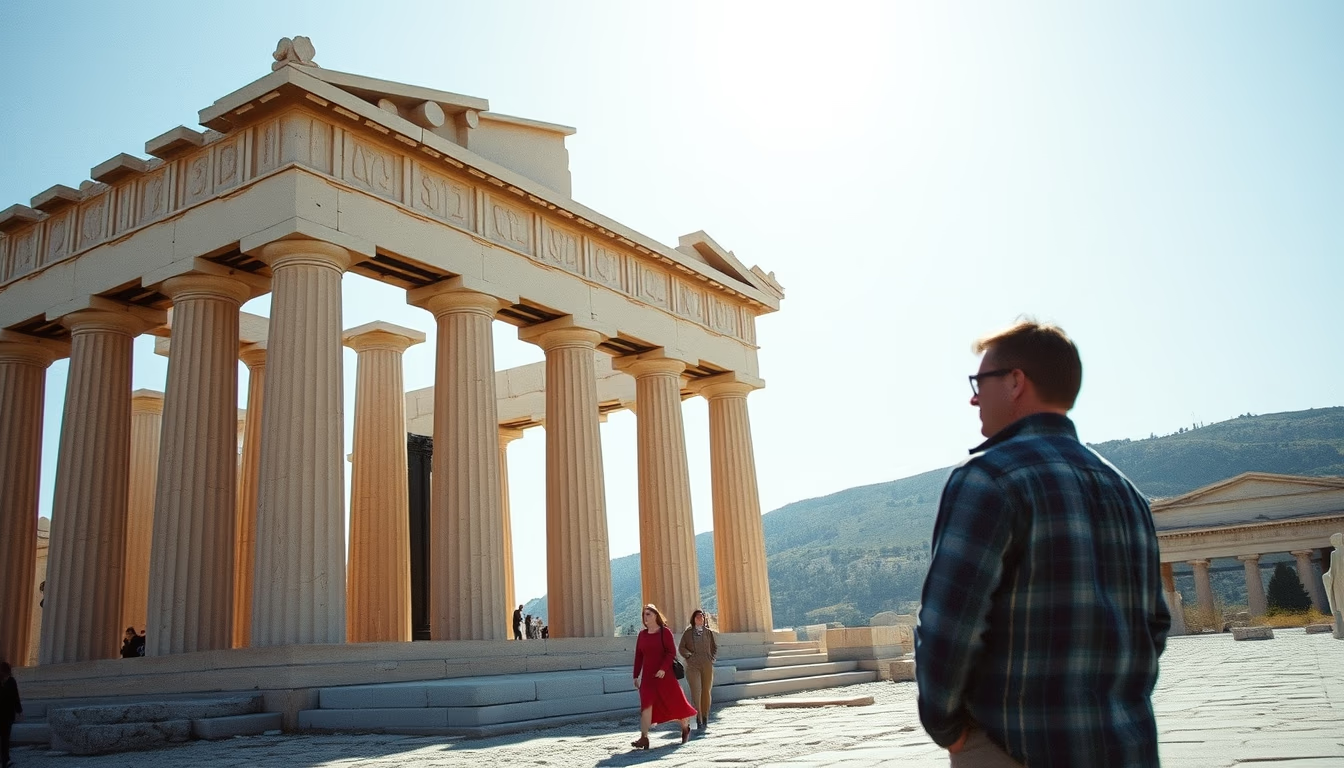
Doric columns of the Parthenon in Athens: ultimate symbol of classical Greek architecture and Athenian democracy.
About this subject
The Parthenon, located on the Acropolis of Athens, is the most famous temple of ancient Greece. Built between 447 and 432 BCE under the leadership of Pericles, it was dedicated to the goddess Athena Parthenos, the city's patron. Its design, by architects Ictinus and Callicrates and sculptor Phidias, represents the apex of the Doric order, with eight columns on the façade and seventeen on the sides, totaling 46 external columns. The columns are not perfectly straight: they feature a slight curvature (entasis) to correct optical illusions, a refinement that demonstrates the technical sophistication of the Greeks.
Originally, the Parthenon housed a colossal chryselephantine (gold and ivory) statue of Athena, 12 meters tall, crafted by Phidias. The temple served as the treasury of the Delian League and, over the centuries, was converted into a Christian church dedicated to the Virgin Mary and later into a mosque under Ottoman rule. In 1687, during a Venetian siege, a gunpowder store inside exploded, causing severe damage and toppling many columns.
The Parthenon's influence extends beyond architecture. It is an icon of Athenian democracy and a symbol of Western cultural heritage. Its columns and pediments have inspired countless neoclassical buildings worldwide, from the U.S. Capitol to the Museu do Ipiranga in Brazil. Despite centuries of decay and controversies over the Elgin Marbles (parts of the frieze taken to the British Museum), the Parthenon remains one of the most visited and studied monuments on Earth.
Frequently Asked Questions
How many columns does the Parthenon originally have?
The Parthenon had 46 external columns in the Doric order: eight on the front and back façades and seventeen on each side. Many are still standing, though some collapsed in the 1687 explosion.
Why are the Parthenon's columns slightly curved?
Greek architects introduced a subtle curvature called entasis to counteract the optical illusion that straight columns appear concave. This refinement also gave a sense of elasticity and lightness to the structure.
Has the Parthenon been used for purposes other than a Greek temple?
Yes. It was converted into a Christian church in the 6th century, later a mosque under the Ottomans in the 15th century, and served as a gunpowder magazine, which led to its explosion in 1687. Today it is an archaeological site and open-air museum.
Direct URL
https://pub-c7d6a6ea828543ac903a74a341ccb2e1.r2.dev/imagens/parthenon-athens-columns-film-grain-authentic-p1.avifHow to credit
Include a visible link back to UtilizAí. Copy one of the snippets below:
<a href="https://xn--utiliza-eza.com/en/midia/imagens/parthenon-athens-columns-film-grain-authentic-p1">Parthenon athens columns</a> by <a href="https://xn--utiliza-eza.com">UtilizAí</a>, licensed under <a href="https://creativecommons.org/licenses/by/4.0/">CC BY 4.0</a>.
[Parthenon athens columns](https://xn--utiliza-eza.com/en/midia/imagens/parthenon-athens-columns-film-grain-authentic-p1) by [UtilizAí](https://xn--utiliza-eza.com), CC BY 4.0
License: CC-BY-4.0