Paramotor flight
1344×768 · AVIF · CC BY 4.0
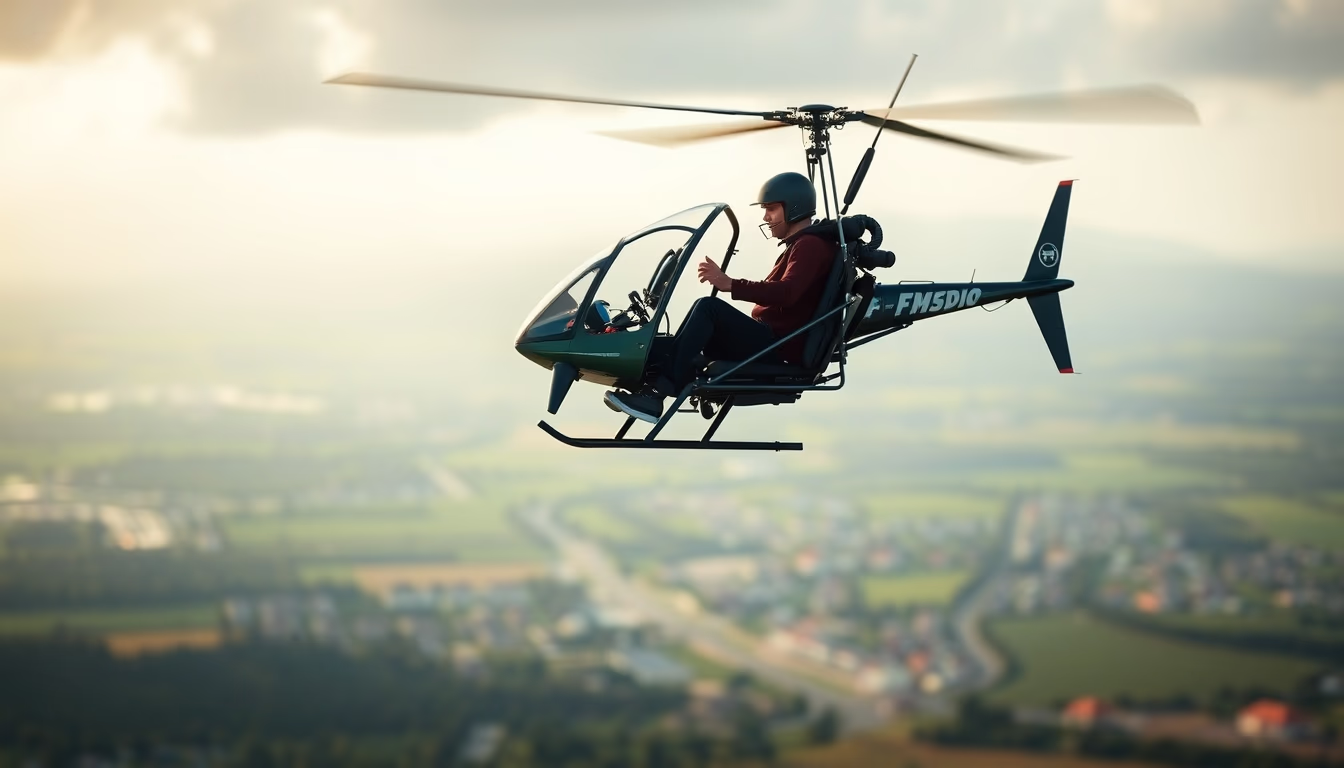
Paramotor flight combines paragliding with a backpack motor, enabling takeoff from flat ground and long-distance flights safely.
About this subject
The paramotor, also known as a powered paraglider, is a flexible-wing aircraft consisting of a paraglider wing and a backpack motor attached to the pilot. This system allows takeoff from flat ground without the need for hills or favorable wind, making it accessible for recreational and long-distance flights. The engine, typically a two-stroke with low displacement, drives a propeller that generates thrust, while the wing is controlled by lines and the pilot's body. Typical flight duration ranges from 1 to 4 hours, depending on fuel tank capacity and weather conditions.
The history of paramotoring dates back to the 1980s, when inventors in France and the United States adapted lightweight engines to paragliders. The first documented flight was performed by Brian Cosgrove and Buck Berry in 1978, but commercial development gained momentum in the 1990s. Today, the sport is regulated by organizations such as the Fédération Aéronautique Internationale (FAI), which organizes precision and distance competitions. In Brazil, paramotoring has grown especially in regions with vast flatlands like the Pantanal and the cerrado, offering a unique perspective of the landscape.
A relevant technical curiosity is that paramotoring requires specific training, as the pilot must manage the balance between power, wing stability, and winds. Unlike conventional paragliding, the motor adds weight and complexity, but compensates with independence from launch sites. Modern paramotors weigh between 20 and 35 kg and can reach speeds up to 50 km/h. Safety is enhanced with instruments such as altimeters, GPS, and radios, along with reserve parachutes.
Culturally, paramotoring is often associated with scenic flights and air tourism, as it allows exploration of large areas with low operational costs. Events like the Paramotor World Championship attract pilots from many countries, and the practice is popular among adventurers seeking the feeling of free flight without terrain limitations. The global community maintains forums and meetups to share experiences on maintenance, techniques, and routes.
Frequently Asked Questions
What is the difference between a paramotor and a conventional paraglider?
A paramotor has a backpack engine that allows takeoff from flat ground and longer flights, whereas a paraglider relies on wind and slopes for launch and gliding.
Do I need a license to fly a paramotor?
Yes, in most countries, including Brazil, you need specific training and certification from aviation authorities such as ANAC or FAI.
How high can a paramotor fly?
Recreational flights typically stay below 500 meters, but with proper equipment and oxygen, altitudes above 3,000 meters are possible.
Direct URL
https://pub-c7d6a6ea828543ac903a74a341ccb2e1.r2.dev/imagens/paramotor-flight-tilt-shift-miniature-fresh5.avifHow to credit
Include a visible link back to UtilizAí. Copy one of the snippets below:
<a href="https://xn--utiliza-eza.com/en/midia/imagens/paramotor-flight-tilt-shift-miniature-fresh5">Paramotor flight</a> by <a href="https://xn--utiliza-eza.com">UtilizAí</a>, licensed under <a href="https://creativecommons.org/licenses/by/4.0/">CC BY 4.0</a>.
[Paramotor flight](https://xn--utiliza-eza.com/en/midia/imagens/paramotor-flight-tilt-shift-miniature-fresh5) by [UtilizAí](https://xn--utiliza-eza.com), CC BY 4.0
License: CC-BY-4.0