Paramotor flight
1344×768 · AVIF · CC BY 4.0
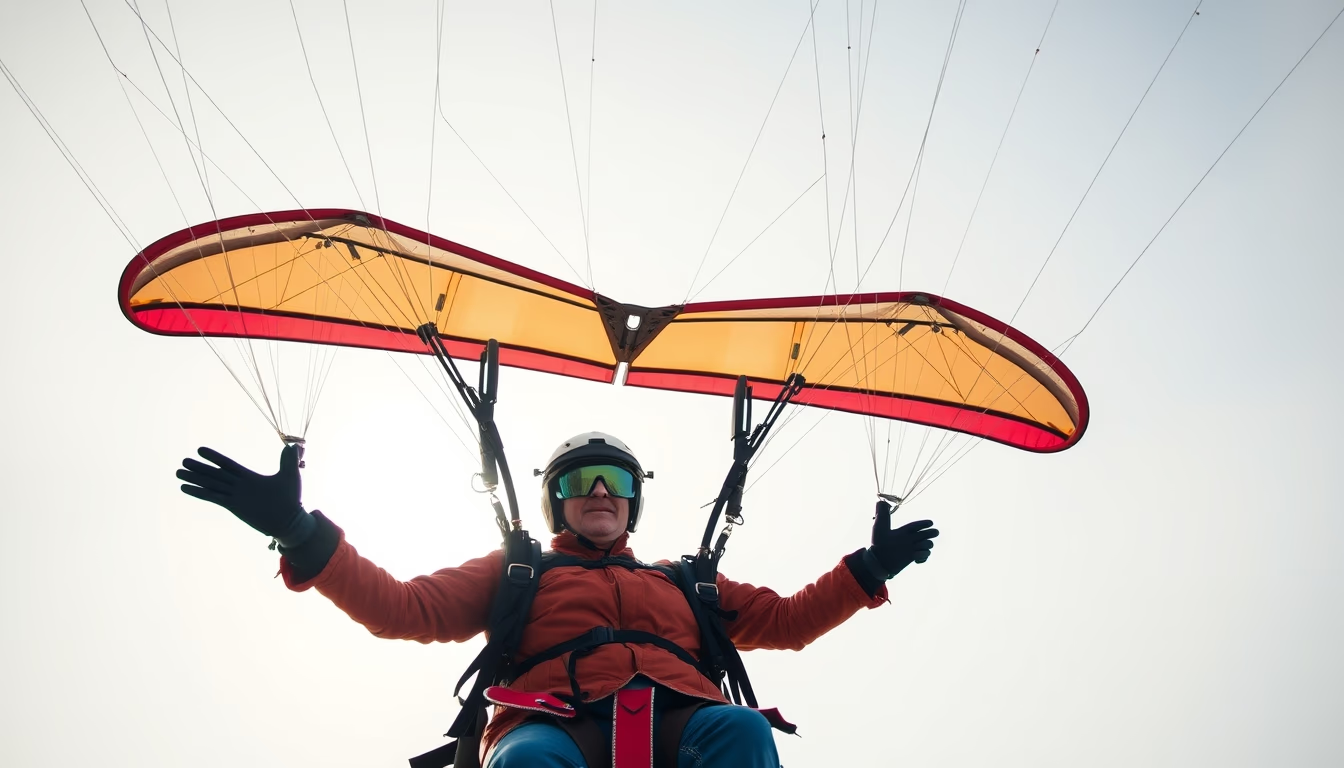
Paramotoring is a form of powered paragliding that combines a paraglider wing with a backpack motor, enabling flat-ground takeoffs and low-altitude autonomous flights.
About this subject
Paramotoring, also known as powered paragliding, consists of a paraglider wing attached to a small internal combustion engine carried on the pilot's back, mounted on a lightweight frame. Unlike traditional paragliding, which relies on thermals or slopes, the paramotor enables takeoff from any flat terrain, such as soccer fields or beaches, thanks to the thrust generated by the propeller. The invention dates back to the late 1980s, with Frenchman Jean-Claude Béchu credited as the pioneer for adapting an ultralight engine to a paraglider. Since then, the practice has expanded globally, particularly in regions with gentle terrain and stable weather, such as inland Brazil, especially in the states of São Paulo, Minas Gerais, and Rio Grande do Sul, where many schools and events exist. Typical flight altitude ranges from 150 to 500 meters, but higher flights are possible with permission. The equipment weighs between 20 and 30 kilograms and consumes about 3 to 5 liters of gasoline per hour, providing up to 3 hours of flight time. Notably, paramotoring is one of the most accessible forms of personal aviation, with entry costs starting around $4,000 (USD) for used gear and basic training. In Brazil, the National Civil Aviation Agency (ANAC) regulates the practice as amateur sport, requiring aircraft registration and a specific license, but exempting strict medical certification. The sport is popular for recreational flights, aerial photography, and even tourism, such as overflights of Fernando de Noronha and the Serra do Mar mountain range.
Frequently Asked Questions
Do I need a license to fly a paramotor in Brazil?
Yes, you must obtain an Experimental Airworthiness Certificate (CAE) for the aircraft and a Paramotor Pilot License issued by ANAC. Training includes theoretical and practical courses at an accredited school.
What is the maximum altitude for a paramotor flight?
In Brazil, the recreational altitude limit is 500 feet (about 150 meters) above ground level unless special airspace authorization is given. This varies by country.
Can you fly a paramotor in bad weather?
No, paramotoring is highly weather-sensitive. Ideal conditions include winds below 20 km/h, no rain, and no strong gusts to ensure safety and stability.
Direct URL
https://pub-c7d6a6ea828543ac903a74a341ccb2e1.r2.dev/imagens/paramotor-flight-studio-editorial-portrait-fresh9.avifHow to credit
Include a visible link back to UtilizAí. Copy one of the snippets below:
<a href="https://xn--utiliza-eza.com/en/midia/imagens/paramotor-flight-studio-editorial-portrait-fresh9">Paramotor flight</a> by <a href="https://xn--utiliza-eza.com">UtilizAí</a>, licensed under <a href="https://creativecommons.org/licenses/by/4.0/">CC BY 4.0</a>.
[Paramotor flight](https://xn--utiliza-eza.com/en/midia/imagens/paramotor-flight-studio-editorial-portrait-fresh9) by [UtilizAí](https://xn--utiliza-eza.com), CC BY 4.0
License: CC-BY-4.0