Paramotor flight
1344×768 · AVIF · CC BY 4.0
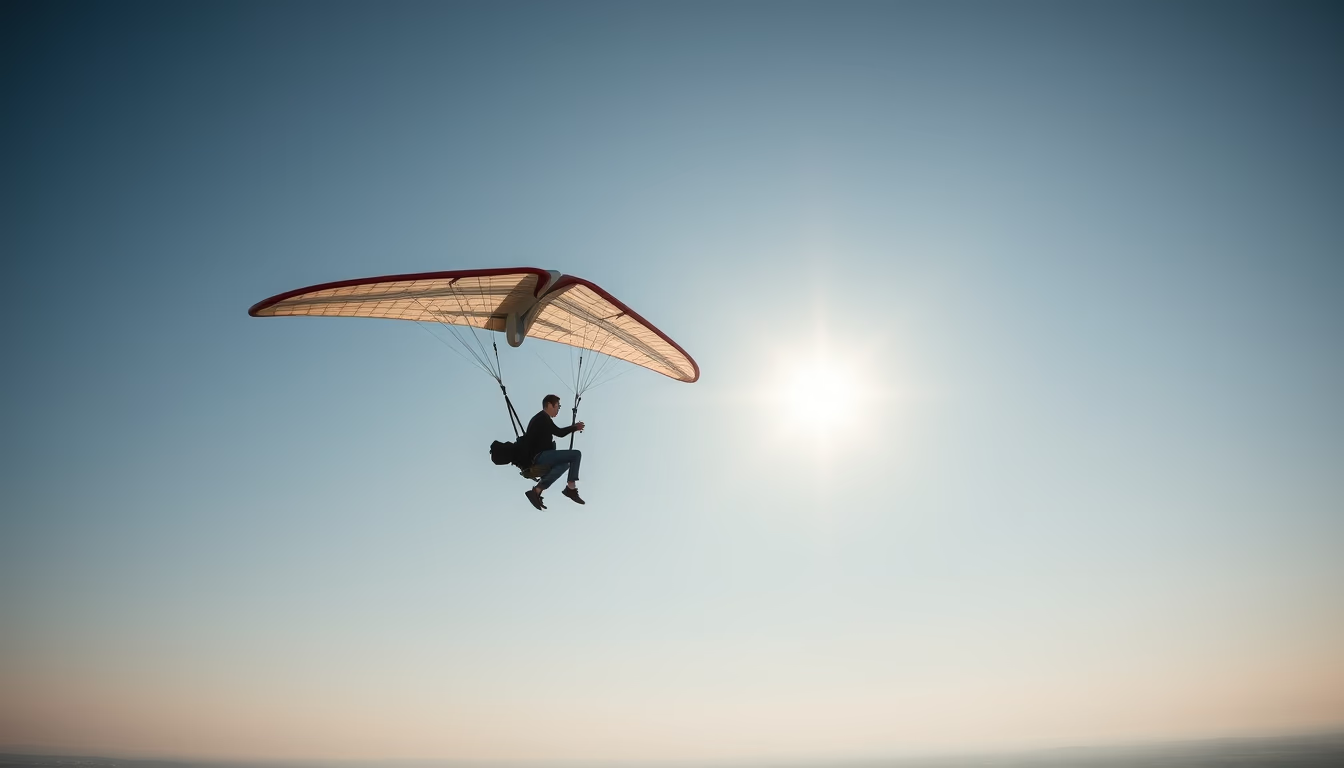
Paramotoring is a form of powered paragliding, combining a paraglider wing with a motor and propeller, enabling recreational and sport flights.
About this subject
Paramotoring, also known as powered paragliding, is a category of ultralight aircraft that uses a flexible paraglider wing attached to a propeller motor carried on the pilot's back. Unlike conventional paragliding, which relies solely on thermal currents to stay aloft, the paramotor offers independent flight capability regardless of weather conditions, enabling takeoffs from flat terrain and long-distance flights.
The invention of the paramotor is attributed to Englishman Mike Byrne, who in 1980 adapted a lawnmower engine to a paraglider, creating the first functional prototype. Since then, the sport has evolved with lighter and more powerful engines, high-performance wings, and safety systems such as reserve parachutes. In Brazil, paramotoring gained popularity in the 1990s, especially in flat regions like the Pantanal and the northeastern coast, where wind conditions are favorable.
Technically, a typical paramotor weighs between 20 and 35 kg, with two-stroke (more common) or four-stroke engines, power ranging from 15 to 30 hp, and average fuel consumption of 4 to 6 liters per hour. Cruise speed is between 35 and 50 km/h, and endurance can reach up to 4 hours, depending on the fuel tank. Pilot training requires a theoretical and practical course, with certification from the Brazilian Association of Paramotor (ABPM) or international bodies such as the FAI.
The practice of paramotoring is regulated by ANAC (Brazil's National Civil Aviation Agency), requiring an ultralight pilot license and aircraft registration. Although considered safe when using proper equipment and training, main risks include collisions with obstacles, mechanical failures, and adverse weather. The sport is also used for aerial photography, environmental monitoring, and tourism.
Frequently Asked Questions
What is the difference between paramotor and paraglider?
A paramotor has a motor attached to the pilot's back, allowing takeoff from flat ground and flight independent of thermal currents. A traditional paraglider has no motor and requires slopes or towing to launch, relying on thermals to stay aloft.
Do I need a license to fly a paramotor in Brazil?
Yes, a pilot license for ultralight (PPL-U) issued by ANAC is mandatory, along with aircraft registration. Training includes theoretical and practical courses at an accredited school.
How much does a complete paramotor cost?
A basic kit (wing, motor, reserve parachute, and accessories) ranges from $5,000 to $10,000 USD, depending on brand and configuration. Used models can be found for lower prices.
Direct URL
https://pub-c7d6a6ea828543ac903a74a341ccb2e1.r2.dev/imagens/paramotor-flight-minimalist-composition-fresh12.avifHow to credit
Include a visible link back to UtilizAí. Copy one of the snippets below:
<a href="https://xn--utiliza-eza.com/en/midia/imagens/paramotor-flight-minimalist-composition-fresh12">Paramotor flight</a> by <a href="https://xn--utiliza-eza.com">UtilizAí</a>, licensed under <a href="https://creativecommons.org/licenses/by/4.0/">CC BY 4.0</a>.
[Paramotor flight](https://xn--utiliza-eza.com/en/midia/imagens/paramotor-flight-minimalist-composition-fresh12) by [UtilizAí](https://xn--utiliza-eza.com), CC BY 4.0
License: CC-BY-4.0