Paramotor flight
1344×768 · AVIF · CC BY 4.0
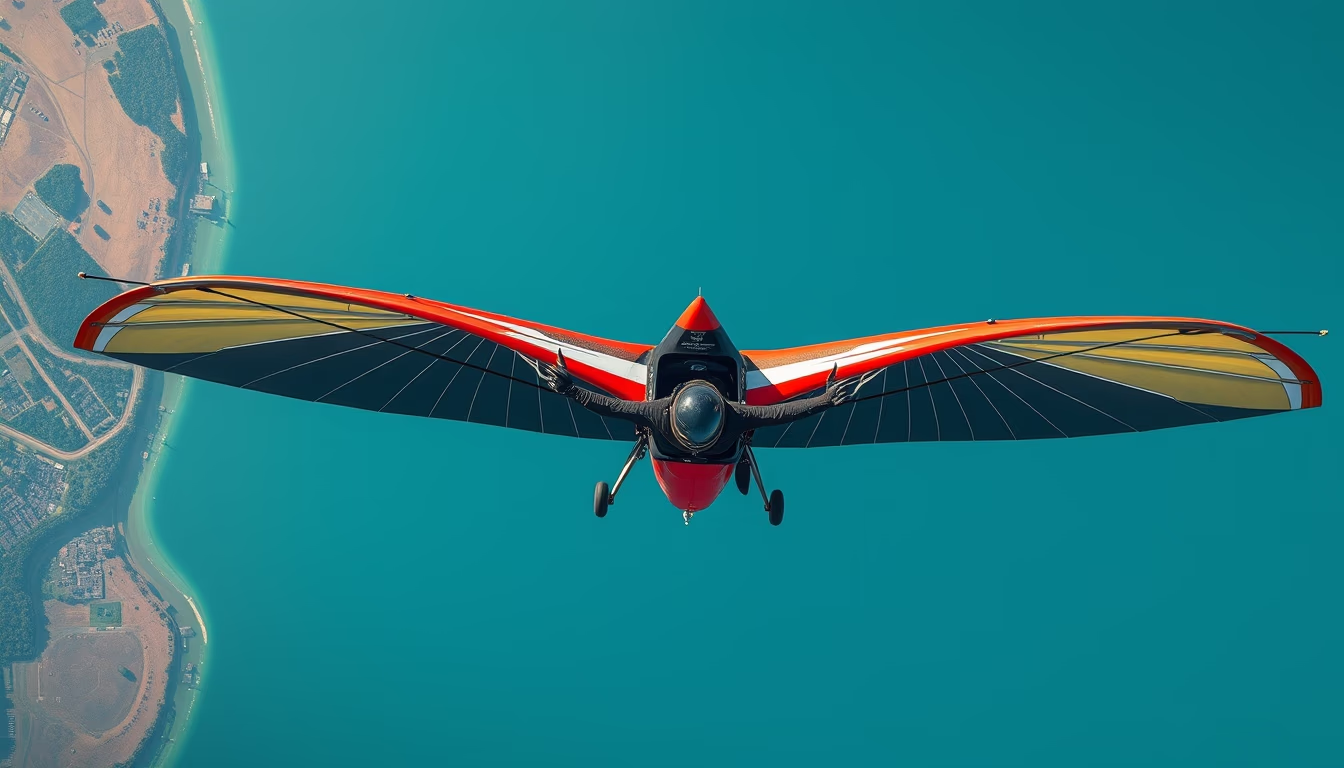
Paramotor flight combines a paraglider with a backpack motor, enabling ground takeoffs and autonomous low-altitude flights.
About this subject
The paramotor, also known as a powered paraglider, is a type of foot-launched aircraft that combines a paraglider wing with a lightweight motor mounted on the pilot's back. The motor typically runs on a mixture of gasoline and two-stroke oil, driving a propeller that provides thrust for takeoff and sustained flight. Fuel tanks range from 5 to 15 liters, allowing flights of 1 to 3 hours at cruising speeds of 30 to 50 km/h. Paramotors can reach altitudes of up to 10,000 feet, though most flights stay below 1,000 feet for safety and regulations.
In Brazil, paramotoring has grown steadily since the early 2000s, with popular flying sites in flat terrains such as the interior of São Paulo state, the Cerrado region, and the northeast coast. The activity is regulated by the National Civil Aviation Agency (ANAC) and the Brazilian Confederation of Paragliding (CBP). Legal operation requires an Experimental Airworthiness Certificate (CAE) for the equipment, a third-class Aeronautical Medical Certificate (CMA), and a paramotor pilot license obtained through theoretical and practical training with an accredited instructor.
Safety-wise, paramotoring is often considered safer than free paragliding because the engine gives pilots the ability to avoid turbulent areas and choose landing spots more easily. However, it demands thorough training, especially in propeller management and fuel planning. Common causes of accidents include crosswind takeoffs and fuel exhaustion. Modern paramotors feature reserve parachutes and dual ignition systems to enhance safety. The fatality rate is relatively low compared to other ultralight aircraft, estimated at around 1 per 1,000 pilots per year.
Interesting facts: The first practical paramotor was developed in the 1980s, evolving from early attempts at motorized paragliding. The world distance record for paramotor flight stands at over 1,200 km, set in Australia. In Brazil, national competitions like the Brazilian Paramotor Championship test pilots in precision landing and cross-country navigation, drawing participants from across the country.
Frequently Asked Questions
Do I need a license to fly a paramotor in Brazil?
Yes, legal flight requires a paramotor pilot license (brevê), an Aeronautical Medical Certificate (CMA), and an Experimental Airworthiness Certificate (CAE) for the equipment. Training must be conducted by an ANAC-accredited instructor.
What is the flight endurance of a paramotor?
Endurance ranges from 1 to 3 hours depending on fuel tank size and motor efficiency. Larger tanks can support up to 5 hours in economical cruising.
Is paramotoring safe?
Yes, it is considered relatively safe when proper training and maintenance are followed. The motor gives pilots control to avoid turbulence and choose safe landing sites, but risks include fuel exhaustion and wind conditions.
Direct URL
https://pub-c7d6a6ea828543ac903a74a341ccb2e1.r2.dev/imagens/paramotor-flight-isometric-flat-lay-fresh3.avifHow to credit
Include a visible link back to UtilizAí. Copy one of the snippets below:
<a href="https://xn--utiliza-eza.com/en/midia/imagens/paramotor-flight-isometric-flat-lay-fresh3">Paramotor flight</a> by <a href="https://xn--utiliza-eza.com">UtilizAí</a>, licensed under <a href="https://creativecommons.org/licenses/by/4.0/">CC BY 4.0</a>.
[Paramotor flight](https://xn--utiliza-eza.com/en/midia/imagens/paramotor-flight-isometric-flat-lay-fresh3) by [UtilizAí](https://xn--utiliza-eza.com), CC BY 4.0
License: CC-BY-4.0