Paramotor flight
1344×768 · AVIF · CC BY 4.0
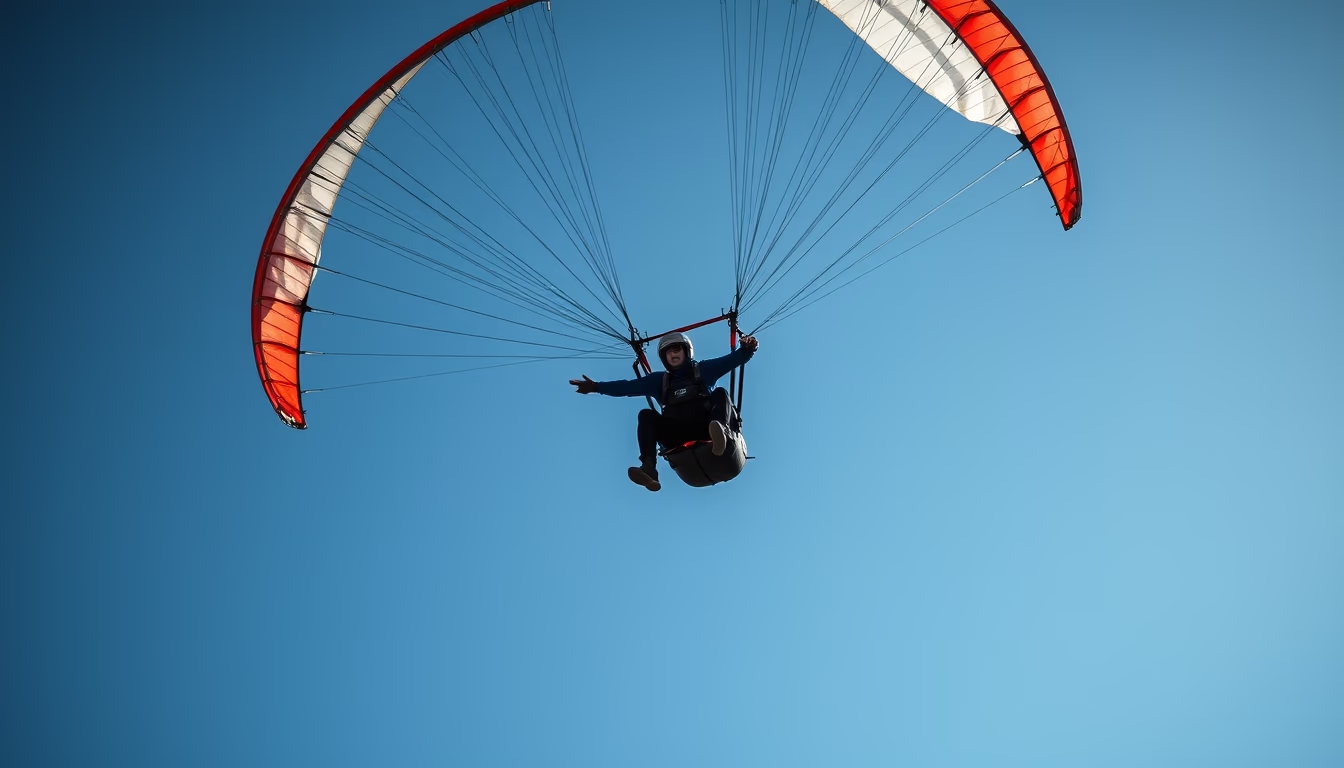
Discover paramotoring, the fusion of paragliding and engine that enables accessible free flight across Brazil and the world.
About this subject
Paramotoring, also known as powered paragliding, is a form of ultralight aviation that combines a paraglider wing with a backpack-mounted engine and propeller. Unlike traditional airplanes or hang gliders, a paramotor is foot-launched from flat ground, requiring no runway or hill. This accessibility has fueled its growth worldwide, especially in countries like Brazil, where warm weather, gentle winds, and diverse landscapes create ideal flying conditions year-round.
Brazil has become a hotspot for paramotor enthusiasts, with iconic flying sites such as Praia do Forte in Bahia, the Serra da Mantiqueira mountain range, and the vast plains of the Pantanal. The sport took off in the country during the 2000s, supported by local clubs and international events like the Paramotor World Cup, which has held stages in Brazil. Pilots appreciate the ability to fly low and slow, perfect for aerial photography of beaches, waterfalls, and urban skylines, a major draw for fine-art photographers.
Technically, paramotors are simple yet reliable. Most use two-stroke engines producing 15 to 30 horsepower, pushing the pilot at cruise speeds of 30 to 50 km/h (18-31 mph). Flight duration ranges from 1 to 3 hours, depending on fuel load (typically 10-20 liters) and throttle usage. Wings are made from ripstop nylon or polyester, with areas from 20 to 30 m². Altitude records exceed 7,600 meters (25,000 feet), but recreational flights usually stay below 1,000 meters. Cross-country distances of over 300 km have been achieved, showcasing the machine's efficiency.
Safety in paramotoring relies heavily on pilot discipline. Most incidents involve pilot error, such as flying in turbulent winds or misjudging landing zones. Beginners undergo ground school and flight training with a certified instructor, often through schools affiliated with organizations like the US Powered Paragliding Association (USPPA) or the Brazilian ABPP. While no license is required in many countries (including the US, for pure foot-launch), training is strongly advised. The initial investment for a new paramotor setup ranges from $8,000 to $15,000 USD, making it one of the most affordable forms of powered flight.
Frequently Asked Questions
Is paramotoring safe?
Yes, when practiced with proper training, certified equipment, and respect for weather conditions (especially winds under 25 km/h). Fatal accidents are rare and usually result from pilot error or poor maintenance.
Do I need a license to fly a paramotor?
In many countries, including the US and Brazil, no license is required for foot-launched paramotoring. However, thorough training from a certified instructor is strongly recommended to learn safety and flight techniques.
How much does a paramotor cost?
A new complete setup (wing, engine, harness, fuel tank, and propeller) ranges from $8,000 to $15,000 USD. Used equipment can be found for $4,000 to $10,000, but buyers should inspect thoroughly for wear.
Direct URL
https://pub-c7d6a6ea828543ac903a74a341ccb2e1.r2.dev/imagens/paramotor-flight-fine-art-photography-fresh13.avifHow to credit
Include a visible link back to UtilizAí. Copy one of the snippets below:
<a href="https://xn--utiliza-eza.com/en/midia/imagens/paramotor-flight-fine-art-photography-fresh13">Paramotor flight</a> by <a href="https://xn--utiliza-eza.com">UtilizAí</a>, licensed under <a href="https://creativecommons.org/licenses/by/4.0/">CC BY 4.0</a>.
[Paramotor flight](https://xn--utiliza-eza.com/en/midia/imagens/paramotor-flight-fine-art-photography-fresh13) by [UtilizAí](https://xn--utiliza-eza.com), CC BY 4.0
License: CC-BY-4.0