Pan flute andean
1344×768 · AVIF · CC BY 4.0

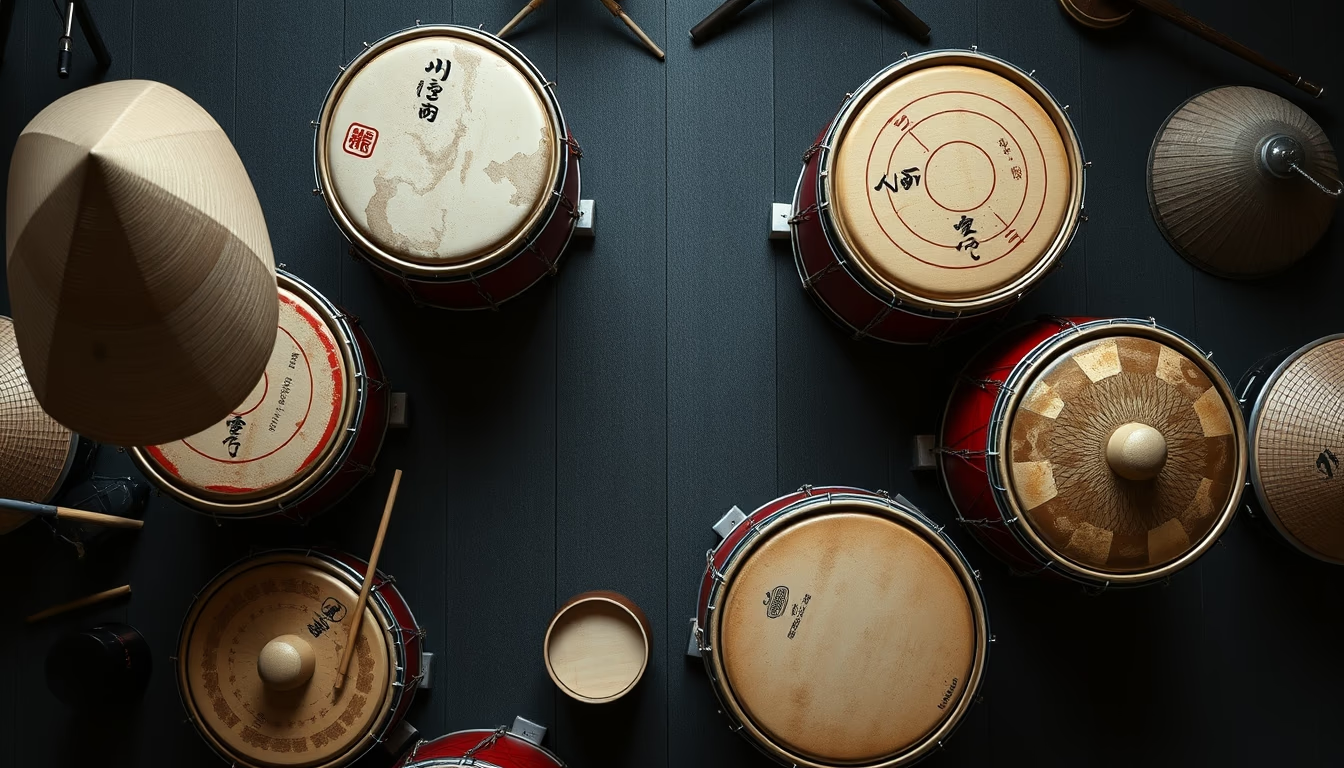
The Andean pan flute, also known as sikus or zampoñas, is an ancient instrument of the Aymara and Quechua peoples.
About this subject
The Andean pan flute, known as sikus in Aymara or zampoñas in Spanish, is an aerophone made of a row of bamboo or cane tubes of different lengths, closed at one end. Each tube produces a specific musical note when blown transversely. Traditionally, sikus are played in complementary pairs: the arca (male) and the ira (female), with seven or eight tubes each, forming the pentatonic scale characteristic of the Andes.
This instrument has pre-Columbian origins, with archaeological evidence dating back to at least 1500 BC in the Nazca and Moche cultures of Peru. It was used in religious rituals, agricultural festivals, and ceremonies thanking Pachamama (Mother Earth) and Inti (Sun God). The handmade crafting still follows ancient techniques: selecting the cane, precise cutting, and manual tuning with beeswax to adjust pitch.
Today, the pan flute is a symbol of cultural identity in Andean countries: Peru, Bolivia, Ecuador, Colombia, Chile, and northern Argentina. Folk groups like Los Kjarkas, Illapu, and the Bolivian ensemble Los Jairas popularized the instrument worldwide. In contemporary music, artists such as Romanian Gheorghe Zamfir and the group Incantation spread the sound of sikus in film scores and fusions with jazz and classical music. The instrument also appears in festivals like Inti Raymi (Festival of the Sun) and the Oruro Carnival.
A fun fact: sikus are tuned differently by region. Those from the Bolivian altiplano have a deeper, denser scale, while those from the Peruvian coast are higher-pitched. Circular breathing technique allows the player to sustain continuous sound, a skill that requires years of practice.
Frequently Asked Questions
What is the difference between sikus, zampoñas, and pan flute?
They are essentially the same instrument. Sikus is the Aymara name, zampoñas is the Spanish term used in the Andean region, and pan flute is the generic English name for this type of aerophone.
How are sikus tuned?
Tuning is done by hand: each tube is cut to the precise length for the desired note, and then the pitch is adjusted by applying beeswax to the bottom opening. Traditionally, the scale is pentatonic (C, D, E, G, A).
Where can I listen to music with Andean pan flute?
Beyond folk bands like Los Kjarkas, Illapu, and Savia Andina, the instrument appears in film scores such as "The Last Emperor" (Gheorghe Zamfir) and in new age and world music albums. Andean festivals and live performances in squares of Cusco, La Paz, or Quito are also great opportunities.
Direct URL
https://pub-c7d6a6ea828543ac903a74a341ccb2e1.r2.dev/imagens/pan-flute-andean-travel-photography-p3.avifHow to credit
Include a visible link back to UtilizAí. Copy one of the snippets below:
<a href="https://xn--utiliza-eza.com/en/midia/imagens/pan-flute-andean-travel-photography-p3">Pan flute andean</a> by <a href="https://xn--utiliza-eza.com">UtilizAí</a>, licensed under <a href="https://creativecommons.org/licenses/by/4.0/">CC BY 4.0</a>.
[Pan flute andean](https://xn--utiliza-eza.com/en/midia/imagens/pan-flute-andean-travel-photography-p3) by [UtilizAí](https://xn--utiliza-eza.com), CC BY 4.0
License: CC-BY-4.0