Pan flute andean
1344×768 · AVIF · CC BY 4.0
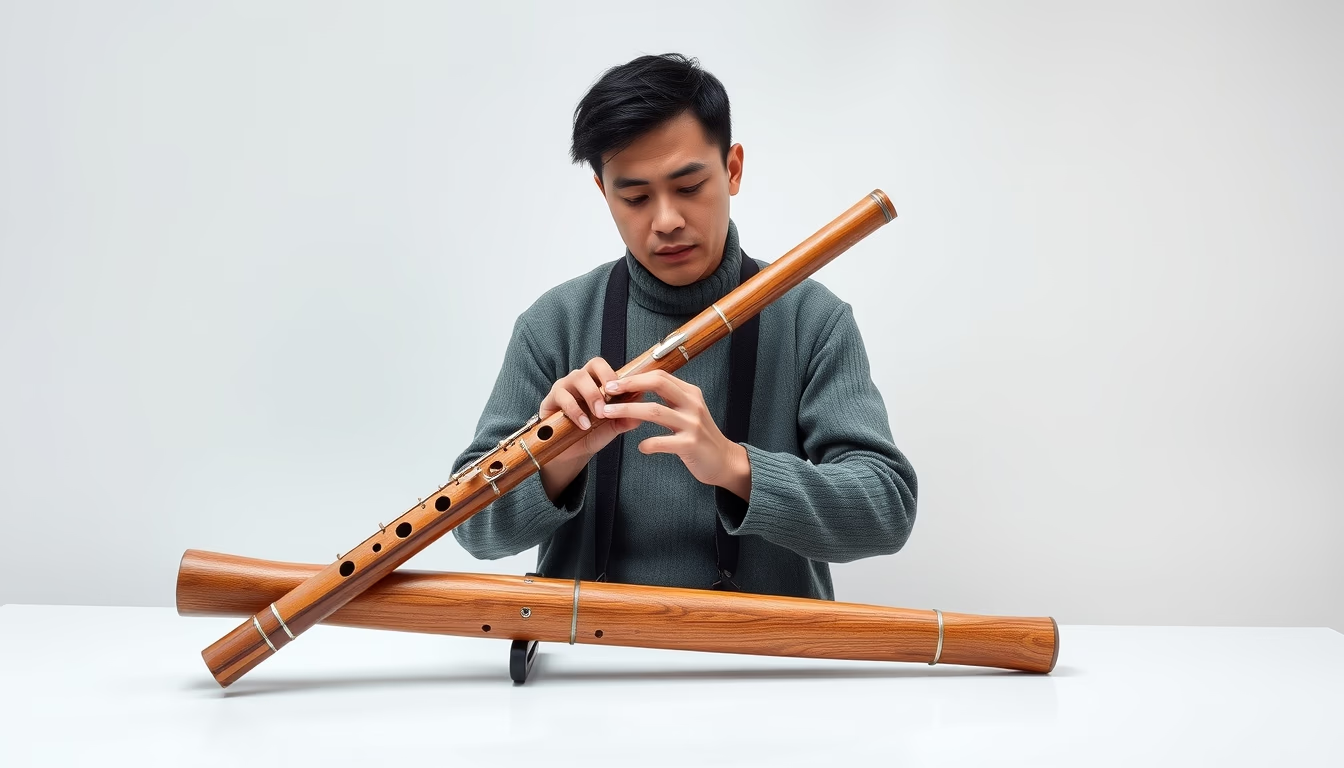
The Andean pan flute, known as zampoña or antara, is one of the most iconic instruments of traditional Andean music, used in festivals and rituals for millennia.
About this subject
The Andean pan flute, known as siku (in the Bolivian and Peruvian highlands) or antara (in the central Andes), is a wind instrument composed of cane or bamboo tubes of varying lengths, arranged in a row and tied together. Its origins trace back to pre-Columbian civilizations such as the Aymara and Quechua, who used it in religious ceremonies, agricultural rituals, and community festivals. The tubes are cut and tuned naturally, producing the pentatonic scale characteristic of Andean music. There are size variations: larger zampoñas (like the taqui) produce deeper sounds, while smaller ones (like the chuli) yield higher notes.
In Andean culture, the pan flute is more than a musical instrument; it is a symbol of collective identity. Traditional musicians often play in pairs, alternating melodic phrases in a style known as "tarkeada" or "sikuri." This practice requires cooperation and quick reflexes, as each player performs only a few notes of a melody. Groups such as Los Kjarkas (Bolivia) and Illapu (Chile) have brought the sound of the zampoña to global audiences, incorporating it into genres like nueva canción and even fusions with rock and electronic music.
Handcrafting a zampoña requires empirical knowledge of materials and acoustics. The tubes are traditionally made from giant cane (Arundo donax) or bamboo, cut at an angle for better sound projection. The bottom ends are sealed with natural nodes or wax, forming resonating air columns. Binding with wool threads or leather strips holds the tubes together and allows tuning adjustments. Each zampoña is unique, reflecting the artisan's sensibility and the region's climatic conditions.
Today, the Andean pan flute is recognized as intangible cultural heritage in several Andean countries. Festivals such as the Lord of Qoyllur Rit'i (Peru) and the Oruro Carnival (Bolivia) feature dozens of sikuri ensembles, keeping the tradition alive. In Brazil, although less common, the zampoña inspires folk guitar players and world music groups, who adopt it for its nostalgic and evocative timbre.
Frequently Asked Questions
What is the difference between siku, antara, and zampoña?
Siku, antara, and zampoña are regional names for the Andean pan flute. Siku is common in the Bolivian and Peruvian highlands, antara in the central Andes (e.g., Ecuador), and zampoña is a generalized Spanish term. They refer to the same instrument, with minor variations in size and tuning.
How is an Andean pan flute made?
It is made by cutting cane or bamboo tubes of graduated lengths, sealing one end with a natural node or wax. The tubes are tied side by side with wool threads or leather strips to form a row. Tuning is adjusted by the length and diameter of the tubes, following a pentatonic scale.
Is the zampoña used in modern popular music?
Yes, the zampoña appears in various contemporary genres. Andean groups like Los Kjarkas and Illapu popularized it in folk music. Today, world music, new age, and even rock artists (e.g., Pink Floyd's Andes influences) incorporate its sound. In Brazil, folk guitarists and fusion bands also use it.
Direct URL
https://pub-c7d6a6ea828543ac903a74a341ccb2e1.r2.dev/imagens/pan-flute-andean-studio-still-life-p9.avifHow to credit
Include a visible link back to UtilizAí. Copy one of the snippets below:
<a href="https://xn--utiliza-eza.com/en/midia/imagens/pan-flute-andean-studio-still-life-p9">Pan flute andean</a> by <a href="https://xn--utiliza-eza.com">UtilizAí</a>, licensed under <a href="https://creativecommons.org/licenses/by/4.0/">CC BY 4.0</a>.
[Pan flute andean](https://xn--utiliza-eza.com/en/midia/imagens/pan-flute-andean-studio-still-life-p9) by [UtilizAí](https://xn--utiliza-eza.com), CC BY 4.0
License: CC-BY-4.0