Pan flute andean
1344×768 · AVIF · CC BY 4.0

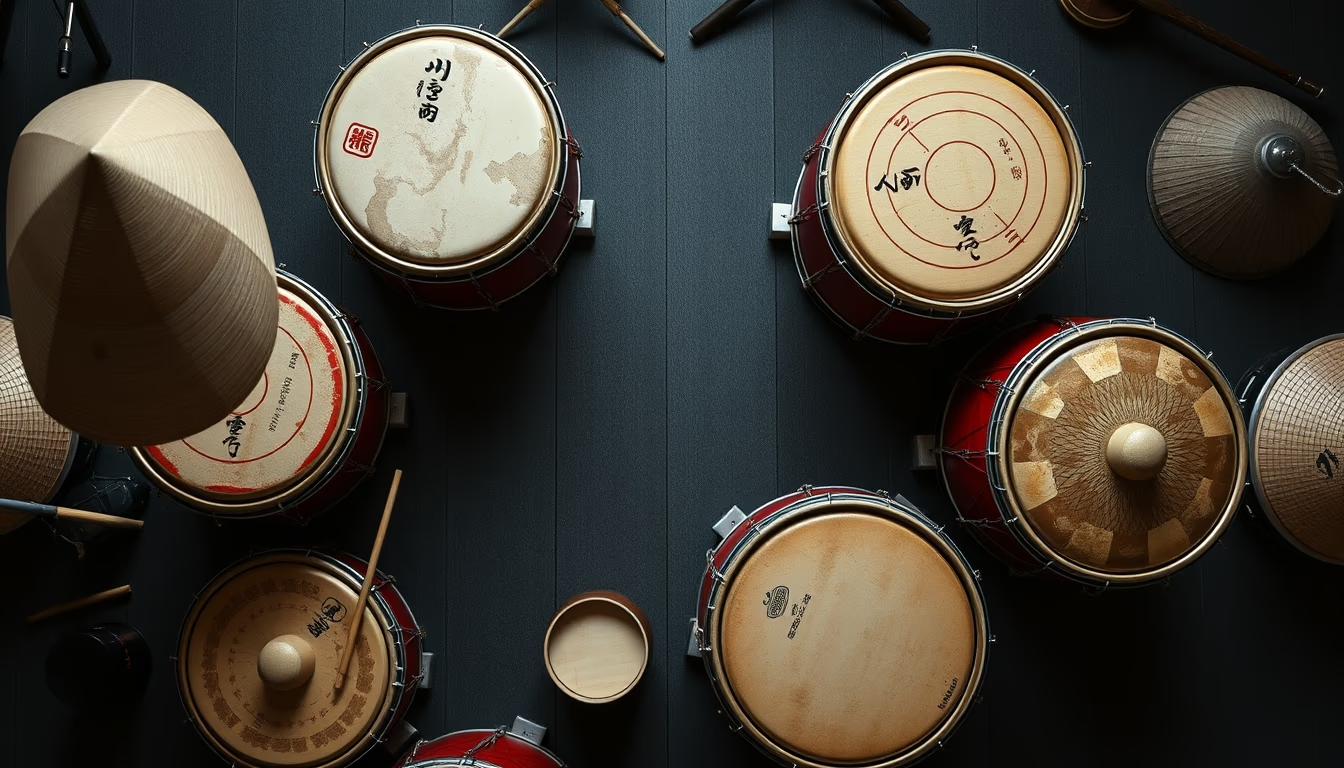
The siku, or Andean pan flute, is an ancient wind instrument used for millennia in the Andes, carrying deep cultural and musical significance.
About this subject
The siku, also known as the Andean pan flute or zampoña, is a wind instrument made of tubes of different lengths tied together in a row. Originating in the Andes region, especially the Altiplano spanning Peru, Bolivia, Chile, Argentina, and Ecuador, its history goes back over 2,000 years, with archaeological evidence found in pre-Incan cultures such as Nazca and Moche. Traditionally crafted from sugarcane, bamboo, or wood, each tube produces a distinct note when the musician blows transversely across the opening.
The siku is not only a solo instrument but plays a central role in Andean ensemble music, such as sikuri groups, where multiple musicians play sikus of different sizes and tunings to create complex harmonies. There are two main types: the male siku (arca) and the female siku (ira), which together form a complete octave. This duality reflects the Andean worldview of complementarity between opposites, such as sun and moon, masculine and feminine.
Beyond its use in religious rituals and traditional festivities like the Feast of the Virgin of Candelaria and Inti Raymi, the siku gained global projection from the 20th century onward, driven by groups like Los Incas and Argentine musician Uña Ramos. The characteristic sound of the siku immediately evokes the soundscape of the Andes, often associated with Andean folk music and the neo-Andean genre. Its popularity transcends borders, being recognized as intangible cultural heritage in several Andean countries.
Frequently Asked Questions
What is the difference between siku, zampoña, and pan flute?
Siku is the Quechua name for the instrument, common in Peru and Bolivia. Zampoña is the term used in the Lake Titicaca region and Chile, while pan flute is the generic name in English. They all refer to the same type of instrument, with slight regional variations in construction and tuning.
How is the siku traditionally made?
The siku is traditionally made from sugarcane or bamboo, cut into tubes of varying lengths. The tubes are tied in a row with leather or plant fiber strips. The bottom end is sealed with a knot or wax, and the top is open for blowing. Tunings can vary by region and purpose.
Is the siku used only in folk music?
Although strongly associated with Andean folklore, the siku is also used in contemporary genres such as new age, world music, and even fusions with jazz and rock. Musicians like Paul Horn and Gonzalo Rubalcaba have incorporated the siku's sound into modern compositions.
Direct URL
https://pub-c7d6a6ea828543ac903a74a341ccb2e1.r2.dev/imagens/pan-flute-andean-lo-fi-disposable-camera-p8.avifHow to credit
Include a visible link back to UtilizAí. Copy one of the snippets below:
<a href="https://xn--utiliza-eza.com/en/midia/imagens/pan-flute-andean-lo-fi-disposable-camera-p8">Pan flute andean</a> by <a href="https://xn--utiliza-eza.com">UtilizAí</a>, licensed under <a href="https://creativecommons.org/licenses/by/4.0/">CC BY 4.0</a>.
[Pan flute andean](https://xn--utiliza-eza.com/en/midia/imagens/pan-flute-andean-lo-fi-disposable-camera-p8) by [UtilizAí](https://xn--utiliza-eza.com), CC BY 4.0
License: CC-BY-4.0