Pan flute andean
1344×768 · AVIF · CC BY 4.0
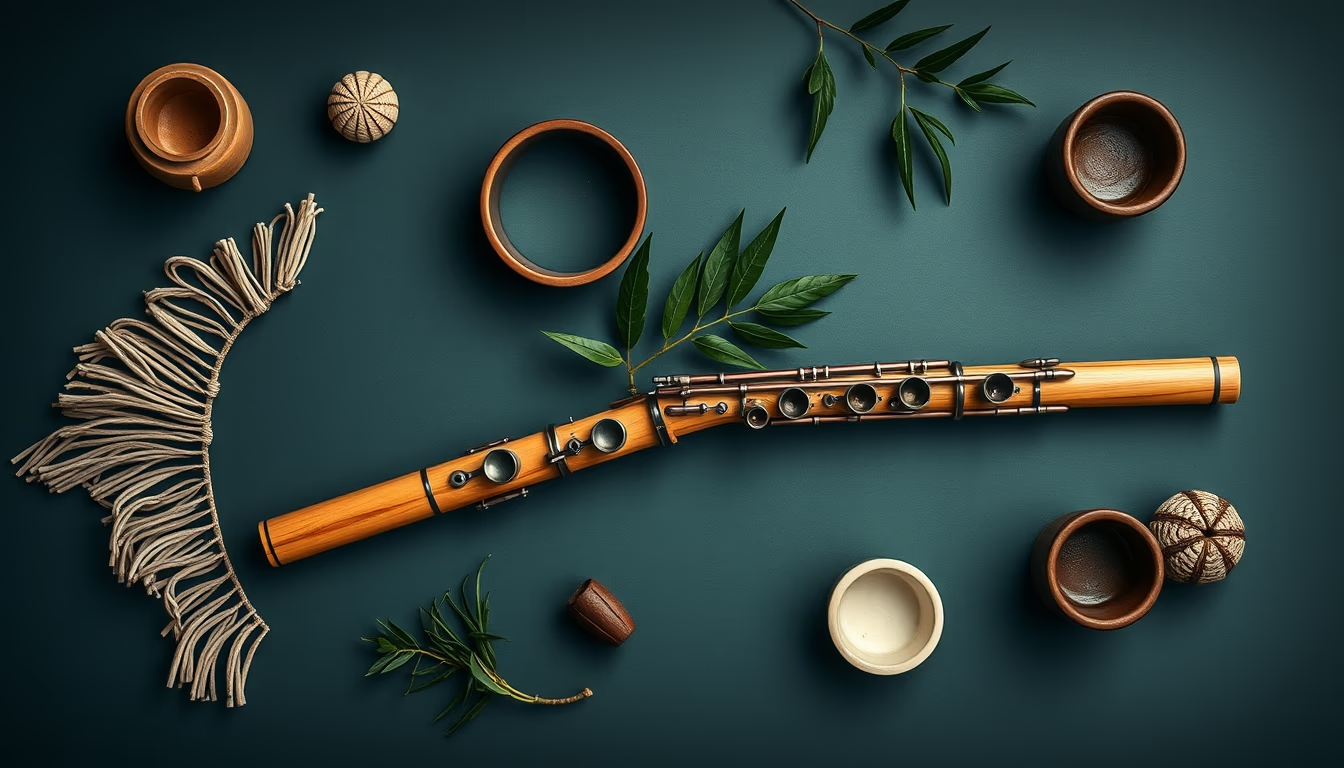
The Andean pan flute, an ancient instrument of the indigenous peoples of the Andes, is known for its melancholic sound and construction from bamboo or cane pipes.
About this subject
The Andean pan flute, also known as zampoña or siku, is an aerophone composed of a series of tubes of different lengths tuned to produce musical scales. Originating from pre-Columbian civilizations in the Andes, such as the Quechua and Aymara, its use dates back over 2000 years. Similar instruments have been found in archaeological sites in Peru, Bolivia, Ecuador, and northern Chile, evidencing its cultural and ritual importance.
The tubes are traditionally made of bamboo or wild cane, bound in rows. Each set may have two parallel rows: one for low notes and another for high notes. The musician blows across the tube edges, varying the angle and intensity to control the sound. The technique requires breath control and lip precision. In Andean tradition, sikus are often played in complementary pairs (ira and arca), creating interlocking harmonies.
The Andean pan flute is a symbol of cultural identity for the highland peoples. It is used in religious festivals, agricultural rituals, and typical dances such as diablada and morenada. Groups like Los Kjarkas and the Peruvian group Los Andes popularized the instrument internationally, influencing world folk music. UNESCO recognizes the siku as Intangible Cultural Heritage in several contexts. Regional variations include the Bolivian zampoña with wider tubes and the Ecuadorian rondador, which has a different construction.
Despite modernization, artisans continue to produce handmade pan flutes, preserving ancestral techniques. The instrument is also used in contemporary and new age music, thanks to its distinctive timbre. Preserving this heritage is important, as it connects new generations to the pre-Hispanic roots of South America.
Frequently Asked Questions
What is the origin of the Andean pan flute?
The Andean pan flute originated in pre-Columbian civilizations of the Andes, such as the Quechua and Aymara, over 2000 years ago. Archaeological evidence shows similar instruments in Peru, Bolivia, Ecuador, and Chile.
What traditional materials are used to make it?
Traditionally, the tubes are made from bamboo or wild cane. They are cut to different lengths and bound in rows, usually with plant fiber cords.
How is the Andean pan flute played?
The musician blows across the top edge of each tube, adjusting the angle and intensity of the breath to produce different notes. The technique requires coordination between breathing and lip movements.
Direct URL
https://pub-c7d6a6ea828543ac903a74a341ccb2e1.r2.dev/imagens/pan-flute-andean-isometric-flat-lay-p11.avifHow to credit
Include a visible link back to UtilizAí. Copy one of the snippets below:
<a href="https://xn--utiliza-eza.com/en/midia/imagens/pan-flute-andean-isometric-flat-lay-p11">Pan flute andean</a> by <a href="https://xn--utiliza-eza.com">UtilizAí</a>, licensed under <a href="https://creativecommons.org/licenses/by/4.0/">CC BY 4.0</a>.
[Pan flute andean](https://xn--utiliza-eza.com/en/midia/imagens/pan-flute-andean-isometric-flat-lay-p11) by [UtilizAí](https://xn--utiliza-eza.com), CC BY 4.0
License: CC-BY-4.0