Pamukkale terraces turkey
1344×768 · AVIF · CC BY 4.0
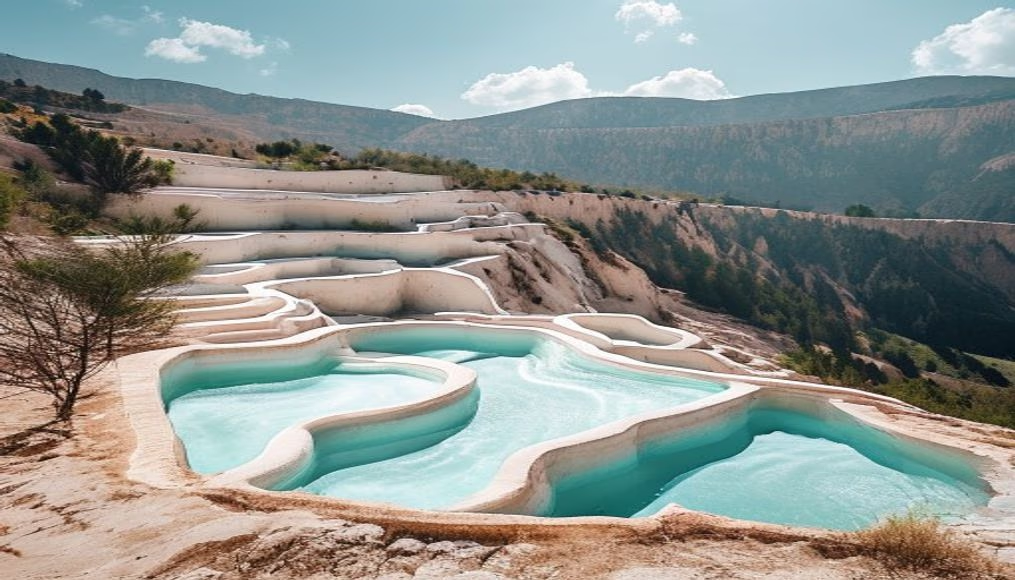
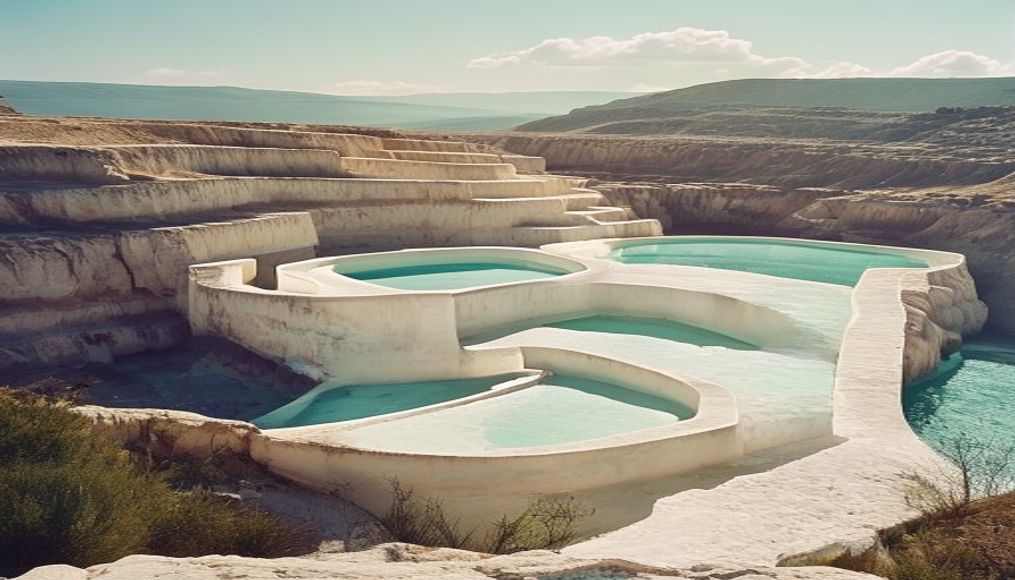
Pamukkale's terraces in Turkey are white travertine formations created by millennia of calcium carbonate deposits from hot springs.
About this subject
Pamukkale's terraces, located in Denizli Province, Turkey, are a unique geological phenomenon. Formed over thousands of years, mineral-rich hot springs flow down the slopes, depositing calcium carbonate that solidifies into white travertine cascades. The result resembles a cotton castle, hence the name Pamukkale, meaning "cotton castle" in Turkish. The natural pools, with crystal-clear waters averaging 35 °C, have attracted visitors since antiquity. Nearby lies the ancient city of Hierapolis, founded in the 2nd century BC by the Pergamon kings. The city grew as a thermal and religious center, with ruins including a Roman theater, a necropolis, and a basilica. In 1988, UNESCO declared Pamukkale-Hierapolis a World Heritage Site, recognizing both natural beauty and archaeological value. The area faces conservation challenges due to heavy tourism. To protect the formations, visitors are prohibited from walking on the terraces with shoes and must use designated areas. The thermal waters still feed modern pools, such as the Antique Pool (Cleopatra's Pool), filled with submerged columns. Studies indicate that travertine forms at a rate of about 1 cm per year under ideal conditions. Interestingly, Pamukkale is one of the most photographed natural sites in Turkey, rivaling Cappadocia.
Frequently Asked Questions
Why is Pamukkale white?
The terraces are white due to calcium carbonate deposited by the hot springs. The minerals reflect sunlight, giving the appearance of snow or cotton.
Can you swim in the pools at Pamukkale?
Yes, but only in designated areas such as the Antique Pool (Cleopatra's Pool). The natural travertine terraces are protected and entry is not allowed to preserve the formations.
What is the best time to visit Pamukkale?
Spring (April to June) and autumn (September to November) offer mild temperatures and fewer crowds. Summer brings intense heat and high tourist numbers, which can detract from the experience.
Direct URL
https://pub-c7d6a6ea828543ac903a74a341ccb2e1.r2.dev/imagens/pamukkale-terraces-turkey-national-geographic-style-p1.avifHow to credit
Include a visible link back to UtilizAí. Copy one of the snippets below:
<a href="https://xn--utiliza-eza.com/en/midia/imagens/pamukkale-terraces-turkey-national-geographic-style-p1">Pamukkale terraces turkey</a> by <a href="https://xn--utiliza-eza.com">UtilizAí</a>, licensed under <a href="https://creativecommons.org/licenses/by/4.0/">CC BY 4.0</a>.
[Pamukkale terraces turkey](https://xn--utiliza-eza.com/en/midia/imagens/pamukkale-terraces-turkey-national-geographic-style-p1) by [UtilizAí](https://xn--utiliza-eza.com), CC BY 4.0
License: CC-BY-4.0