Pamukkale terraces turkey
1344×768 · AVIF · CC BY 4.0
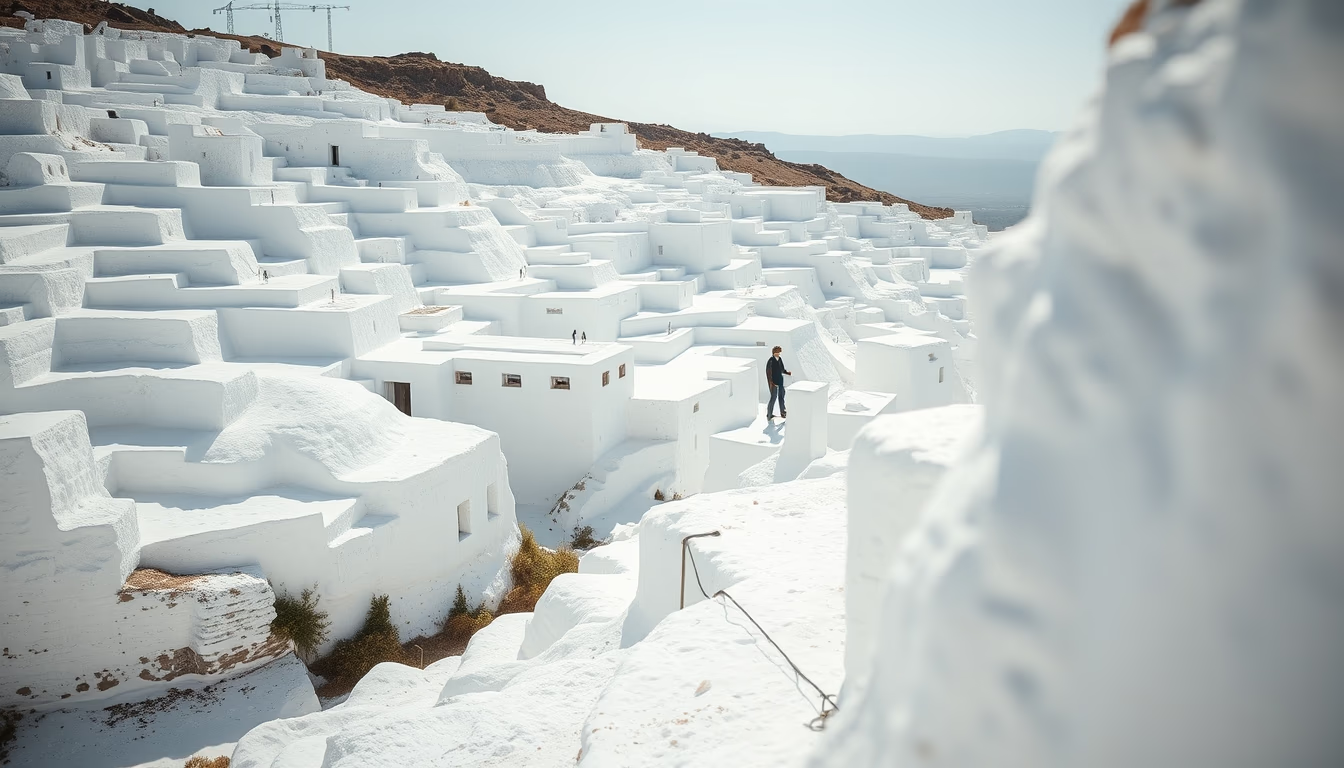
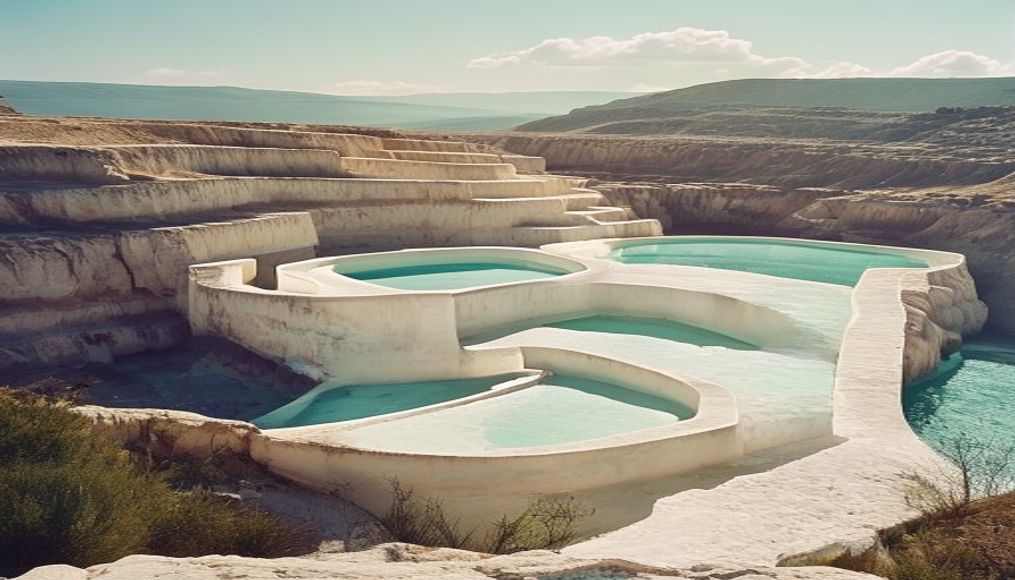
Pamukkale terraces in Turkey are natural white travertine formations created by hot springs, recognized as a UNESCO World Heritage site.
About this subject
Pamukkale terraces, located in Denizli Province in southwestern Turkey, are a stunning geological wonder. Formed over millennia by the precipitation of calcium carbonate from thermal spring waters emerging from a local fault, the terraces create a landscape of brilliant white natural pools contrasting with the blue sky. The name Pamukkale means "cotton castle" in Turkish, directly referring to the formations' appearance.
Beyond its natural beauty, the site houses the ancient city of Hierapolis, founded in the 2nd century BC by the kings of Pergamon. Hierapolis was a thermal and religious center, featuring temples, a theater, and an extensive necropolis. The mineral-rich thermal waters were used for therapeutic baths, and the city flourished during the Roman period. Today, Hierapolis ruins are an archaeological site visited by millions of tourists annually, who can also swim in ancient pools like Cleopatra's Pool.
The geological formation of the terraces is delicate and sensitive to human impact. Calcium carbonate deposition occurs when supersaturated water reaches the surface and releases carbon dioxide, precipitating the mineral. This process creates travertine layers that build up ledges and pools over time. To protect the site, UNESCO and the Turkish government have implemented strict rules: visitors must walk barefoot in designated areas and are not allowed to enter certain pools to prevent damage. Unfortunately, pollution and uncontrolled tourism in the past have caused discoloration and erosion, but conservation measures, such as restoring water flow, are underway.
Pamukkale is a popular tourist destination in Turkey, attracting visitors from around the world. The best time to visit is spring or autumn when temperatures are mild and crowds are smaller. Besides exploring the terraces and Hierapolis, tourists can visit the nearby ruins of Laodicea or take a hot air balloon ride for an aerial view. The region is also known for its cuisine, with traditional dishes like Denizli kebab and local sponge cake.
Frequently Asked Questions
What causes the white color of the Pamukkale terraces?
The white color comes from calcium carbonate (travertine) deposits left by thermal waters. As supersaturated water evaporates or releases CO2, the mineral precipitates, forming the white layers that build the terraces.
Can I swim in the pools at Pamukkale?
Yes, swimming is allowed in designated areas such as Cleopatra's Pool (an ancient Roman pool) for a fee. On the main terraces, access to the pools is restricted for preservation, but visitors can walk barefoot in the water channels.
Is Pamukkale a UNESCO World Heritage site?
Yes, since 1988, Pamukkale and the ruins of Hierapolis have been listed as a UNESCO World Heritage mixed site (natural and cultural), recognizing both its geological and historical significance.
Direct URL
https://pub-c7d6a6ea828543ac903a74a341ccb2e1.r2.dev/imagens/pamukkale-terraces-turkey-minimalist-composition-p9.avifHow to credit
Include a visible link back to UtilizAí. Copy one of the snippets below:
<a href="https://xn--utiliza-eza.com/en/midia/imagens/pamukkale-terraces-turkey-minimalist-composition-p9">Pamukkale terraces turkey</a> by <a href="https://xn--utiliza-eza.com">UtilizAí</a>, licensed under <a href="https://creativecommons.org/licenses/by/4.0/">CC BY 4.0</a>.
[Pamukkale terraces turkey](https://xn--utiliza-eza.com/en/midia/imagens/pamukkale-terraces-turkey-minimalist-composition-p9) by [UtilizAí](https://xn--utiliza-eza.com), CC BY 4.0
License: CC-BY-4.0