Pamukkale terraces turkey
1344×768 · AVIF · CC BY 4.0
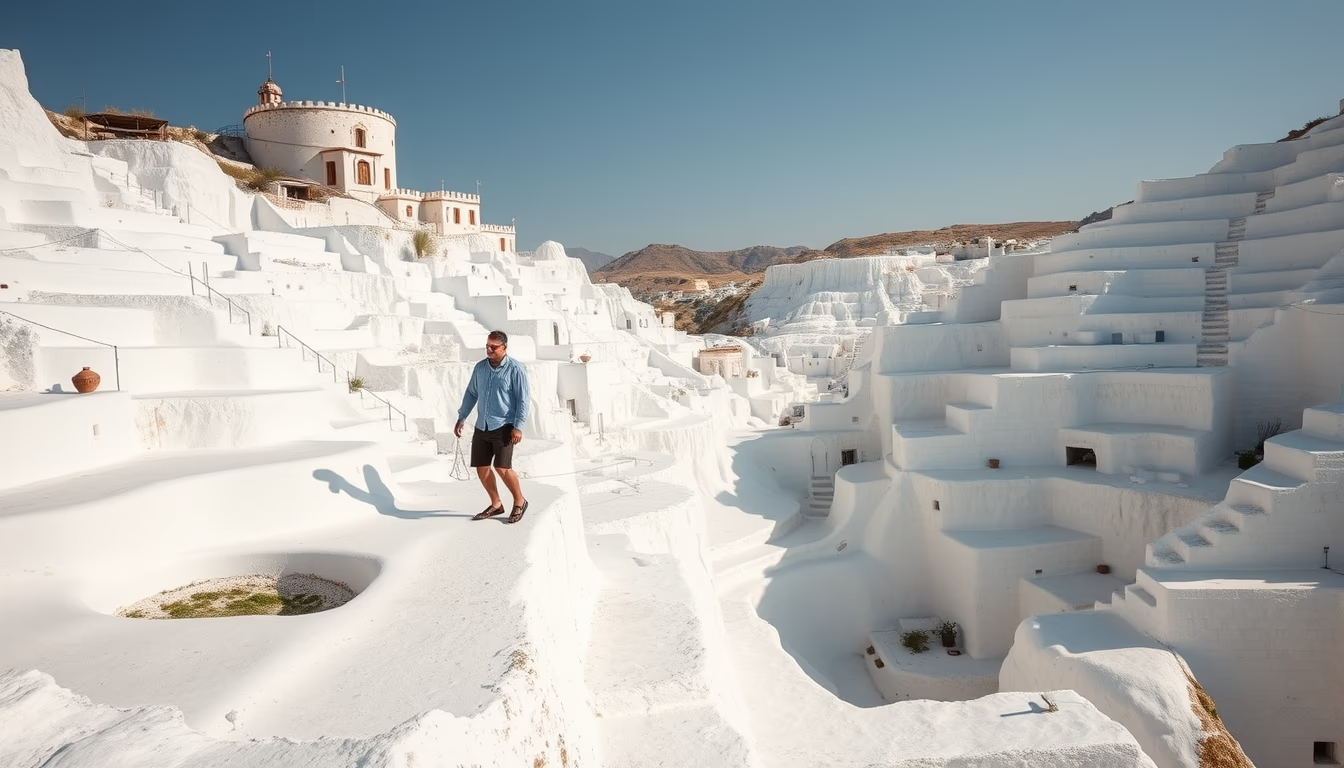
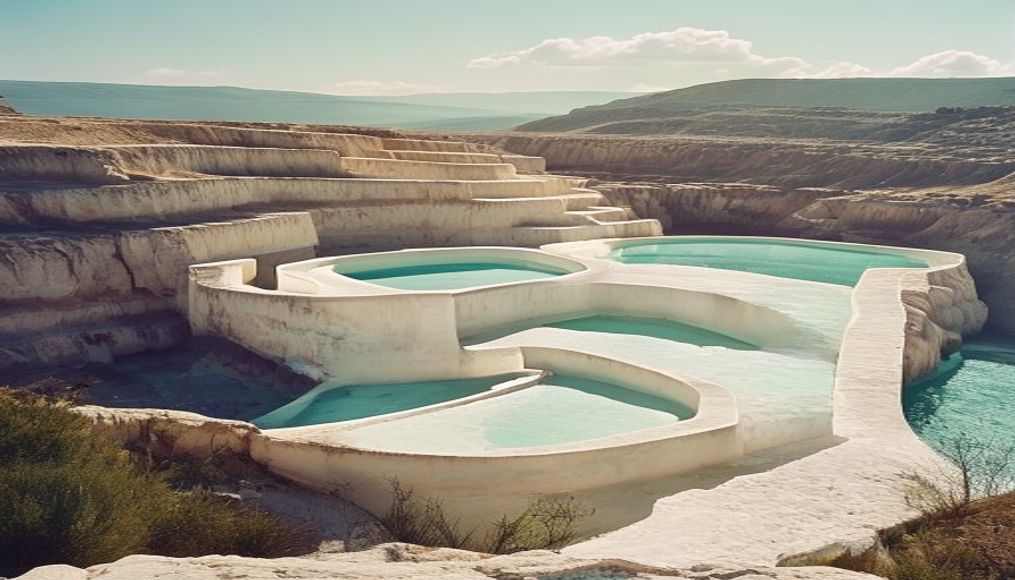
The stunning white travertine formations of Pamukkale, Turkey, create natural thermal pools rich in minerals.
About this subject
Pamukkale, meaning "cotton castle" in Turkish, is a natural site in Denizli Province, southwestern Turkey. Its iconic white terraces were formed over millennia by the deposition of calcium carbonate from hot springs that emerge in the region. The mineral-rich water flows down the slope and, as it cools, solidifies into layers of travertine, creating formations resembling frozen waterfalls.
The area also hosts the ancient city of Hierapolis, founded in the 2nd century BC by the Pergamon kings. Hierapolis became a major thermal center during the Roman era, and its well-preserved ruins, such as the theater, necropolis, and antique pool (where visitors can still swim among submerged columns), are part of the UNESCO World Heritage site designated in 1988. The combination of geological wonders and historical heritage attracts millions of visitors each year.
Due to heavy tourist traffic, conservation measures have been implemented. In some areas, access to the natural pools is restricted and visitors must walk barefoot to protect the travertine. The thermal waters maintain an average temperature of 36°C and are known for their therapeutic properties, rich in bicarbonate, calcium, and magnesium. The best time to visit is spring or autumn, when the weather is mild and the landscape less crowded.
Frequently Asked Questions
How were the travertine formations of Pamukkale formed?
They formed over thousands of years by the deposition of calcium carbonate from hot springs. As the mineral-rich water flows down the slope and cools, it solidifies into layers of travertine.
Is swimming allowed in the natural pools of Pamukkale?
Yes, but only in designated areas. The ancient pool of Hierapolis is one of the few where you can swim among submerged columns. Other parts are off-limits to preserve the fragile formations.
What is the best time to visit Pamukkale?
Spring (April to June) and autumn (September to November) offer mild weather and fewer crowds. Avoid summer when temperatures are high and the site is very busy.
Direct URL
https://pub-c7d6a6ea828543ac903a74a341ccb2e1.r2.dev/imagens/pamukkale-terraces-turkey-magazine-editorial-p11.avifHow to credit
Include a visible link back to UtilizAí. Copy one of the snippets below:
<a href="https://xn--utiliza-eza.com/en/midia/imagens/pamukkale-terraces-turkey-magazine-editorial-p11">Pamukkale terraces turkey</a> by <a href="https://xn--utiliza-eza.com">UtilizAí</a>, licensed under <a href="https://creativecommons.org/licenses/by/4.0/">CC BY 4.0</a>.
[Pamukkale terraces turkey](https://xn--utiliza-eza.com/en/midia/imagens/pamukkale-terraces-turkey-magazine-editorial-p11) by [UtilizAí](https://xn--utiliza-eza.com), CC BY 4.0
License: CC-BY-4.0