Pamukkale terraces turkey
1344×768 · AVIF · CC BY 4.0
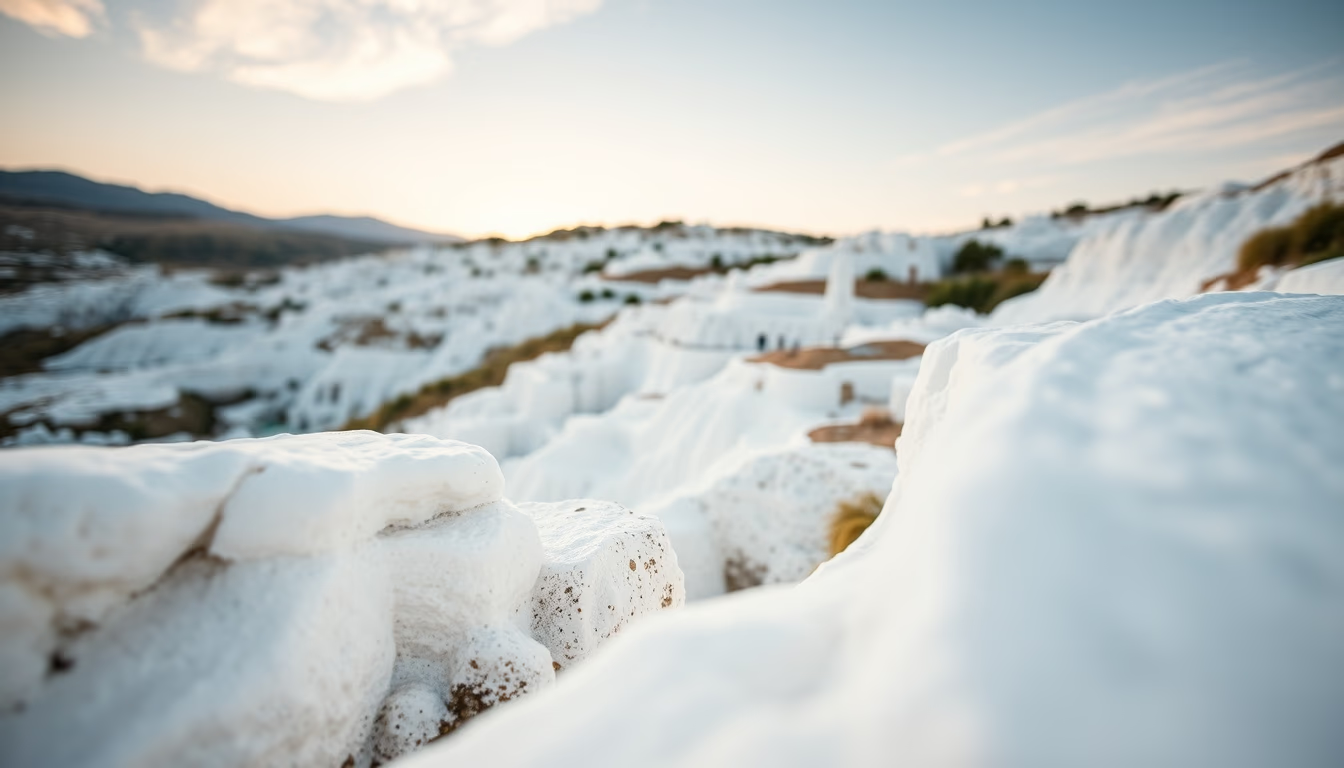
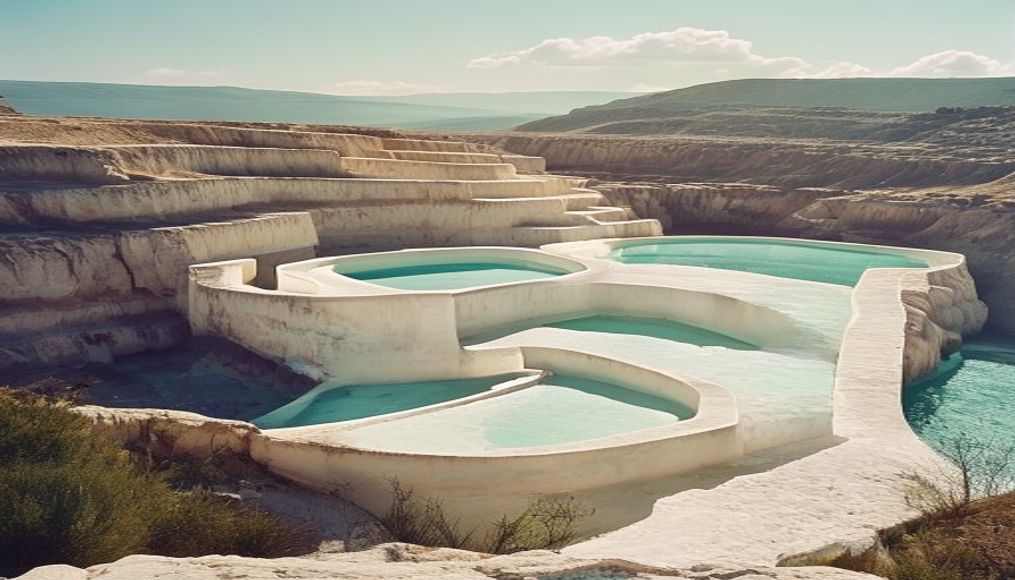
The famous travertine terraces of Pamukkale in Turkey, formed by calcium carbonate deposits over millennia.
About this subject
Pamukkale, meaning "cotton castle" in Turkish, is a geological wonder located in Denizli Province in southwestern Turkey. Its famous white terraces are formed by travertine, a sedimentary rock deposited by calcium-rich hot springs that emerge from underground sources. As the water reaches the surface and cools, calcium carbonate precipitates, creating sculpted basins and cascades over thousands of years. The process remains active, with new layers constantly added. The area has been a UNESCO World Heritage Site since 1988, combining natural formations with the ruins of the ancient city of Hierapolis, built on top of the hot springs in the 2nd century BC. Visitors are required to walk barefoot on the terraces to protect the travertine, and access is restricted to prevent damage. Water temperature ranges from 35°C to 50°C, and it was believed to have healing properties in antiquity, attracting people from across the Roman Empire. The natural pools reflect shades of blue and white, creating a striking contrast with the calcareous ground. Today, tourism is managed to protect the fragile ecosystem, and water is channeled to avoid excessive erosion. Despite conservation challenges, Pamukkale remains one of Turkey's most iconic destinations, drawing millions of visitors each year.
Frequently Asked Questions
What causes the white color of Pamukkale's terraces?
The white color comes from the precipitation of calcium carbonate (travertine) in the thermal waters. As water evaporates, the mineral accumulates and forms white layers.
Is swimming allowed in Pamukkale's pools?
Yes, but only in designated areas such as the Ancient Pool of Hierapolis (Cleopatra's Pool). The main terraces are not open for bathing to protect the formations.
What is the best time to visit Pamukkale?
Spring (April to June) and autumn (September to November) offer mild temperatures and fewer crowds. Summer can be very hot, while winter may bring snow.
Direct URL
https://pub-c7d6a6ea828543ac903a74a341ccb2e1.r2.dev/imagens/pamukkale-terraces-turkey-macro-closeup-p8.avifHow to credit
Include a visible link back to UtilizAí. Copy one of the snippets below:
<a href="https://xn--utiliza-eza.com/en/midia/imagens/pamukkale-terraces-turkey-macro-closeup-p8">Pamukkale terraces turkey</a> by <a href="https://xn--utiliza-eza.com">UtilizAí</a>, licensed under <a href="https://creativecommons.org/licenses/by/4.0/">CC BY 4.0</a>.
[Pamukkale terraces turkey](https://xn--utiliza-eza.com/en/midia/imagens/pamukkale-terraces-turkey-macro-closeup-p8) by [UtilizAí](https://xn--utiliza-eza.com), CC BY 4.0
License: CC-BY-4.0