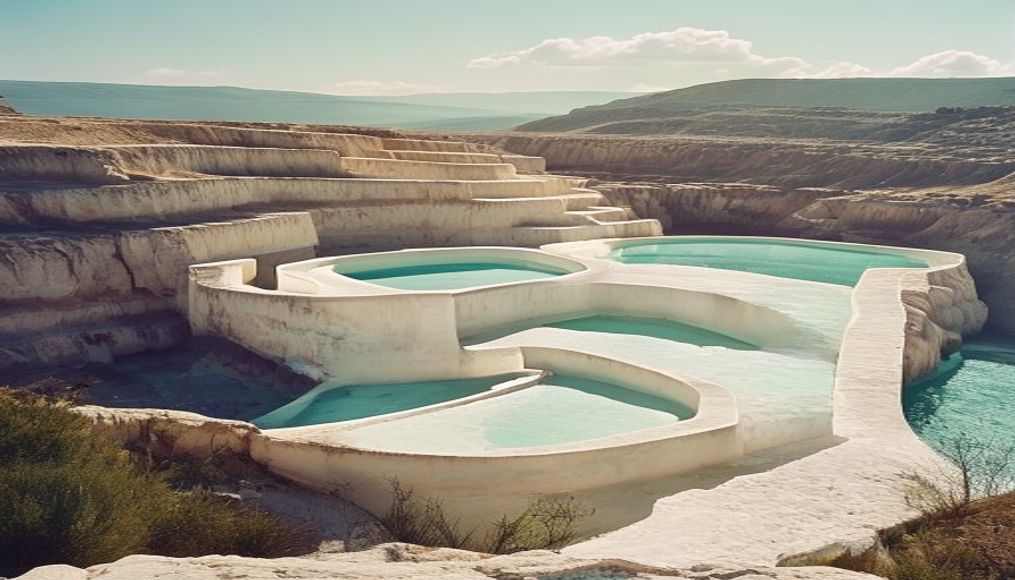
Pamukkale terraces turkey
1344×768 · AVIF · CC BY 4.0
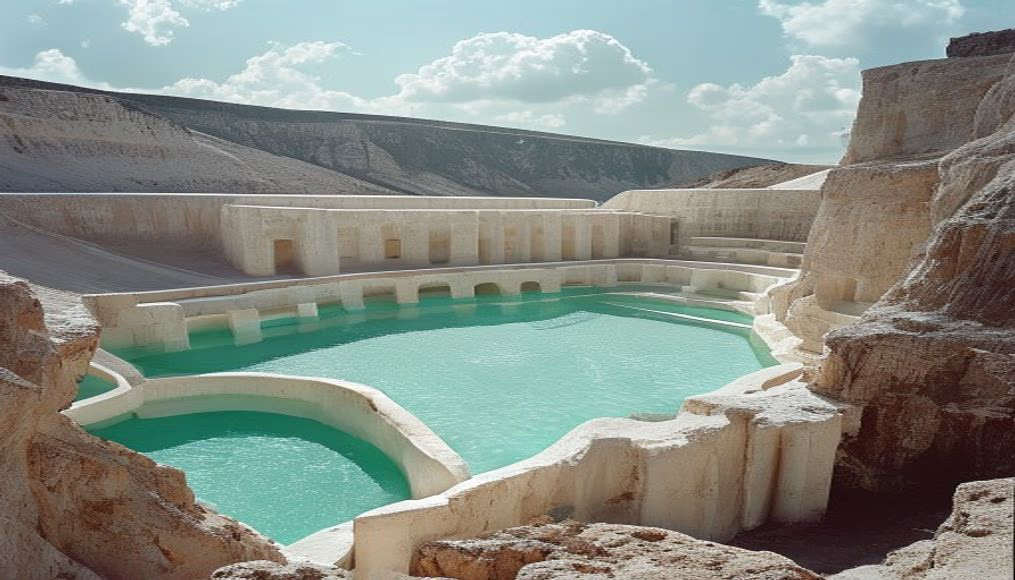
The stunning travertine terraces of Pamukkale, Turkey, are ancient natural formations created by mineral-rich thermal waters.
About this subject
Pamukkale, meaning "cotton castle" in Turkish, is one of Turkey's most iconic natural sites. Located in Denizli Province in the southwestern part of the country, the site is famous for its white travertine terraces formed over millennia by calcium carbonate deposits from hot springs. The water emerges at around 35°C (95°F) and, as it flows downhill, cools and precipitates the mineral, creating stepped natural pools of brilliant white.
The archaeological site of Hierapolis sits atop the terraces. Founded around 190 BC as a Hellenistic city-state, Hierapolis became a major thermal center during the Roman period, renowned for its healing waters. Ruins include a well-preserved theater, an extensive necropolis, and Cleopatra's Pool, which can still be visited today. In 1988, Pamukkale and Hierapolis were declared a UNESCO World Heritage Site, recognizing both the natural and cultural significance of the area.
Due to heavy tourist traffic, conservation measures have been implemented. Visitors must walk barefoot on the terraces to protect the fragile travertine, and access to some areas is restricted to prevent damage. Despite this, the site remains a popular destination, attracting millions of tourists annually. The best time to visit is spring or autumn, when temperatures are mild and crowds thinner.
Beyond the terraces, the region offers other attractions such as the ruins of Laodicea and the city of Denizli, known for its cuisine and handicrafts. Pamukkale is not only a geological wonder but also a testament to the interaction between nature and human history over centuries.
Frequently Asked Questions
How were the Pamukkale terraces formed?
They were formed by the precipitation of calcium carbonate from hot springs emerging at about 35°C. As the water flows downhill and cools, it deposits the mineral, creating layers of travertine over thousands of years.
Can you swim in the pools at Pamukkale?
Yes, in designated areas such as Cleopatra's Pool in Hierapolis, a natural pool with submerged columns. The terraced pools themselves are shallow and access is restricted for preservation.
What is the best time to visit Pamukkale?
Spring (April to June) and autumn (September to November) offer mild temperatures and fewer crowds. Summer is very hot and crowded, while winter can be cold but less busy.
Direct URL
https://pub-c7d6a6ea828543ac903a74a341ccb2e1.r2.dev/imagens/pamukkale-terraces-turkey-high-fashion-editorial-p2.avifHow to credit
Include a visible link back to UtilizAí. Copy one of the snippets below:
<a href="https://xn--utiliza-eza.com/en/midia/imagens/pamukkale-terraces-turkey-high-fashion-editorial-p2">Pamukkale terraces turkey</a> by <a href="https://xn--utiliza-eza.com">UtilizAí</a>, licensed under <a href="https://creativecommons.org/licenses/by/4.0/">CC BY 4.0</a>.
[Pamukkale terraces turkey](https://xn--utiliza-eza.com/en/midia/imagens/pamukkale-terraces-turkey-high-fashion-editorial-p2) by [UtilizAí](https://xn--utiliza-eza.com), CC BY 4.0
License: CC-BY-4.0