Pamukkale terraces turkey
1344×768 · AVIF · CC BY 4.0
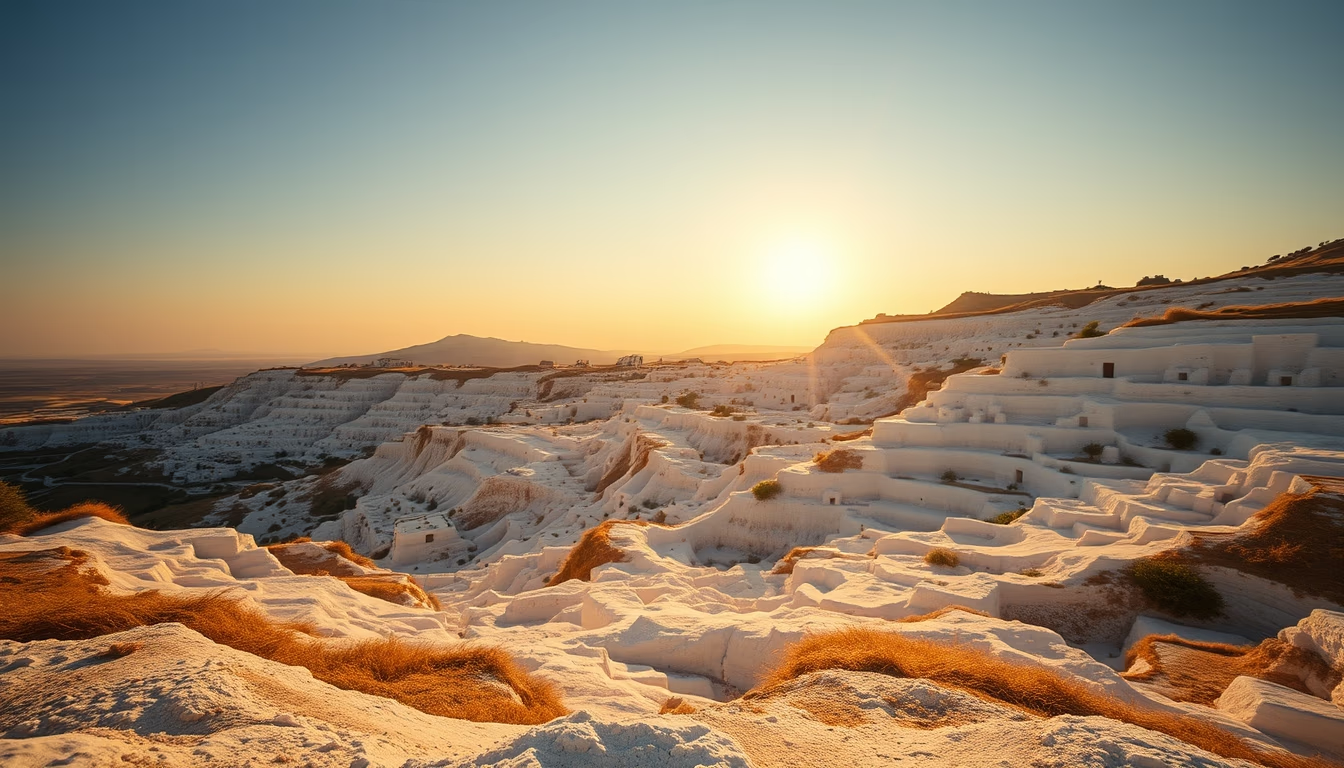
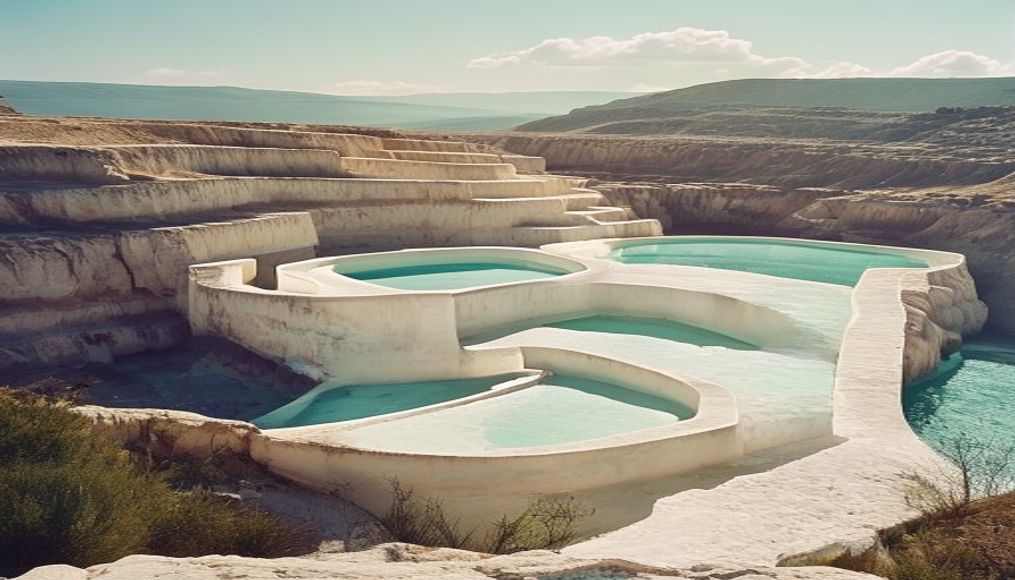
Pamukkale, Turkey, features white travertine terraces shaped by mineral-rich hot springs, a UNESCO World Heritage site.
About this subject
Pamukkale, Turkish for 'cotton castle', is a natural wonder in Denizli Province, southwestern Turkey. Its iconic white terraces have been sculpted over millennia by thermal waters rich in calcium carbonate. As the water cools and evaporates, calcium carbonate precipitates, forming travertine deposits that create stepped natural pools. The site was already known in antiquity: the nearby city of Hierapolis, built atop the hill, was a thermal center in Hellenistic and Roman times, with well-preserved ruins including a theater and a necropolis.
The ensemble of Pamukkale and Hierapolis was declared a UNESCO World Heritage site in 1988, recognizing both its exceptional geological value and archaeological importance. The thermal waters, emerging at temperatures between 35°C and 100°C, are known for their therapeutic properties, especially for cardiovascular and skin conditions. However, intense tourism in the 1960s and 1970s caused degradation, leading to the construction of roads and hotels over the ruins. Conservation measures have been implemented since the 1990s, including the removal of structures and restricted visitor access to the pools, which today can only be walked on barefoot in designated areas.
The brilliant white of the terraces contrasts with the deep blue of the thermal pools, creating a landscape of rare beauty. The white color results from the high concentration of calcium carbonate, which reflects sunlight. The site attracts millions of tourists annually, but preservation requires balance: water flow is artificially controlled to ensure continuous travertine deposition and prevent drying of the formations. Additionally, the area hosts rich biodiversity with thermophilic algae and bacteria adapted to hot waters, contributing to occasional hues of red, green, and yellow along the pool edges.
Frequently Asked Questions
What are the Pamukkale formations and how were they created?
Pamukkale consists of travertine terraces formed by calcium carbonate deposits from thermal waters flowing for millennia. The mineral-rich water, upon contact with air, evaporates and leaves solid calcium carbonate, creating stepped natural pools.
Can you swim in the pools of Pamukkale?
Yes, in controlled areas. Visitors can walk barefoot on the terraces and enter some shallow pools, but access is restricted to preserve the formations. There are also thermal pools in the ruins of Hierapolis where swimming is allowed.
What is the best time to visit Pamukkale?
Spring (April to June) and autumn (September to November) offer mild temperatures and fewer crowds. Summer heat and heavy tourism can reduce the experience, while winter may bring snow and closure of some areas.
Direct URL
https://pub-c7d6a6ea828543ac903a74a341ccb2e1.r2.dev/imagens/pamukkale-terraces-turkey-cinematic-wide-shot-p5.avifHow to credit
Include a visible link back to UtilizAí. Copy one of the snippets below:
<a href="https://xn--utiliza-eza.com/en/midia/imagens/pamukkale-terraces-turkey-cinematic-wide-shot-p5">Pamukkale terraces turkey</a> by <a href="https://xn--utiliza-eza.com">UtilizAí</a>, licensed under <a href="https://creativecommons.org/licenses/by/4.0/">CC BY 4.0</a>.
[Pamukkale terraces turkey](https://xn--utiliza-eza.com/en/midia/imagens/pamukkale-terraces-turkey-cinematic-wide-shot-p5) by [UtilizAí](https://xn--utiliza-eza.com), CC BY 4.0
License: CC-BY-4.0