Pamukkale terraces turkey
1344×768 · AVIF · CC BY 4.0
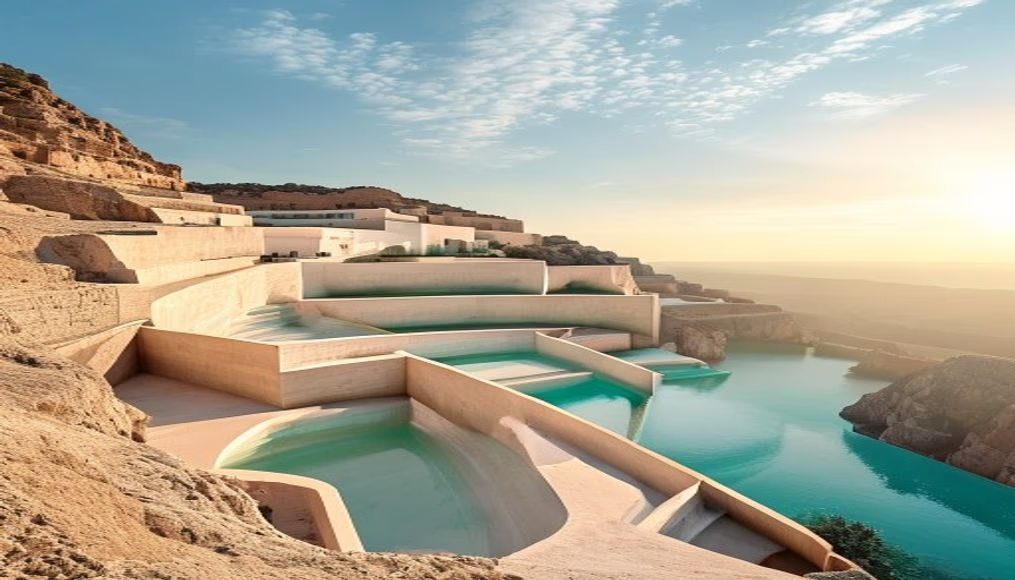
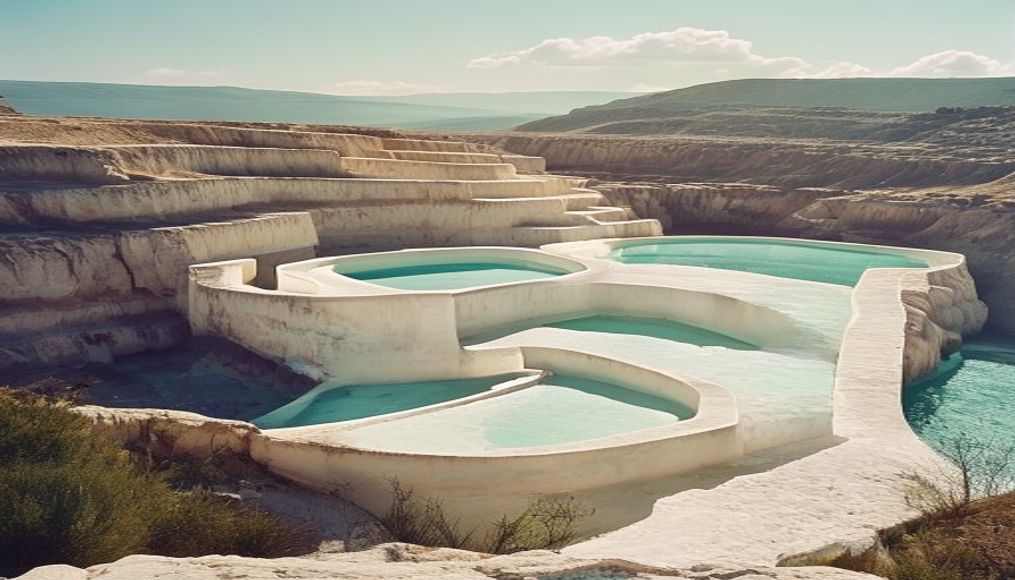
Pamukkale's calcium formations in Turkey are among the world's most impressive natural phenomena, combining geological beauty and ancient history.
About this subject
Pamukkale, meaning 'cotton castle' in Turkish, is a natural site located in Denizli Province, southwestern Turkey. Its iconic white terraces are formed by calcium carbonate deposits left by hot springs that flow at an average temperature of 35°C to 36°C. Over millennia, the constant flow of mineral-rich water created cascading basins that shimmer in the sunlight, resembling a cotton castle.
At the top of the hill, the ancient city of Hierapolis was founded around 190 BC by the kings of Pergamon. During the Roman period, it became a major thermal healing center, with baths and temples dedicated to Apollo. Today, its ruins, including a well-preserved theater and an extensive necropolis, are a UNESCO World Heritage Site since 1988, together with the terraces themselves.
Pamukkale's thermal waters are famous for their medicinal properties, rich in bicarbonate, calcium, and magnesium. Visitors can walk barefoot on the terraces to protect the fragile formations, and the ancient pool of Hierapolis, called the Antique Pool, allows swimming among submerged Roman columns. However, overtourism in the past led to preservation measures, such as restricting access to certain areas and prohibiting footwear.
The intense white color of the terraces contrasts with the blue water and the surrounding green landscape. The geological phenomenon is fed by a system of tectonic faults that heat the groundwater. Pamukkale attracts millions of visitors annually, being one of the most photographed destinations in Turkey, alongside Cappadocia.
Frequently Asked Questions
What are the Pamukkale terraces?
They are geological travertine formations created by the deposition of calcium carbonate from thermal waters over thousands of years. They form white cascading basins on a hilltop in southwestern Turkey.
Why is the water at Pamukkale hot?
The water is heated by deep geothermal activity fed by tectonic faults. It emerges at around 35-36°C, rich in dissolved minerals.
Is swimming allowed in the Pamukkale pools?
Swimming is not allowed on the main terraces to preserve them. However, you can swim in the Antique Pool, a natural pool with submerged Roman ruins located at the Hierapolis archaeological site.
Direct URL
https://pub-c7d6a6ea828543ac903a74a341ccb2e1.r2.dev/imagens/pamukkale-terraces-turkey-architectural-photography-p3.avifHow to credit
Include a visible link back to UtilizAí. Copy one of the snippets below:
<a href="https://xn--utiliza-eza.com/en/midia/imagens/pamukkale-terraces-turkey-architectural-photography-p3">Pamukkale terraces turkey</a> by <a href="https://xn--utiliza-eza.com">UtilizAí</a>, licensed under <a href="https://creativecommons.org/licenses/by/4.0/">CC BY 4.0</a>.
[Pamukkale terraces turkey](https://xn--utiliza-eza.com/en/midia/imagens/pamukkale-terraces-turkey-architectural-photography-p3) by [UtilizAí](https://xn--utiliza-eza.com), CC BY 4.0
License: CC-BY-4.0