Palm house botanical kew
1344×768 · AVIF · CC BY 4.0
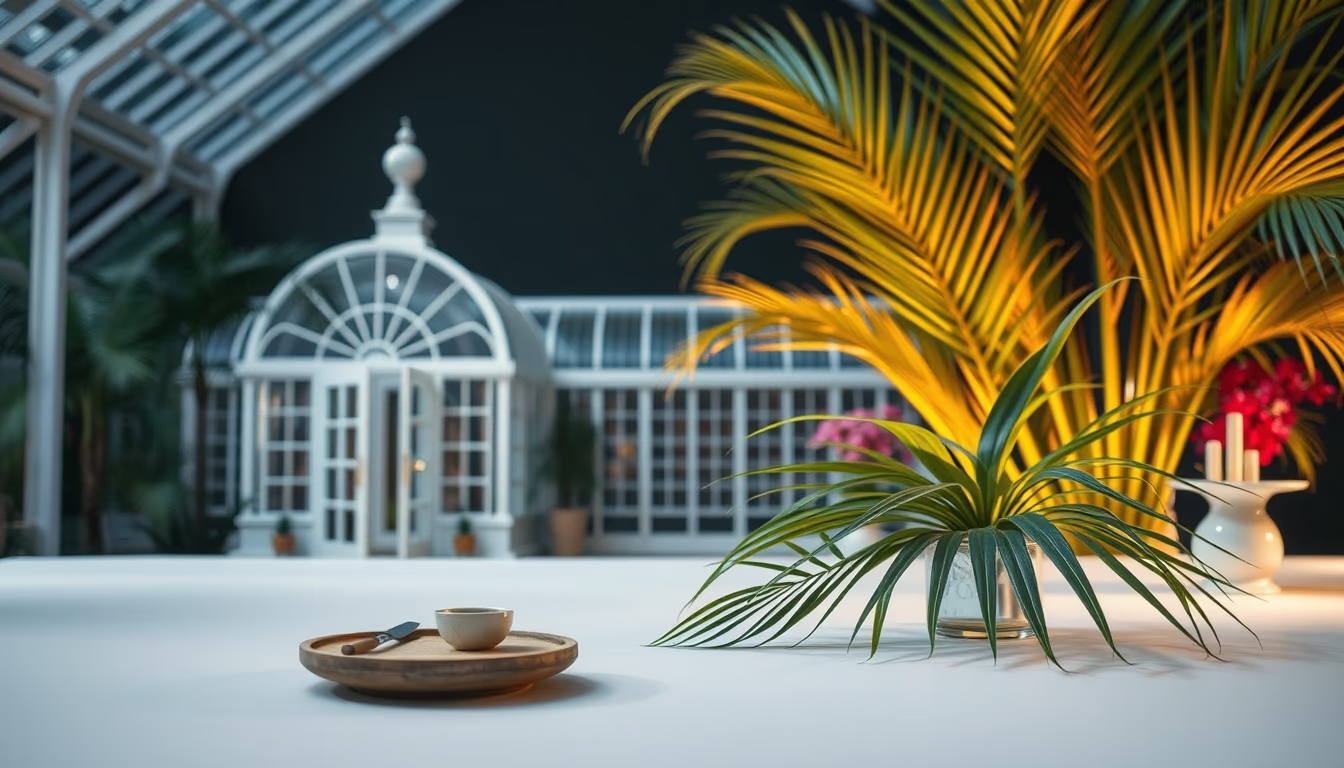
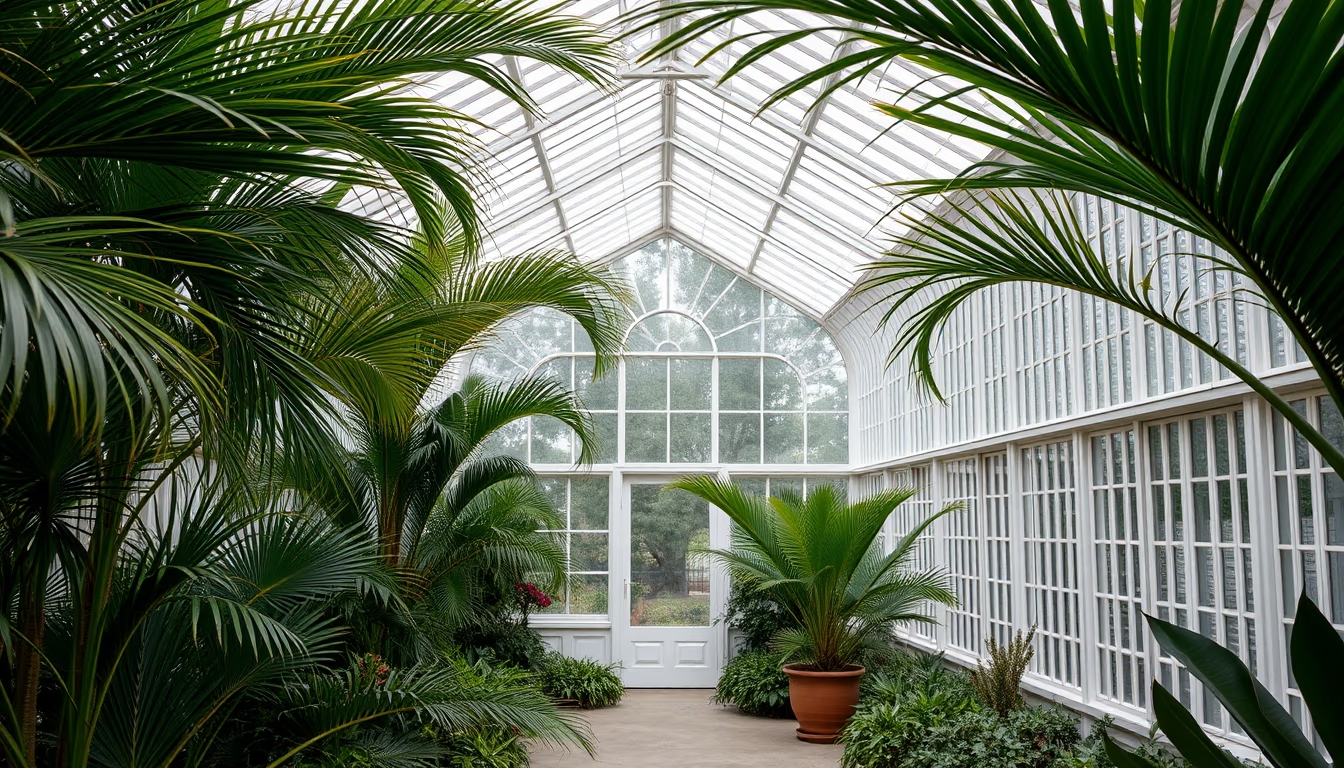
The Palm House at the Royal Botanic Gardens, Kew, is a historic iron-and-glass greenhouse housing one of the world's most important collections of palms and tropical plants.
About this subject
The Palm House at the Royal Botanic Gardens, Kew, in London is one of the most iconic greenhouses in the world. Built between 1844 and 1848, it was designed by architect Decimus Burton and engineer Richard Turner, combining wrought iron and curved glass in a structure admired for its lightness and elegance. Its elongated, arched form, reaching 20 meters in height, created an optimal indoor environment for growing palms and other tropical plants, representing a landmark of Victorian architecture and 19th-century engineering.
The interior of the Palm House houses a vast botanical collection, with over 200 species of palms, as well as cycads, orchids, and the famous giant water lily Victoria amazonica, native to the Amazon. The greenhouse maintains controlled conditions of temperature, humidity, and ventilation, simulating the tropical climate required for these plants. Many species were collected during botanical expeditions sponsored by the British Empire, and the Palm House played a crucial role in acclimatizing exotic plants, such as banana and coffee, which later became economically important crops in tropical colonies.
Beyond its scientific value, the Palm House is a cultural and tourist icon, attracting thousands of visitors each year. It underwent a major restoration in the 1980s, which reinforced its iron frame and replaced the glass, preserving its original appearance. The building is also used for research in botanical conservation, focusing on endangered species and mitigating the effects of climate change. Its distinctive silhouette and the contrast with the surrounding green gardens make it one of the most recognizable images of Kew Gardens.
Frequently Asked Questions
What is the Palm House at Kew Gardens?
It is a monumental iron-and-glass greenhouse built in 1848, designed by Decimus Burton and Richard Turner, housing a vast collection of palms and tropical plants.
Which famous plants are in the Palm House?
It includes rare palms, the giant water lily Victoria amazonica, cycads, and orchids, as well as economically important plants like coffee and banana.
Why is the Palm House important?
It is an icon of Victorian architecture and engineering, one of the first large-scale iron-and-glass greenhouses, and a center for botanical research and conservation.
Direct URL
https://pub-c7d6a6ea828543ac903a74a341ccb2e1.r2.dev/imagens/palm-house-botanical-kew-studio-still-life-fresh3.avifHow to credit
Include a visible link back to UtilizAí. Copy one of the snippets below:
<a href="https://xn--utiliza-eza.com/en/midia/imagens/palm-house-botanical-kew-studio-still-life-fresh3">Palm house botanical kew</a> by <a href="https://xn--utiliza-eza.com">UtilizAí</a>, licensed under <a href="https://creativecommons.org/licenses/by/4.0/">CC BY 4.0</a>.
[Palm house botanical kew](https://xn--utiliza-eza.com/en/midia/imagens/palm-house-botanical-kew-studio-still-life-fresh3) by [UtilizAí](https://xn--utiliza-eza.com), CC BY 4.0
License: CC-BY-4.0