Palm house botanical kew
1344×768 · AVIF · CC BY 4.0
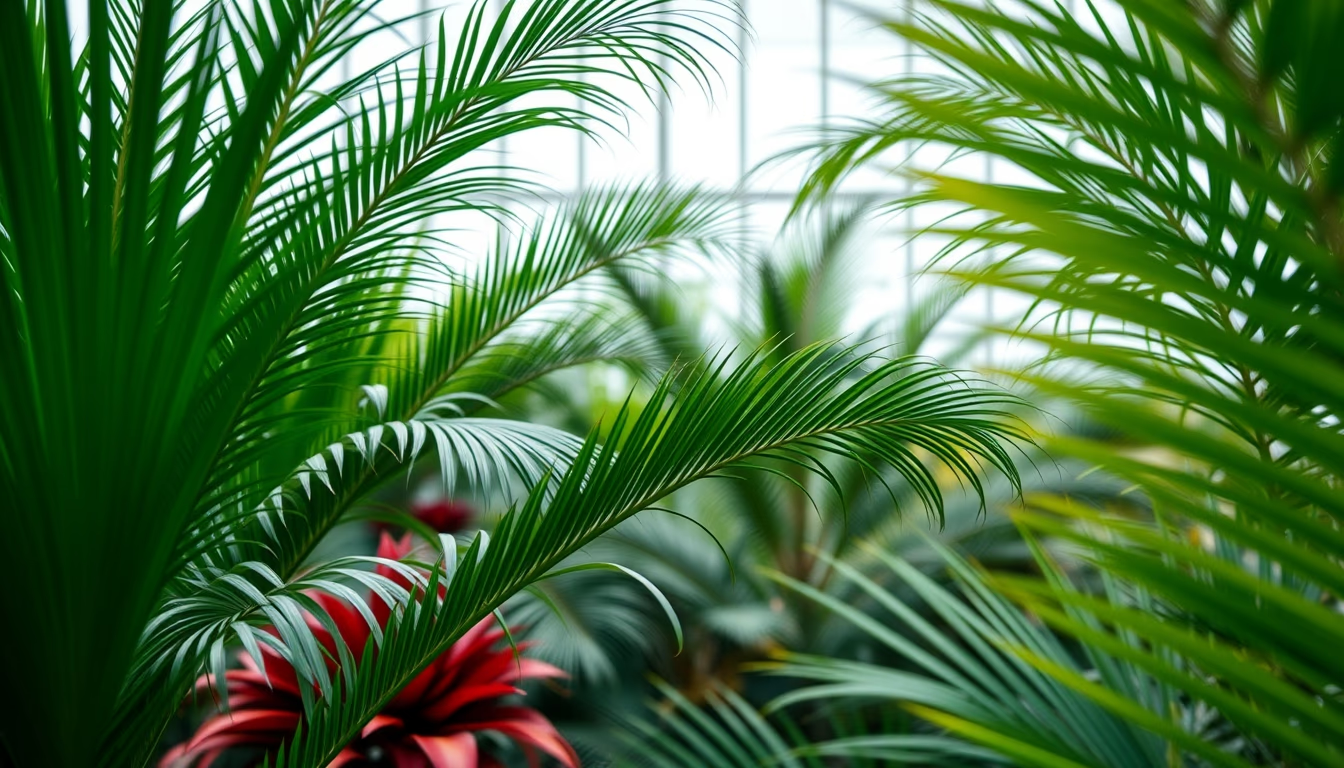
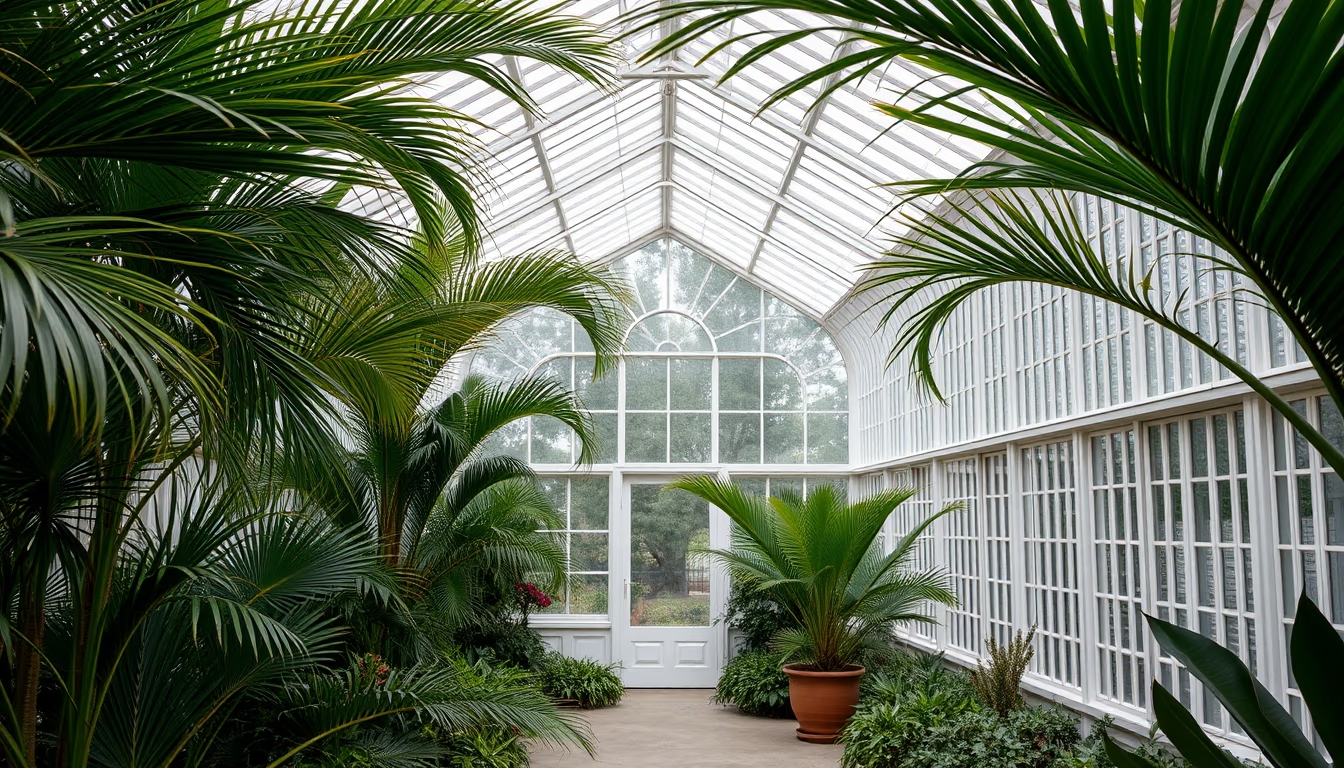
The Palm House at Kew Gardens is an iconic Victorian greenhouse, housing one of the world's most important collections of palms and tropical plants.
About this subject
Built between 1844 and 1848 by architects Decimus Burton and Richard Turner, the Palm House is a landmark of Victorian iron and glass architecture. Designed to house tropical plants arriving in England from botanical expeditions, its curved, elongated shape resembles an upturned ship's hull. Measuring 110 meters in length and 20 meters in height, the greenhouse maintains a warm, humid climate essential for growing palms, cycads, and other tropical species.
The Palm House collection includes rare specimens such as the oil palm (Elaeis guineensis), coconut palm (Cocos nucifera), and the blue Bismarck palm (Bismarckia nobilis). Many of these plants were collected during the height of the British Empire, when botanists traveled the world in search of exotic species. The greenhouse also played a crucial role in acclimatizing economically important plants, such as the rubber tree (Hevea brasiliensis), which was cultivated there before being introduced to Asia.
Beyond its botanical value, the Palm House is a symbol of 19th-century engineering. Its construction required innovative techniques for the time, such as curved glass panes and steam heating systems. In 2018, it underwent a £41 million restoration that replaced 15,000 glass panes and modernized climate control systems while preserving its original aesthetic. Today, the greenhouse receives over 1.5 million visitors annually and has been a UNESCO World Heritage Site since 2003.
Fun fact: the Palm House has inspired other famous greenhouses, such as the Sydney Conservatory and the Singapore Botanic Gardens. Its silhouette is one of London's most photographed landmarks, appearing in films and TV series like "Spectre" and "Doctor Who."
Frequently Asked Questions
What is the internal temperature of the Palm House?
The temperature in the Palm House is maintained between 18°C and 25°C, with high humidity, simulating the tropical climate needed for the plants.
How many different plants are housed in the Palm House?
The Palm House houses over 1,500 species of tropical plants, including palms, cycads, and useful plants such as the banana tree and rubber tree.
Is the Palm House wheelchair accessible?
Yes, the Palm House has ramps and elevators that allow access for visitors with reduced mobility, although some interior areas have narrow passages.
Direct URL
https://pub-c7d6a6ea828543ac903a74a341ccb2e1.r2.dev/imagens/palm-house-botanical-kew-macro-closeup-fresh13.avifHow to credit
Include a visible link back to UtilizAí. Copy one of the snippets below:
<a href="https://xn--utiliza-eza.com/en/midia/imagens/palm-house-botanical-kew-macro-closeup-fresh13">Palm house botanical kew</a> by <a href="https://xn--utiliza-eza.com">UtilizAí</a>, licensed under <a href="https://creativecommons.org/licenses/by/4.0/">CC BY 4.0</a>.
[Palm house botanical kew](https://xn--utiliza-eza.com/en/midia/imagens/palm-house-botanical-kew-macro-closeup-fresh13) by [UtilizAí](https://xn--utiliza-eza.com), CC BY 4.0
License: CC-BY-4.0