Palm house botanical kew
1344×768 · AVIF · CC BY 4.0
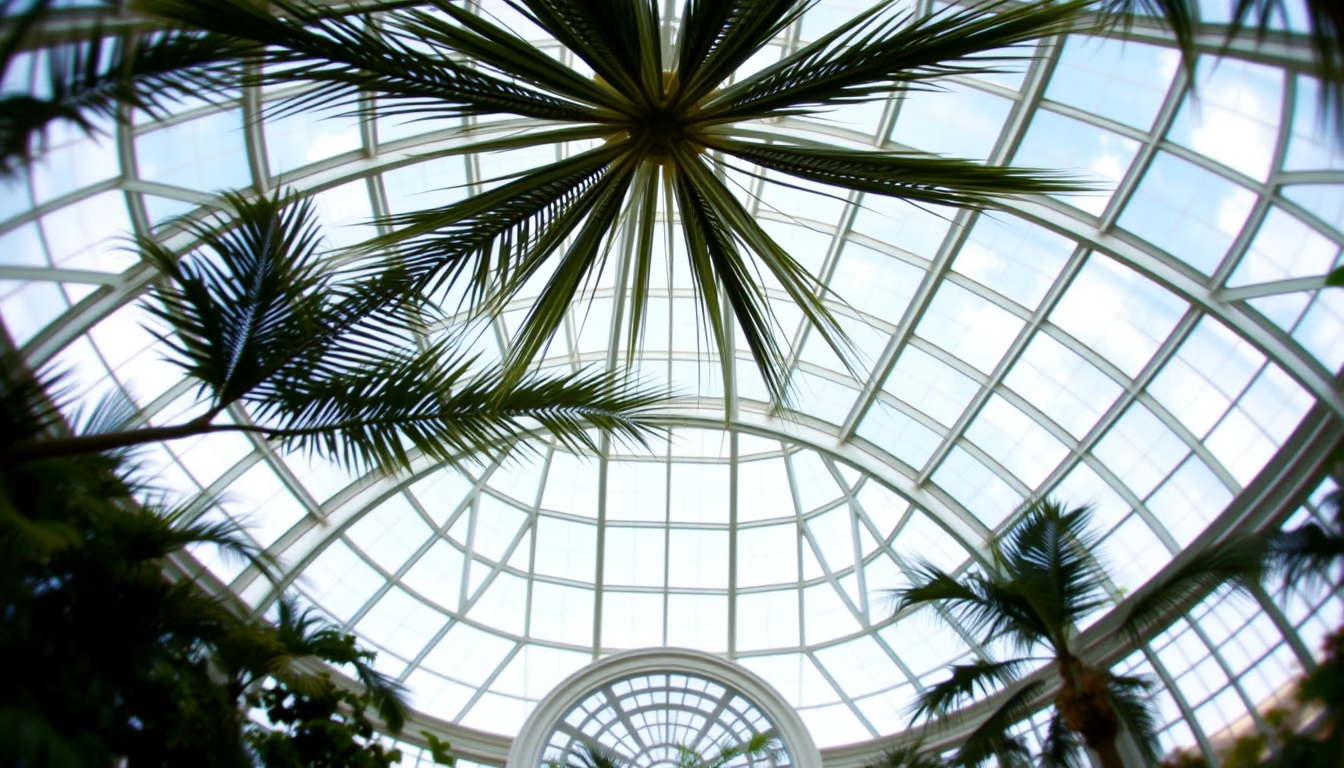
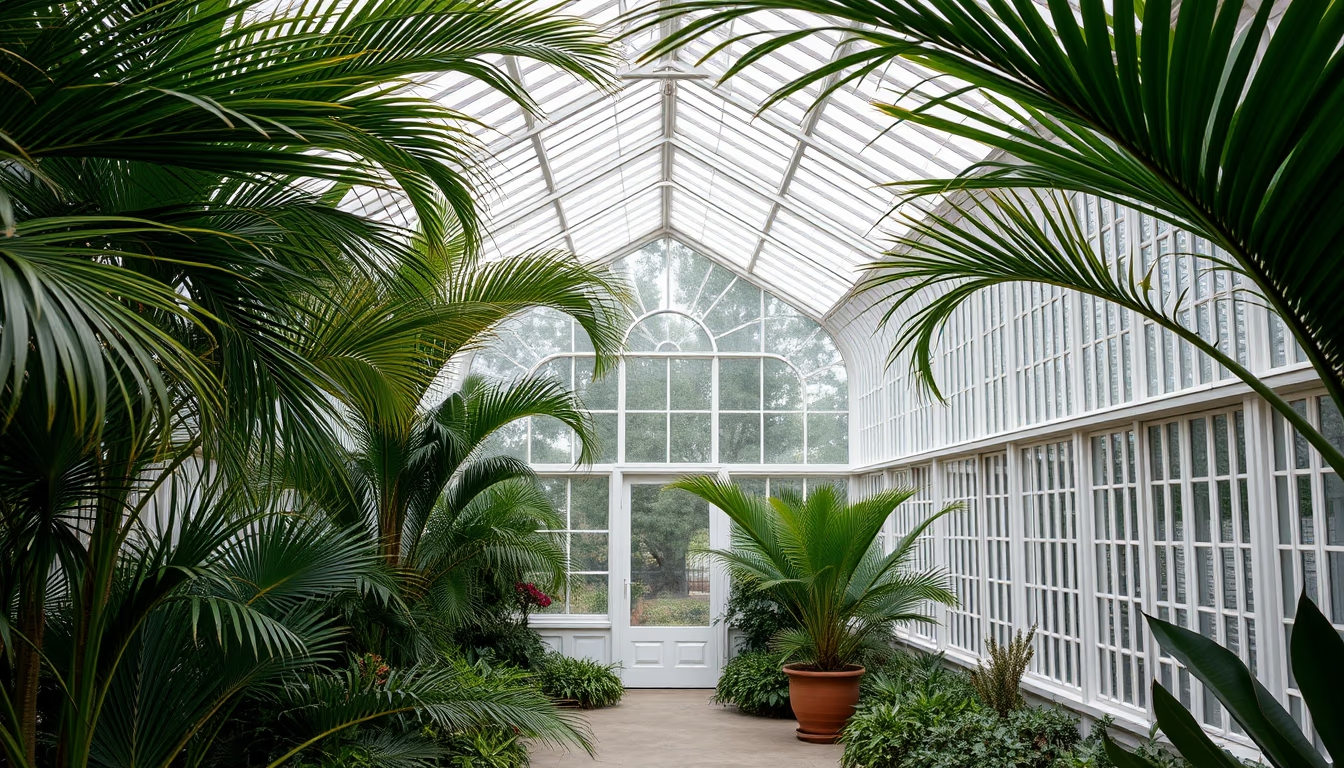
The Palm House at Kew Gardens is an iconic Victorian glasshouse, home to one of the world's most important collections of palms and tropical plants.
About this subject
The Palm House at the Royal Botanic Gardens, Kew in London is one of the world's most iconic glasshouses. Designed by architect Decimus Burton and engineer Richard Turner, it opened in 1848. Its wrought iron and glass structure, inspired by European botanical garden conservatories, allowed tropical plants to thrive in a temperate climate. Measuring 110 meters in length and 20 meters in height, the Palm House was a marvel of Victorian engineering.
The glasshouse houses a vast collection of palms, cycads, and other tropical plants from regions including South America, Africa, and Southeast Asia. Many of these species are rare or endangered in their natural habitats. The Palm House also plays a crucial role in ex situ conservation, maintaining specimens that would not survive the cold northern European climate. Beyond palms, the enclosure includes epiphytes, ferns, and aquatic plants.
During World War II, the Palm House was closed to the public and used to store valuable plants protected from bombings. In the 1980s, it underwent a major restoration that replaced about 16,000 glass panes. Today, the Palm House is a major attraction at Kew Gardens, receiving millions of visitors annually. Its elegant silhouette is recognized worldwide as a symbol of botany and Victorian architecture.
The interior maintains constant tropical temperatures thanks to a steam heating system dating from the Victorian era. Visitors can walk along elevated walkways to observe the palm canopy and climb to an upper gallery with panoramic views. The Palm House is not only an architectural landmark but a living center for research, education, and preservation of plant biodiversity.
Frequently Asked Questions
How tall is the Palm House?
The Palm House is 20 meters (66 feet) tall at its highest point (the central dome).
How many plant species are in the Palm House?
It houses over 1,000 species of tropical plants, including palms, cycads, and epiphytes.
Why was the Palm House built?
It was built to cultivate and display tropical plants arriving in London from British colonies, enabling study and acclimatization.
Direct URL
https://pub-c7d6a6ea828543ac903a74a341ccb2e1.r2.dev/imagens/palm-house-botanical-kew-fish-eye-wide-angle-fresh6.avifHow to credit
Include a visible link back to UtilizAí. Copy one of the snippets below:
<a href="https://xn--utiliza-eza.com/en/midia/imagens/palm-house-botanical-kew-fish-eye-wide-angle-fresh6">Palm house botanical kew</a> by <a href="https://xn--utiliza-eza.com">UtilizAí</a>, licensed under <a href="https://creativecommons.org/licenses/by/4.0/">CC BY 4.0</a>.
[Palm house botanical kew](https://xn--utiliza-eza.com/en/midia/imagens/palm-house-botanical-kew-fish-eye-wide-angle-fresh6) by [UtilizAí](https://xn--utiliza-eza.com), CC BY 4.0
License: CC-BY-4.0