Palm house botanical kew
1344×768 · AVIF · CC BY 4.0
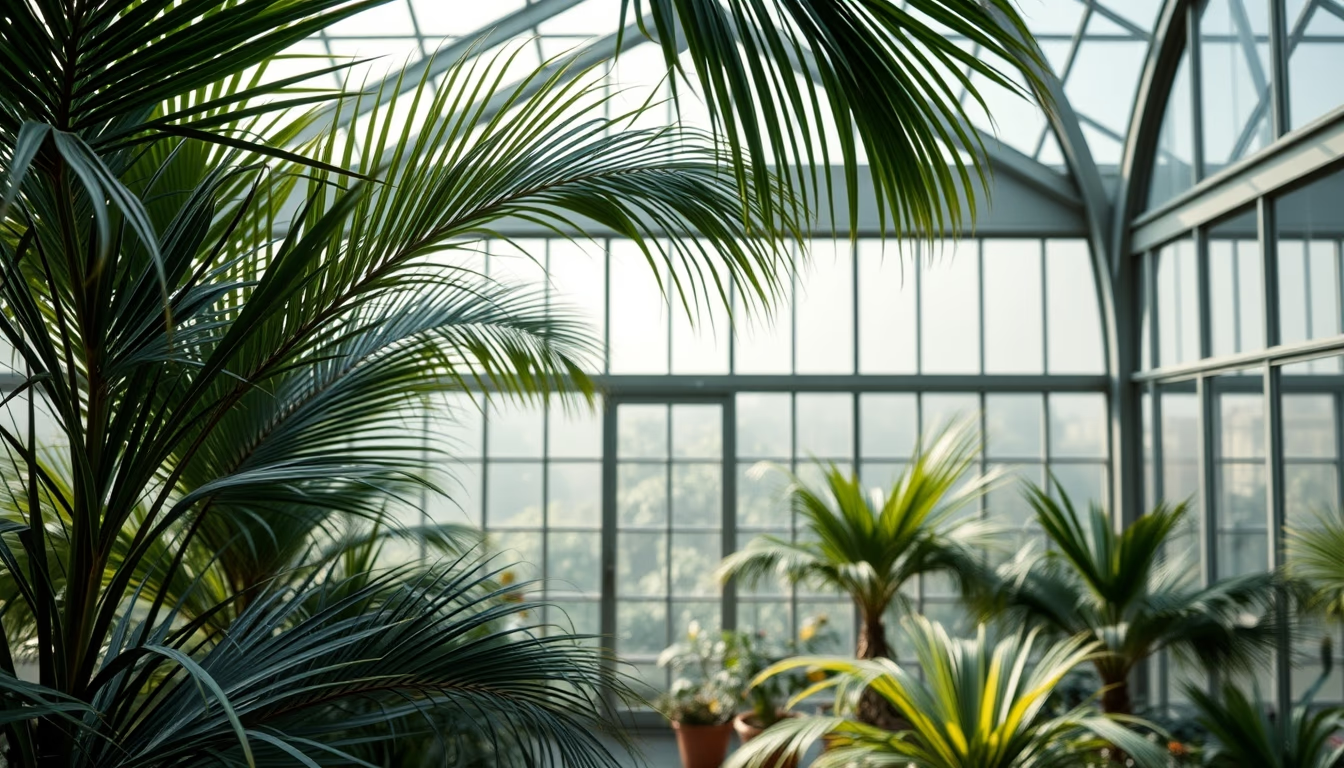
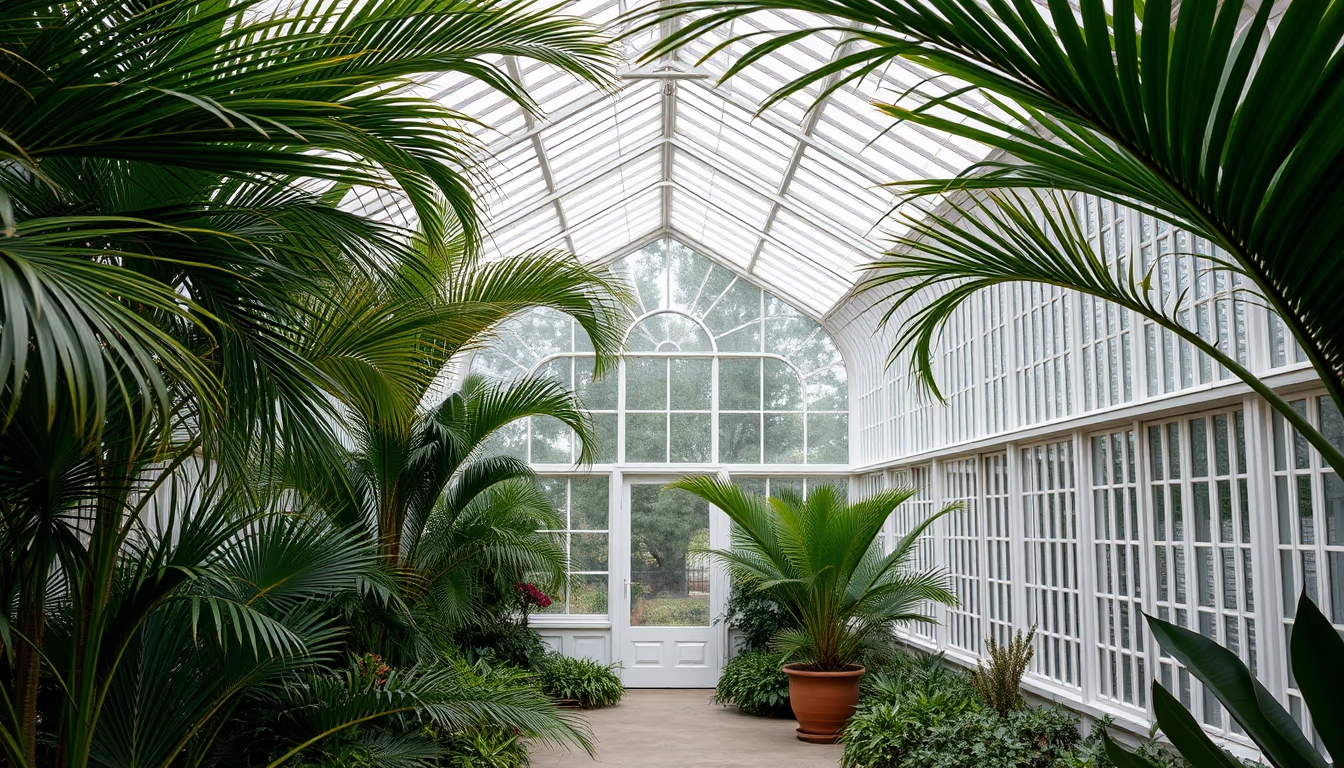
The Palm House at Kew Gardens is an iconic Victorian greenhouse housing a vast collection of palms and tropical plants.
About this subject
The Palm House is one of the most iconic buildings at the Royal Botanic Gardens, Kew, in London. Designed by architect Decimus Burton and engineer Richard Turner, it was constructed between 1844 and 1848. Its wrought-iron and glass structure was a feat of Victorian engineering, creating a controlled environment for cultivating exotic plants from tropical regions. The greenhouse measures 110 meters in length, 30 meters in width, and 19 meters in height at its highest point, housing palms, cycads, and other species from hot, humid climates.
The curved, elongated design of the Palm House was inspired by the glasshouses of the era, but its scale and elegance made it a symbol of Victorian botany and architecture. Inside, the space is organized on three levels: the ground floor with larger plants, an intermediate gallery, and an upper walkway that allows canopy observation. Ventilation was originally controlled by manual window and blind systems, now automated to maintain optimal temperature and humidity.
The Palm House is not only an architectural icon but also a center for research and conservation. It houses rare and endangered species, such as the coco de mer palm (Lodoicea maldivica) and the Mexican blue palm. The collection includes over 3,500 species, many introduced to Europe from botanical expeditions in the 18th and 19th centuries. In 2006, the Palm House underwent a £3.7 million restoration to repair the structure and modernize climate control systems.
This greenhouse is a popular tourist destination, attracting millions of visitors annually. Beyond its aesthetic value, it plays a crucial role in preserving global biodiversity, functioning as a seed bank and living laboratory for climate adaptation studies. Its image is often used as a symbol of Kew Gardens and British horticulture.
Frequently Asked Questions
When was the Palm House at Kew Gardens built?
The Palm House was built between 1844 and 1848, during the Victorian era, designed by Decimus Burton and Richard Turner.
How many plant species does the Palm House house?
The greenhouse houses over 3,500 species of tropical plants, including palms, cycads, and endangered species.
Has the Palm House undergone any recent restoration?
Yes, in 2006 the Palm House underwent a £3.7 million restoration to repair the metal structure and modernize ventilation and climate control systems.
Direct URL
https://pub-c7d6a6ea828543ac903a74a341ccb2e1.r2.dev/imagens/palm-house-botanical-kew-documentary-photography-fresh9.avifHow to credit
Include a visible link back to UtilizAí. Copy one of the snippets below:
<a href="https://xn--utiliza-eza.com/en/midia/imagens/palm-house-botanical-kew-documentary-photography-fresh9">Palm house botanical kew</a> by <a href="https://xn--utiliza-eza.com">UtilizAí</a>, licensed under <a href="https://creativecommons.org/licenses/by/4.0/">CC BY 4.0</a>.
[Palm house botanical kew](https://xn--utiliza-eza.com/en/midia/imagens/palm-house-botanical-kew-documentary-photography-fresh9) by [UtilizAí](https://xn--utiliza-eza.com), CC BY 4.0
License: CC-BY-4.0