Organ pipes cathedral
1344×768 · AVIF · CC BY 4.0
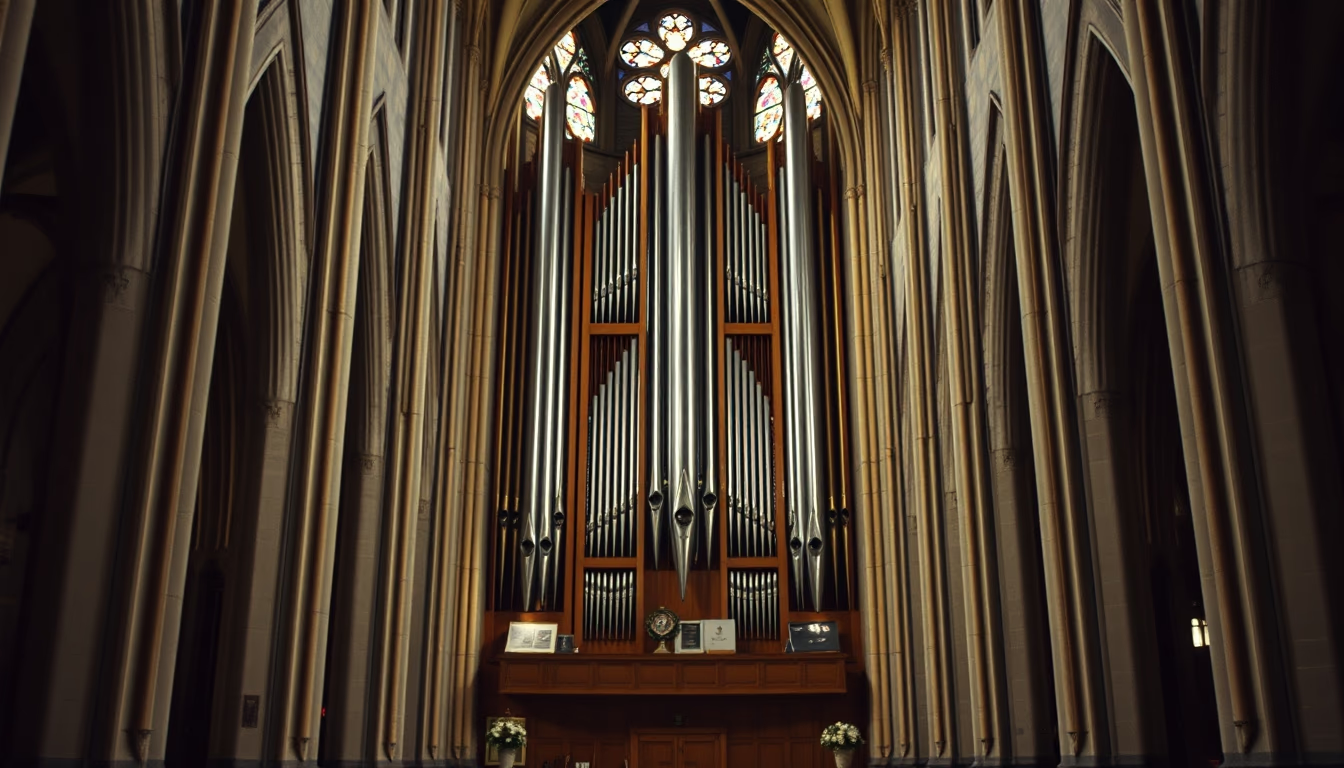
Cathedral pipe organs blend acoustic engineering and sacred art, producing sounds that have echoed for centuries.
About this subject
Pipe organs are complex musical instruments, often installed in cathedrals and large churches. Their history dates back to ancient Greece with the hydraulis, but the ecclesiastical organ as we know it flourished in the Middle Ages. In Europe, Gothic cathedrals such as Notre-Dame de Paris and Cologne Cathedral house monumental instruments with thousands of pipes ranging from a few centimeters to over 10 meters in length. Each pipe produces a specific pitch, controlled by one or more keyboards (manuals) and pedals. Building a pipe organ requires years of craftsmanship involving woodworkers, metalworkers, and specialized tuners. Sound is produced by air flowing through the pipes, generated by bellows, nowadays often powered by electric motors, but historically operated manually or by water. The acoustics of cathedrals, with their high ceilings and stone materials, enhance resonance and sustain, creating an immersive sound experience. Beyond liturgical use, these organs host classical music concerts and festivals, attracting tourists and scholars. In Brazil, São Paulo's Catedral da Sé has an Italian pipe organ, and Mariana Cathedral (MG) houses one of the country's oldest, dating from the 18th century. Maintenance is constant and expensive, as dust and humidity can detune the pipes. Nevertheless, the pipe organ remains a symbol of musical grandeur and cultural heritage.
Frequently Asked Questions
What is the largest pipe organ in the world?
The largest functioning pipe organ is at Boardwalk Hall in Atlantic City, USA, with about 33,000 pipes. In Europe, the organ at Passau Cathedral in Germany stands out with over 17,000 pipes.
How does a pipe organ work?
Air is pressurized by bellows and directed to selected pipes via valves controlled by the keyboard. Each pipe resonates at a specific frequency, producing sound. Different registers (combinations of pipes) alter the timbre.
Why are pipe organs common in cathedrals?
Historically, the Catholic Church promoted sacred music to enrich ceremonies. Cathedrals offered ideal space and acoustics for powerful instruments. Also, the organ symbolized divine glory and the institution's wealth.
Direct URL
https://pub-c7d6a6ea828543ac903a74a341ccb2e1.r2.dev/imagens/organ-pipes-cathedral-lo-fi-disposable-camera-p5.avifHow to credit
Include a visible link back to UtilizAí. Copy one of the snippets below:
<a href="https://xn--utiliza-eza.com/en/midia/imagens/organ-pipes-cathedral-lo-fi-disposable-camera-p5">Organ pipes cathedral</a> by <a href="https://xn--utiliza-eza.com">UtilizAí</a>, licensed under <a href="https://creativecommons.org/licenses/by/4.0/">CC BY 4.0</a>.
[Organ pipes cathedral](https://xn--utiliza-eza.com/en/midia/imagens/organ-pipes-cathedral-lo-fi-disposable-camera-p5) by [UtilizAí](https://xn--utiliza-eza.com), CC BY 4.0
License: CC-BY-4.0