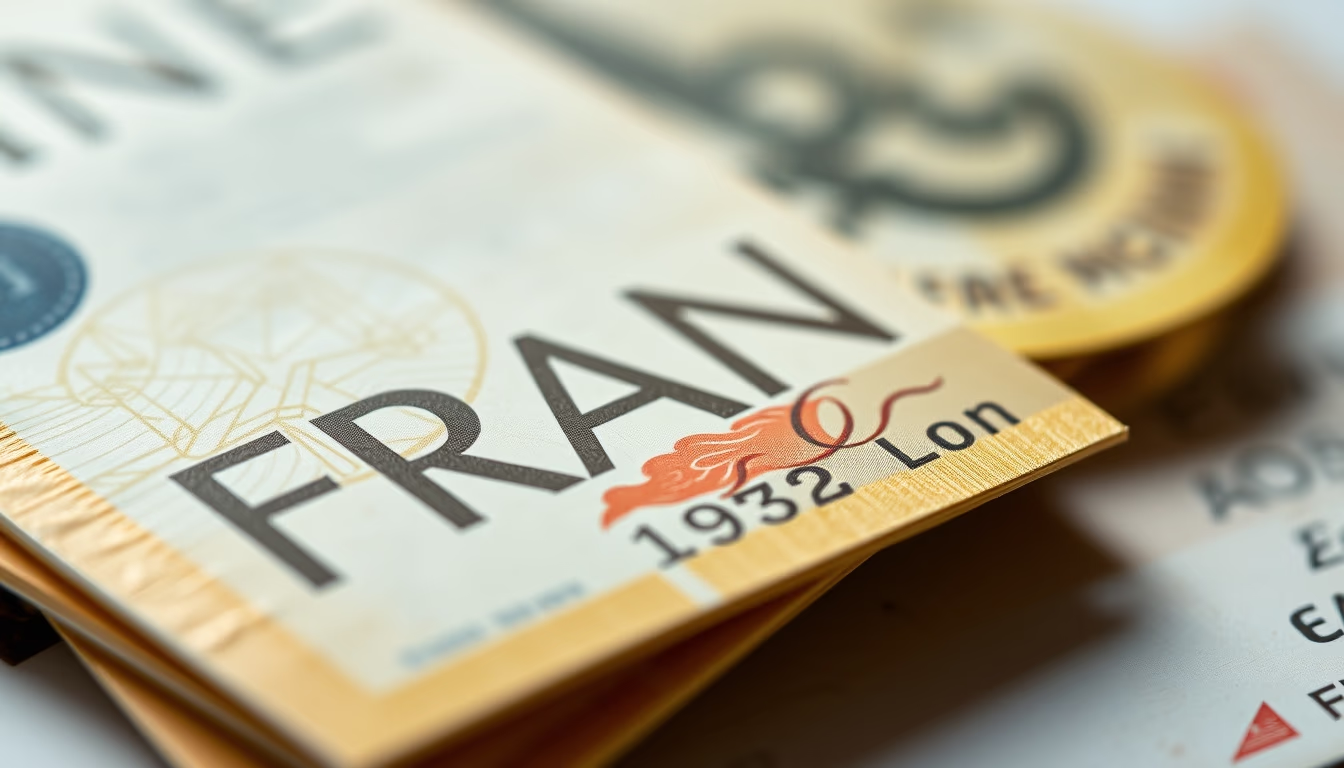
Old portuguese escudos
1344×768 · AVIF · CC BY 4.0
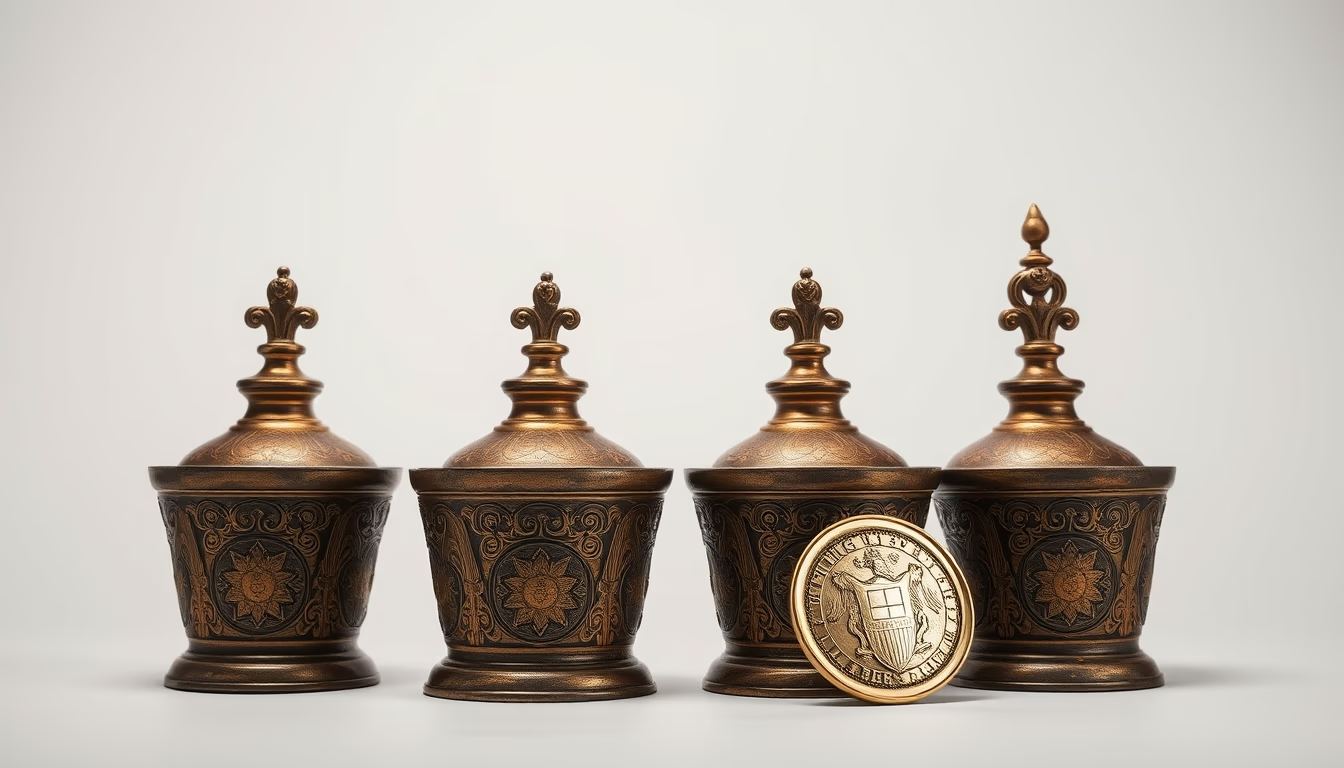
The old Portuguese escudos, gold and silver coins, circulated from 1911 until the late 20th century, marking Portugal's monetary history.
About this subject
The Portuguese escudo was introduced in 1911, shortly after the proclamation of the Portuguese Republic, replacing the real. The name "escudo" derives from the coat of arms of Portugal, which frequently appeared on the coins. During its lifetime, the escudo underwent several monetary reforms and design changes, reflecting historical periods such as the Estado Novo and the Carnation Revolution.
Escudo coins ranged from centavos (cêntimos) to higher denominations like 1, 2.5, 5, 10, 20, 50, and 100 escudos. Early issues were primarily made of silver and gold, but over time they were replaced by more common metal alloys. One of the most iconic coins was the gold 10-escudo coin, featuring the effigy of the Republic.
On the reverse side, coins often featured national symbols such as the armillary sphere, the Cross of the Order of Christ, and portraits of historical figures like Prince Henry the Navigator or poet Luís de Camões. From 1968 onward, the Portuguese Mint modernized the coinage, adopting more contemporary designs. The escudo remained in circulation until January 1, 2002, when it was replaced by the euro, although it coexisted with the new currency until February 2002.
Interestingly, the escudo was also the currency in some former Portuguese colonies, such as Angola, Mozambique, and Cape Verde, which issued their own versions. Today, old escudos are collector's items, valued for their history and rarity.
Frequently Asked Questions
What was the value of a Portuguese escudo compared to the previous real?
One escudo was equivalent to 1000 réis (thousand réis), the unit in use before the Republic. So 1$000 (one escudo) replaced 1000 réis.
What were the most common denominations of escudo coins?
Coins ranged from 10 centavos (cêntimos) to 100 escudos. The denominations of 1, 2.5, 5, 10, 20, and 50 escudos were most commonly circulated, made from metals like cupronickel and bronze.
When and why was the escudo replaced by the euro?
The escudo was replaced by the euro on January 1, 2002, as part of Portugal's accession to the European Union and the single currency. The dual circulation period lasted until February 28, 2002.
Direct URL
https://pub-c7d6a6ea828543ac903a74a341ccb2e1.r2.dev/imagens/old-portuguese-escudos-studio-still-life-fresh7.avifHow to credit
Include a visible link back to UtilizAí. Copy one of the snippets below:
<a href="https://xn--utiliza-eza.com/en/midia/imagens/old-portuguese-escudos-studio-still-life-fresh7">Old portuguese escudos</a> by <a href="https://xn--utiliza-eza.com">UtilizAí</a>, licensed under <a href="https://creativecommons.org/licenses/by/4.0/">CC BY 4.0</a>.
[Old portuguese escudos](https://xn--utiliza-eza.com/en/midia/imagens/old-portuguese-escudos-studio-still-life-fresh7) by [UtilizAí](https://xn--utiliza-eza.com), CC BY 4.0
License: CC-BY-4.0