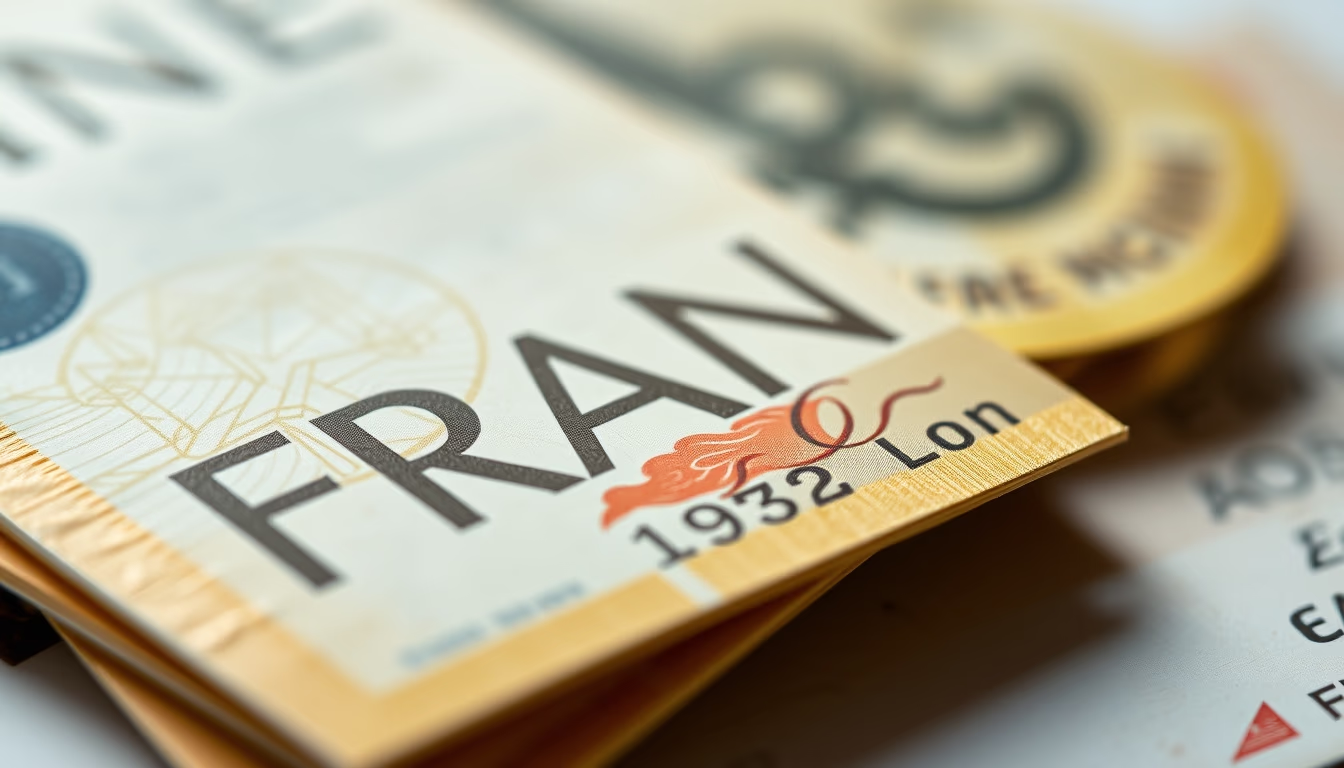
Old portuguese escudos
1344×768 · AVIF · CC BY 4.0

Old Portuguese escudos are coins that circulated in Portugal from 1911 to 2002, marking the country's economic and cultural history.
About this subject
The escudo was introduced in Portugal in 1911, following the establishment of the Republic, replacing the real as the monetary unit. For nearly a century, these coins witnessed political and social transformations, from the First Republic to the Estado Novo dictatorship and the Carnation Revolution of 1974. The escudos varied in design, often featuring the national coat of arms, effigies of historical figures like Prince Henry the Navigator, or allegories of the Republic.
Escudo coins were minted in materials such as bronze, cupronickel, and silver, with denominations ranging from 10 centavos to 100 escudos. For instance, the 10-escudo coin from 1972 honored Portuguese navigation and discoveries, while the 1-escudo coin from 1969 featured a typical sailing vessel. After Portugal joined the European Union, the escudo was gradually replaced by the euro starting in 1999, losing legal tender status in 2002.
Collectors and numismatists value old escudos for their aesthetic and historical diversity. Rare pieces, such as the 5-escudo coin from 1932 or commemorative issues for the 500th anniversary of the Discoveries, fetch good prices at auctions. Conservation and preservation condition are crucial factors for numismatic value, with uncirculated coins being highly sought after.
Beyond monetary value, the escudos carry a strong cultural symbolism, representing Portuguese identity during a period of deep change. Today, they are remembered with nostalgia by generations who grew up using these coins in daily life, forming part of the country's affective memory.
Frequently Asked Questions
When did Portuguese escudos cease to circulate?
The escudo was replaced by the euro starting in 1999, but both circulated together until February 28, 2002, when the escudo lost legal tender status.
What is the most valuable Portuguese escudo for collectors?
The 5-escudo coin from 1932 is considered one of the rarest, potentially worth thousands of euros in good condition.
Were Portuguese escudos made of silver?
Yes, some issues, especially the 2.5 and 10 escudos in specific periods, contained silver. However, most 20th-century coins were cupronickel or bronze.
Direct URL
https://pub-c7d6a6ea828543ac903a74a341ccb2e1.r2.dev/imagens/old-portuguese-escudos-aerial-drone-shot-fresh16.avifHow to credit
Include a visible link back to UtilizAí. Copy one of the snippets below:
<a href="https://xn--utiliza-eza.com/en/midia/imagens/old-portuguese-escudos-aerial-drone-shot-fresh16">Old portuguese escudos</a> by <a href="https://xn--utiliza-eza.com">UtilizAí</a>, licensed under <a href="https://creativecommons.org/licenses/by/4.0/">CC BY 4.0</a>.
[Old portuguese escudos](https://xn--utiliza-eza.com/en/midia/imagens/old-portuguese-escudos-aerial-drone-shot-fresh16) by [UtilizAí](https://xn--utiliza-eza.com), CC BY 4.0
License: CC-BY-4.0