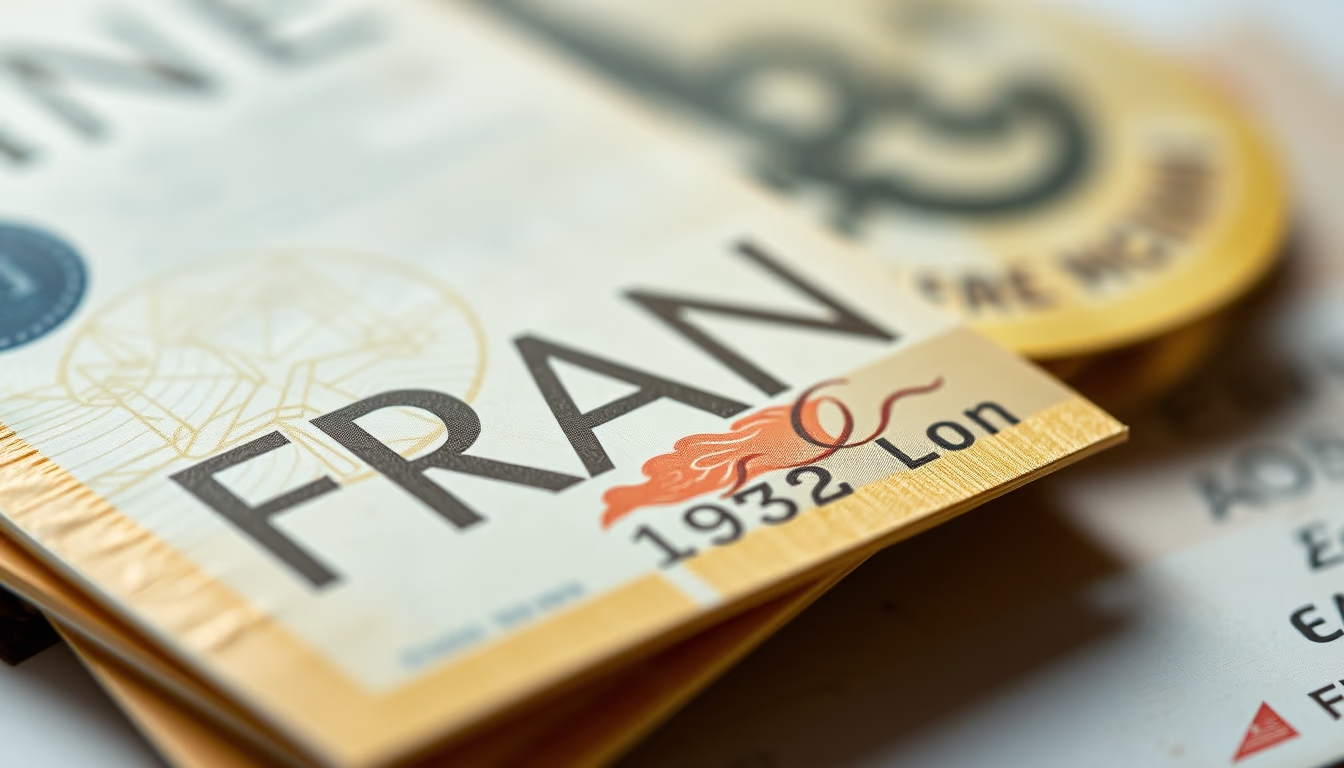
Old french francs
1344×768 · AVIF · CC BY 4.0
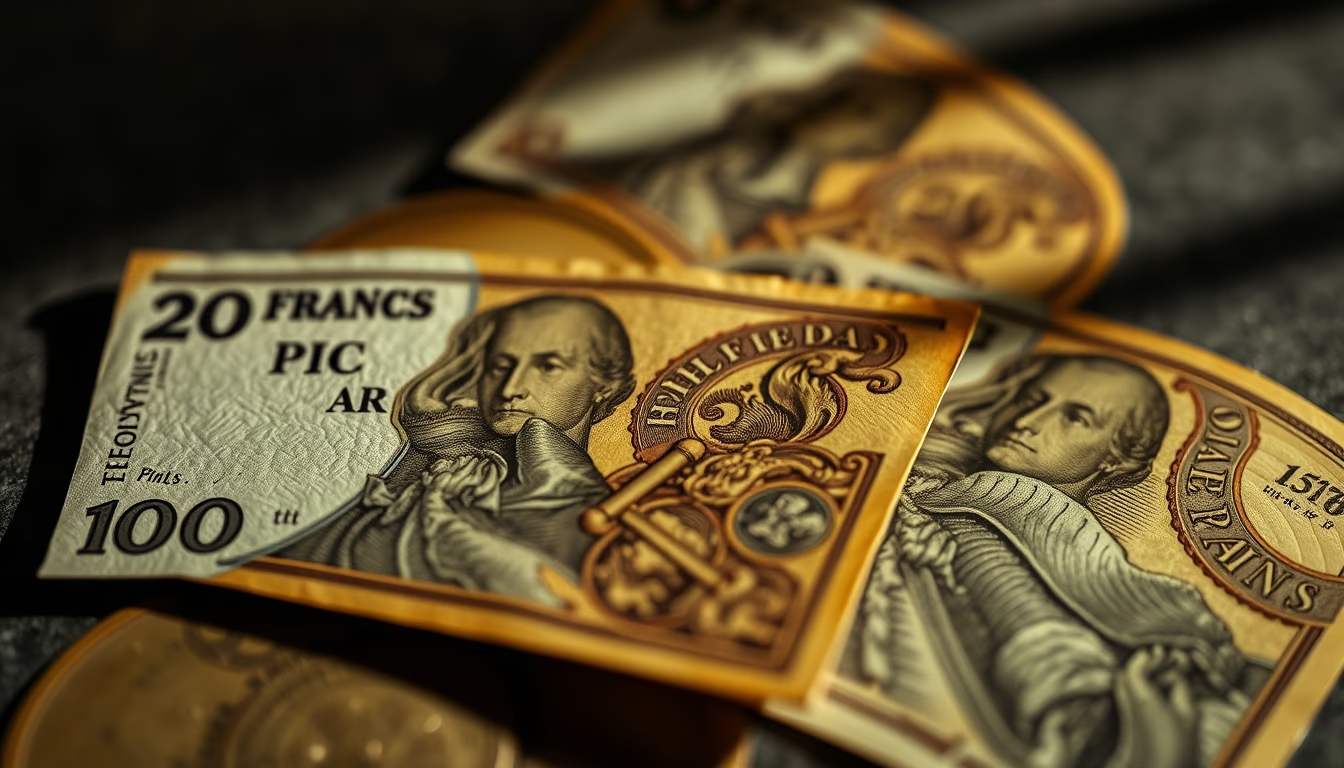
Old French franc banknotes tell the economic and cultural history of France, from its creation to the adoption of the euro.
About this subject
The French franc was the official currency of France for over six centuries, from 1360 to 2002, when it was replaced by the euro. Its history began with King John II, who minted the first franc in 1360 to pay his ransom during the Hundred Years' War. The currency underwent several reforms, including the creation of the germinal franc in 1803 by Napoleon Bonaparte, which stabilized the post-Revolution economy. Old franc banknotes are true works of art, featuring iconic figures such as Napoleon, Victor Hugo, Marie Curie, and Pasteur, reflecting national pride and France's scientific and cultural achievements.
Each denomination carried a unique design. The 500-franc note, for example, depicted the Curie couple in honor of the discovery of radium. The 100-franc note featured Eugène Delacroix, symbolizing the arts. After World War II, the franc experienced severe inflation, leading to devaluation and the introduction of the new franc in 1960, worth 100 old francs. Banknotes from this period were redesigned with historical portraits and vibrant colors to ease public acceptance.
Despite its end as legal tender, the French franc left a lasting legacy. Collectors and historians value these banknotes as testimonies to France's economic and artistic evolution. Many are sold at auctions for high prices, especially rare series or those in good condition. The replacement by the euro in 2002 marked the end of an era, but the franc remains alive in cultural memory and the numismatic market.
Frequently Asked Questions
When was the French franc created?
The French franc was created in 1360 by King John II during the Hundred Years' War, originally as a gold coin to pay his ransom.
Which historical figures appeared on franc banknotes?
The banknotes featured figures like Napoleon Bonaparte, Victor Hugo, Marie Curie, Louis Pasteur, and Eugène Delacroix, representing science, art, and politics.
Why was the franc replaced by the euro?
The franc was replaced by the euro in 2002 as part of the European Union's economic integration, aimed at facilitating trade and monetary stability among member countries.
Direct URL
https://pub-c7d6a6ea828543ac903a74a341ccb2e1.r2.dev/imagens/old-french-francs-rembrandt-lighting-dramatic-shadows-fresh13.avifHow to credit
Include a visible link back to UtilizAí. Copy one of the snippets below:
<a href="https://xn--utiliza-eza.com/en/midia/imagens/old-french-francs-rembrandt-lighting-dramatic-shadows-fresh13">Old french francs</a> by <a href="https://xn--utiliza-eza.com">UtilizAí</a>, licensed under <a href="https://creativecommons.org/licenses/by/4.0/">CC BY 4.0</a>.
[Old french francs](https://xn--utiliza-eza.com/en/midia/imagens/old-french-francs-rembrandt-lighting-dramatic-shadows-fresh13) by [UtilizAí](https://xn--utiliza-eza.com), CC BY 4.0
License: CC-BY-4.0