Official decree document with Brazilian government letterhead and stamp
1344×768 · AVIF · CC BY 4.0
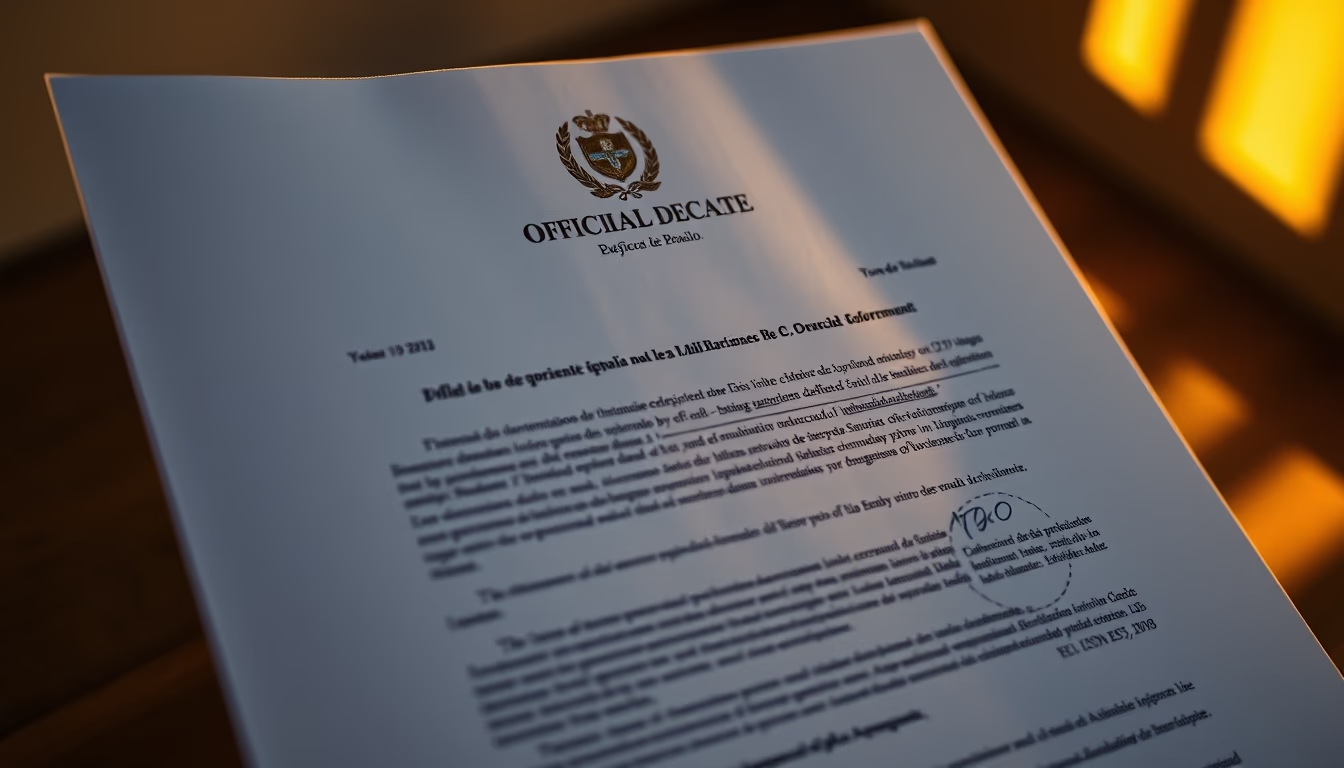
Official decree document with Brazilian government letterhead and stamp, recording a normative act of the federal executive branch.
About this subject
Decrees are legal instruments used by the Executive Branch to regulate laws, organize public administration, or address specific situations. In Brazil, federal decrees are signed by the President and published in the Official Gazette, but physical versions with letterhead and official stamp are still produced for archiving and formal ceremonies. The Brazilian government letterhead includes the national coat of arms, featuring a celestial sphere, a ribbon with the date of the Proclamation of the Republic (November 15, 1889), and the Southern Cross constellation. The stamp, usually in dry seal or ink, authenticates the document and prevents forgery. Each decree receives a unique sequential number, such as Decree No. 11,000, and is organized by year. The typical structure includes: preamble with the issuing authority, recitals (justification), first article with the decision, and an effective date clause. Decrees can amend previous regulations, create committees, or define public policies. Although digitization has reduced paper use, physical documents are still required for judicial processes and international agreements. The paper used is highly durable, with watermarks and security fibers, similar to banknotes. These documents are preserved by the National Archive, which holds historical copies dating back to the Empire era. Famous decrees include the one that abolished slavery (Golden Law, 1888, issued as a decree) and the one that instituted the Real Plan (1994).
Frequently Asked Questions
What is the difference between a decree and a law in Brazil?
A law is approved by the Legislative Branch (National Congress) and sanctioned by the President. A decree is issued solely by the Executive Branch to regulate existing laws or address matters within its authority, without requiring legislative approval.
How can I verify the authenticity of a federal decree?
The official version is published in the Official Gazette (DOU), available online. Physical documents feature official letterhead and stamp, plus watermarked paper. The decree number and date allow verification on the Planalto website or the National Press.
Do decrees have an expiration date?
Yes, some decrees have temporary validity, especially those addressing emergency situations. Others remain in force until revoked by another decree or law. Revocation must be explicit and published in the DOU.
Direct URL
https://pub-c7d6a6ea828543ac903a74a341ccb2e1.r2.dev/imagens/official-decree-document-with-brazilian-government-letterhead-and-stamp-wide-late-afternoon-5.avifHow to credit
Include a visible link back to UtilizAí. Copy one of the snippets below:
<a href="https://xn--utiliza-eza.com/en/midia/imagens/official-decree-document-with-brazilian-government-letterhead-and-stamp-wide-late-afternoon-5">Official decree document with Brazilian government letterhead and stamp</a> by <a href="https://xn--utiliza-eza.com">UtilizAí</a>, licensed under <a href="https://creativecommons.org/licenses/by/4.0/">CC BY 4.0</a>.
[Official decree document with Brazilian government letterhead and stamp](https://xn--utiliza-eza.com/en/midia/imagens/official-decree-document-with-brazilian-government-letterhead-and-stamp-wide-late-afternoon-5) by [UtilizAí](https://xn--utiliza-eza.com), CC BY 4.0
License: CC-BY-4.0
Tags
Related images
 Itamaraty Palace modernist exterior with reflecting pool in Brasília
 Itamaraty Palace modernist exterior with reflecting pool in Brasília
 Itamaraty Palace modernist exterior with reflecting pool in Brasília
 Itamaraty Palace modernist exterior with reflecting pool in Brasília
 Itamaraty Palace modernist exterior with reflecting pool in Brasília
 Itamaraty Palace modernist exterior with reflecting pool in Brasília