Oboe wooden detail
1344×768 · AVIF · CC BY 4.0
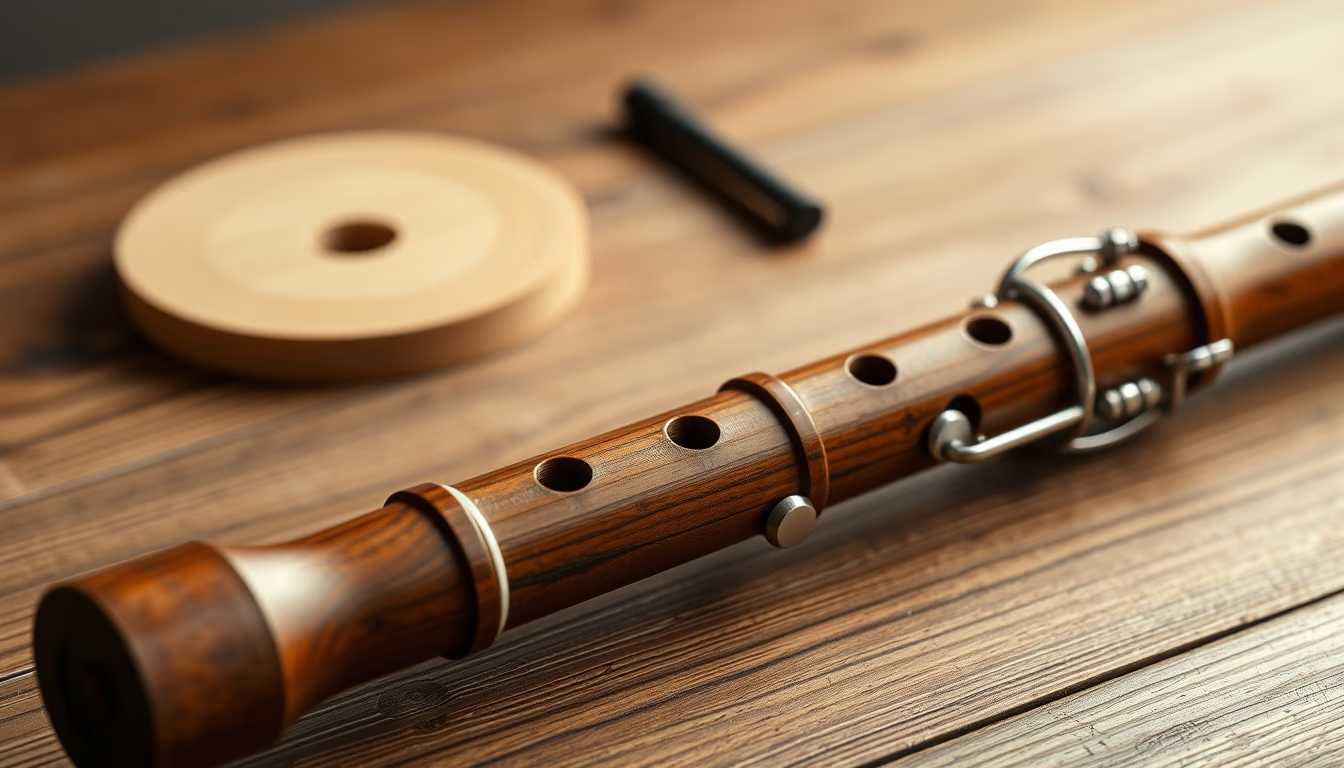
The oboe is a double-reed woodwind instrument, traditionally carved from fine hardwoods like grenadilla and rosewood, giving it a distinctive timbre and projection.
About this subject
The oboe is a double-reed woodwind instrument celebrated for its penetrating and expressive timbre. Its wooden construction is vital to its sound quality. Historically, the most common woods used are grenadilla (African blackwood, Dalbergia melanoxylon) and rosewood (Brazilian rosewood, Dalbergia nigra). These are dense, hard, fine-grained woods that allow precise machining and rich acoustic response. Since the 17th century, when the modern oboe began to develop in France, wood has been the standard material, replacing Renaissance models made of boxwood.
The choice of wood directly influences the sound: grenadilla yields a darker, more focused tone, while rosewood provides a softer, slightly sweeter sound. Specialist luthiers select logs that have been seasoned for years to prevent cracking. The making process involves turning the wood, drilling the conical bore, and assembling metal keywork. The oboe is one of the most difficult wooden instruments to manufacture due to the extremely tight bore tolerances and complex key mechanism.
Culturally, the oboe holds a central role in symphony orchestras, military bands, and chamber music. It is the instrument that gives the tuning A for the entire orchestra, a tradition dating back to the 18th century. Great composers like Mozart, Richard Strauss, and Igor Stravinsky wrote challenging oboe passages. Maintenance of a wooden oboe requires constant care: cleaning after use, applying linseed or specialized oil to prevent drying, and storing in a humidity-controlled environment. Many professional oboists own multiple instruments for different repertoires and climates.
Today, although resin or plastic student oboes exist, professional models remain made of wood. Brands such as Lorée, Marigaux, Buffet Crampon, and Yamaha produce high-quality grenadilla oboes. The demand for sustainable and certified wood is growing, as species like grenadilla become rarer. The wooden oboe represents a handcraft tradition that merges precision woodworking, acoustics, and musical expression.
Frequently Asked Questions
Why is the oboe made of wood instead of metal?
Wood provides a richer, more natural timbre with characteristic resonance and projection. Metal instruments like the flute have a brighter sound, but the density and porosity of wood are essential for the classical oboe sound.
What are the main woods used in oboe manufacturing?
The most common are grenadilla (African blackwood) and rosewood (especially Brazilian rosewood). Grenadilla is preferred for its density and durability, while rosewood offers a softer tone. Other woods like boxwood and cocobolo are used in historical models.
How to care for a wooden oboe to prevent cracking?
Clean internal moisture after each use, apply specialized oil periodically, avoid sudden temperature and humidity changes, and store the instrument in a humidity-controlled case. Cracking mainly occurs when the wood dries too quickly.
Direct URL
https://pub-c7d6a6ea828543ac903a74a341ccb2e1.r2.dev/imagens/oboe-wooden-detail-studio-still-life-p2.avifHow to credit
Include a visible link back to UtilizAí. Copy one of the snippets below:
<a href="https://xn--utiliza-eza.com/en/midia/imagens/oboe-wooden-detail-studio-still-life-p2">Oboe wooden detail</a> by <a href="https://xn--utiliza-eza.com">UtilizAí</a>, licensed under <a href="https://creativecommons.org/licenses/by/4.0/">CC BY 4.0</a>.
[Oboe wooden detail](https://xn--utiliza-eza.com/en/midia/imagens/oboe-wooden-detail-studio-still-life-p2) by [UtilizAí](https://xn--utiliza-eza.com), CC BY 4.0
License: CC-BY-4.0