Oboe wooden detail
1344×768 · AVIF · CC BY 4.0
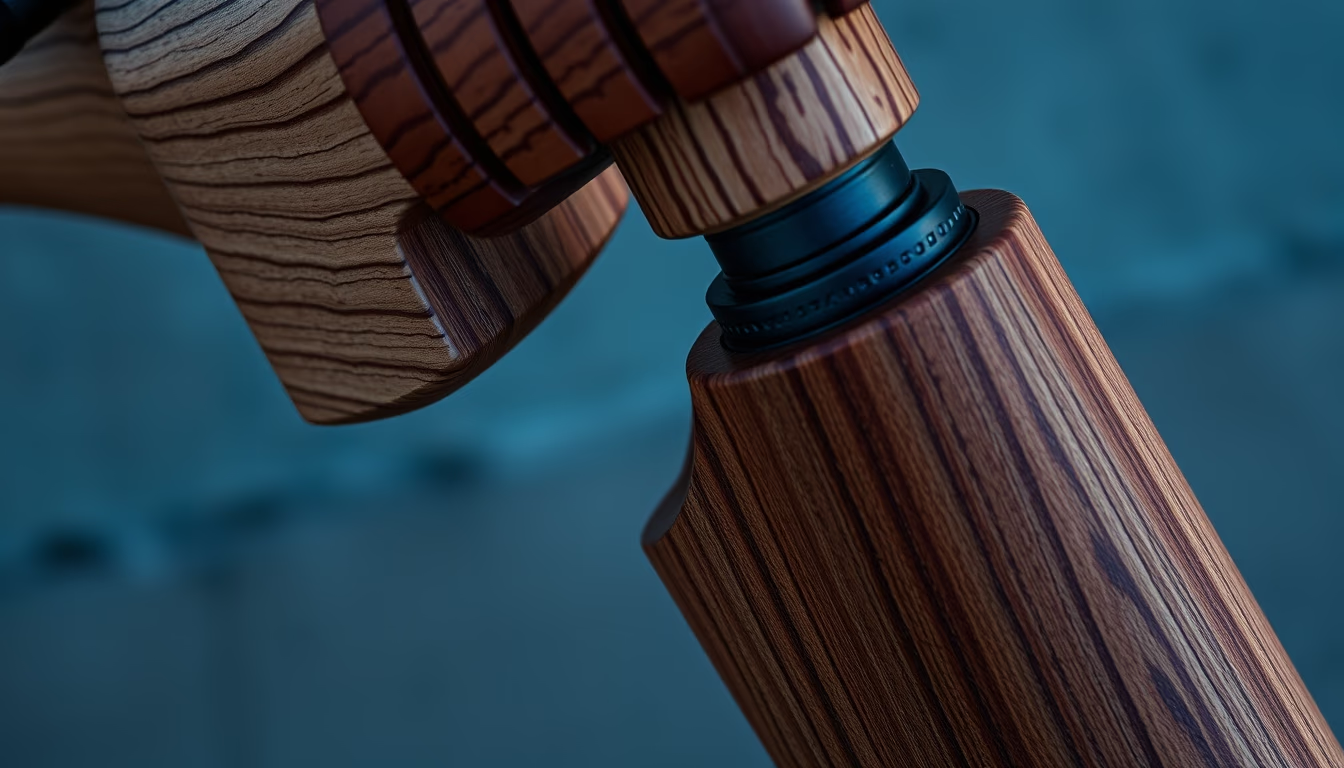
The oboe is a double-reed woodwind instrument, known for its penetrating tone and fine wooden craftsmanship, essential in symphony orchestras.
About this subject
The oboe is a double-reed woodwind instrument, distinguished by its bright, piercing tone. Its body is traditionally crafted from African blackwood, or grenadilla (Dalbergia melanoxylon), a dense and resonant timber that shapes the instrument's characteristic timbre. Rosewood and synthetic materials are also used for student models. Modern oboes feature a complex keywork system, refined in the 19th century, enabling chromatic agility across all keys.
Originating in 17th-century France, the oboe evolved from the medieval shawm and soon became a staple of Baroque orchestras. Composers like Bach, Handel, and Vivaldi wrote extensively for it. In symphony orchestras, the oboe provides the tuning note (A440) due to its stable pitch. Its penetrating sound allows it to cut through full orchestral textures, often carrying poignant solos.
Handcrafting an oboe demands exceptional precision. The wood is drilled and turned into a conical bore, and metal keys (silver or nickel-plated) are mounted. Most oboists make their own reeds, adjusting thickness and shape for dynamic and intonation control. Humidity must be carefully managed to prevent wood cracking.
While rare in jazz, the oboe appears in popular music and film scores. Masterpieces like Mozart's Oboe Concerto and Beethoven's Symphony No. 9 (notably the second-movement solo) highlight its expressive range. Virtuosos such as Heinz Holliger and Albrecht Mayer have expanded its technical and artistic boundaries.
Frequently Asked Questions
What wood is the oboe made from?
Professional oboes are traditionally made from grenadilla (Dalbergia melanoxylon), a dense African blackwood. Intermediate models may use rosewood, while student oboes often use synthetic materials like resin or plastic.
Why does the oboe give the tuning note to the orchestra?
The oboe has a stable, penetrating timbre that stands out among instruments. Historically, its pitch is less affected by temperature and humidity changes, making it the traditional choice to sound the A440 note that guides the orchestra's tuning.
What is the difference between oboe and clarinet?
The oboe uses a double reed (two canes vibrating against each other) and has a conical bore, producing a brighter, more nasal sound. The clarinet uses a single reed and a cylindrical bore, resulting in a warmer, rounder tone.
Direct URL
https://pub-c7d6a6ea828543ac903a74a341ccb2e1.r2.dev/imagens/oboe-wooden-detail-aerial-drone-shot-p10.avifHow to credit
Include a visible link back to UtilizAí. Copy one of the snippets below:
<a href="https://xn--utiliza-eza.com/en/midia/imagens/oboe-wooden-detail-aerial-drone-shot-p10">Oboe wooden detail</a> by <a href="https://xn--utiliza-eza.com">UtilizAí</a>, licensed under <a href="https://creativecommons.org/licenses/by/4.0/">CC BY 4.0</a>.
[Oboe wooden detail](https://xn--utiliza-eza.com/en/midia/imagens/oboe-wooden-detail-aerial-drone-shot-p10) by [UtilizAí](https://xn--utiliza-eza.com), CC BY 4.0
License: CC-BY-4.0